
The Abbey Road Crossing: An Iconic Moment, Unpacked
Explore the historical context, emotional landscape, and powerful lessons in social awareness behind one of music's most unforgettable images.
The Moment Itself
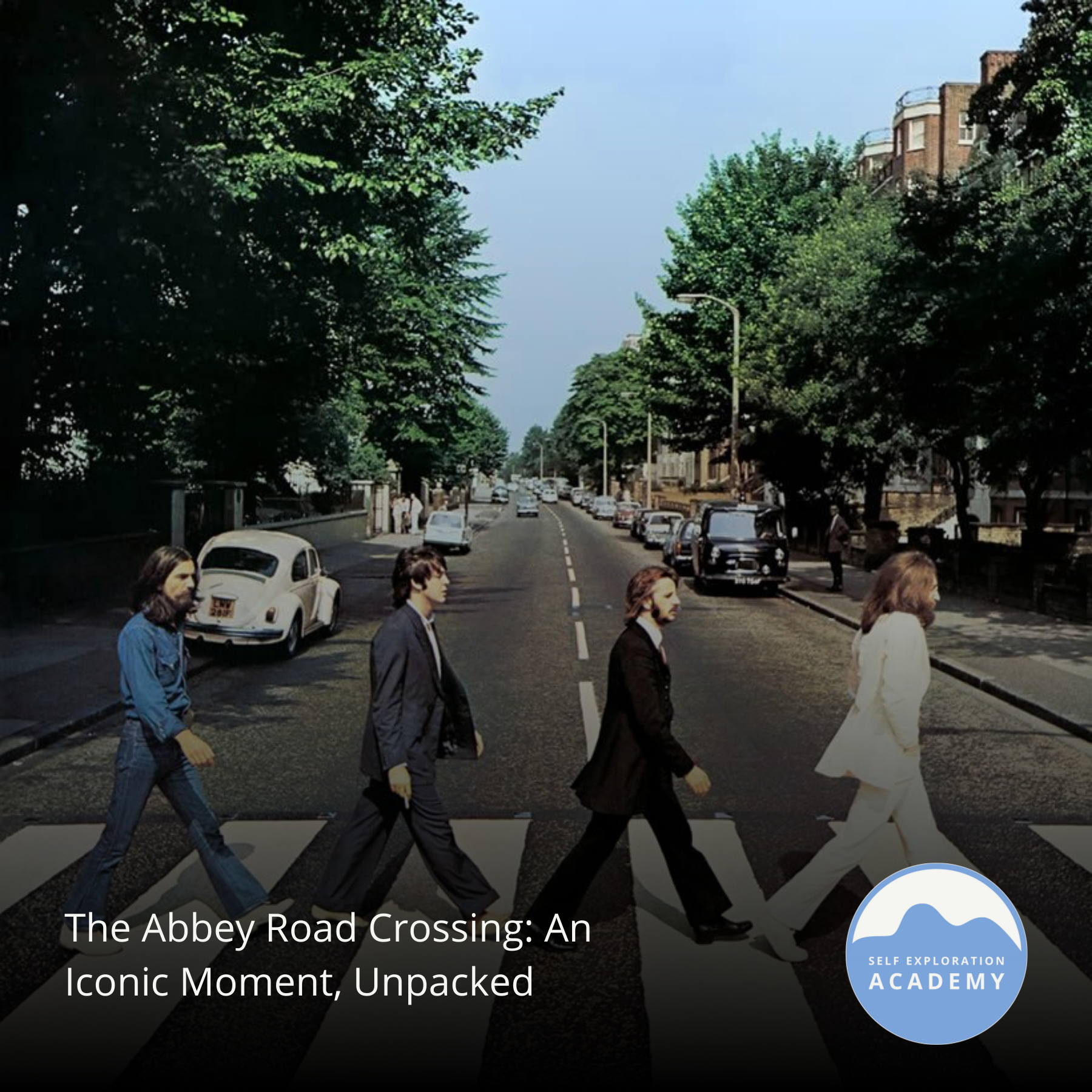
On a sweltering Friday morning, August 8, 1969, a small team gathered outside EMI Studios on Abbey Road in London. The Beatles—John Lennon, Paul McCartney, George Harrison, and Ringo Starr—were nearing the completion of their penultimate album, which would ultimately be named after the very street they were on. The idea for the cover was simple yet audacious: a photograph of the four band members walking across the zebra crossing directly outside the studio. Photographer Iain MacMillan, perched precariously on a stepladder in the middle of the road, had a mere ten minutes to capture the shot. A single policeman briefly halted the sparse traffic, allowing the band to cross back and forth a few times. In just six frames, MacMillan immortalized one of the most recognizable images in music history. What was at stake was not just an album cover, but a visual representation of a band at a crossroads, subtly signaling their collective journey and impending dissolution, even if unintentionally. The image became a cultural touchstone, a silent farewell from the world’s biggest band.
The Emotional Landscape
The emotional landscape surrounding the Abbey Road shoot was a complex tapestry of creative exhaustion, simmering tensions, and a desperate, fleeting hope for unity. While the public saw a cohesive quartet, behind the scenes, the band was fraying. John Lennon had already privately expressed his desire to leave, and the collaborative spirit that once defined them was largely gone, replaced by individual projects and growing resentments. Yet, on that sunny morning, for those few minutes, they performed their roles as "The Beatles" one last time for the camera, a practiced familiarity masking the internal turmoil. For fans, the album and its iconic cover would evoke a mix of nostalgia for their unparalleled run and a bittersweet awareness that an era was drawing to a close. The image, devoid of text, spoke volumes: four individuals, once inseparable, now walking in a line, each seemingly absorbed in their own path, yet forever linked by the shared journey that had defined a generation.
A Lesson in Social Emotional Learning
The Abbey Road moment offers a profound lesson in Social Awareness, particularly in understanding group dynamics and unspoken cues. Despite the internal strife, The Beatles managed to present a unified front for the camera, demonstrating an acute, albeit perhaps unconscious, awareness of their public image and the expectations of their audience. They understood the cultural weight they carried and, for that brief instance, put aside personal discord to deliver an iconic visual. This wasn't necessarily a display of strong Relationship Skills in their personal interactions, but rather a collective Social Awareness of their brand and legacy. The image itself, chosen by Paul McCartney, captures a fleeting moment of synchronized movement, a visual metaphor for a harmony that was increasingly elusive off-camera. It highlights how, even when internal relationships are strained, a shared purpose or external pressure can momentarily align individuals, revealing the delicate balance between personal feelings and collective presentation. The moment still speaks to us today about the power of iconic imagery to both reflect and shape perception, and how even in moments of profound change, a collective identity can persist, if only in a photograph.
Latest Posts











Discover SEA’s 95 Universal Core Competencies—a research-informed, human-centered framework for building the life skills that actually matter. Organized in nine domains, this guide explores what it means to be truly capable.