Edinburgh, 1886: The Day the Stone of Destiny Reclaimed Its Place in Scottish Hearts
Explore the surprising 1886 event that cemented the ancient Stone of Destiny as a powerful emblem of Scotland's enduring spirit.
The Moment Itself
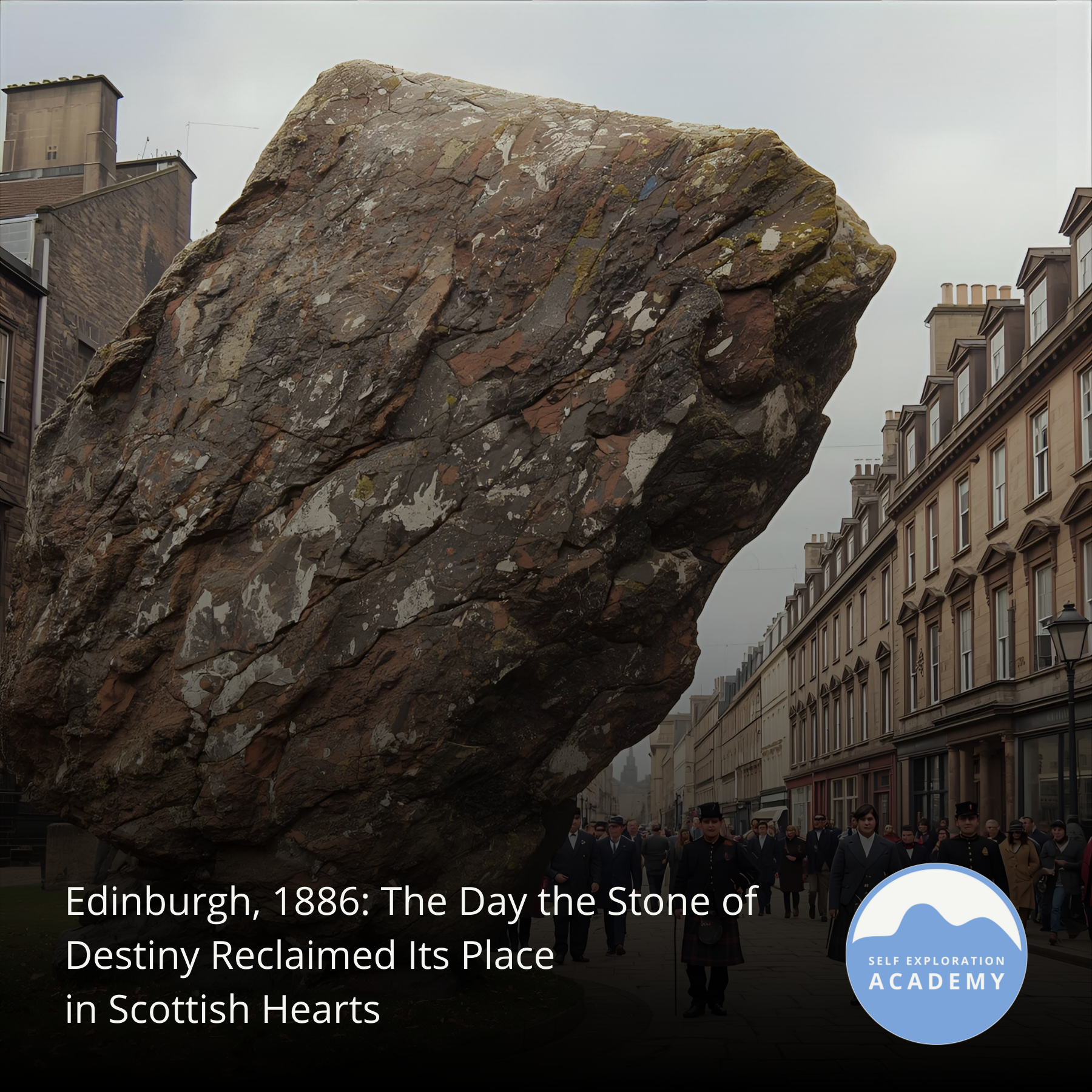
On September 04, 1886, Edinburgh played host to the Freemasons’ Grand National Tournament, an event that, while ostensibly a fraternal gathering, inadvertently became a pivotal moment in the popularization of the Stone of Destiny as a symbol of Scottish nationhood. The Stone, an ancient block of sandstone used for centuries in the coronation of Scottish monarchs, had been seized by Edward I of England in 1296 and transported to Westminster Abbey, where it remained beneath the English Coronation Chair for over 600 years. Despite its physical absence from Scotland, its symbolic weight endured in historical memory.
By the late 19th century, amidst a burgeoning sense of national identity across Europe, Scottish cultural institutions sought ways to affirm their distinct heritage within the United Kingdom. The Freemasons, a powerful and influential fraternal order with deep historical roots in Scotland, provided a grand public stage. During the tournament, a replica or significant symbolic representation of the Stone was prominently displayed, drawing considerable public attention. This wasn't a political protest, but a cultural spectacle that resonated deeply. What was at stake was the quiet assertion of a distinct Scottish identity, a reminder of a sovereign past, and a subtle reclaiming of a potent national emblem from the annals of history into contemporary public consciousness.
The Emotional Landscape
The atmosphere surrounding the tournament, particularly concerning the Stone, would have been charged with a complex mix of emotions. For many Scots, there was likely a profound sense of pride in their heritage, mingled with a poignant nostalgia for a lost sovereignty. The public display of the Stone’s likeness tapped into a collective memory, evoking feelings of shared identity and a quiet longing for greater recognition of their nation’s unique story. For the Freemasons themselves, it was a moment of immense collective pride, showcasing their organization’s role as custodians of Scottish tradition and their ability to command such a grand public event.
While overt political defiance was not the aim, the event fostered a subtle, yet powerful, sense of unity and cultural affirmation. Attendees likely felt a surge of connection to a grand historical narrative, a shared sense of belonging that transcended daily life. The emotions were less about anger or confusion, and more about a quiet, resilient pride and a collective recognition of a heritage that, despite centuries of union, remained distinct and deeply cherished.

A Lesson in Social Emotional Learning
This historical moment offers a compelling insight into Social Awareness, one of the five core competencies of Social Emotional Learning. The Freemasons, as a prominent social and cultural organization, demonstrated a profound understanding of the collective emotional and historical landscape of the Scottish people. Their decision to prominently feature the Stone of Destiny was not merely an internal organizational display; it was an astute act of social awareness. They recognized the deep-seated significance of the Stone as a symbol of national identity, sovereignty, and historical continuity for Scots.
By bringing this powerful emblem into a public spectacle, they tapped into a shared cultural consciousness, reinforcing a collective sense of "who we are" as a nation. This act served to amplify a dormant symbol, bringing it back into the popular imagination and strengthening a communal bond. The success of the event in popularizing the Stone lay in this very social awareness – the ability to perceive, understand, and respond effectively to the cultural and emotional cues of the wider community. The moment still speaks to us today about the enduring power of symbols and the role of collective social awareness in shaping and preserving national identity.
Latest Posts