
The Battle of Qianshi: How Lu Defied Qi in Ancient China
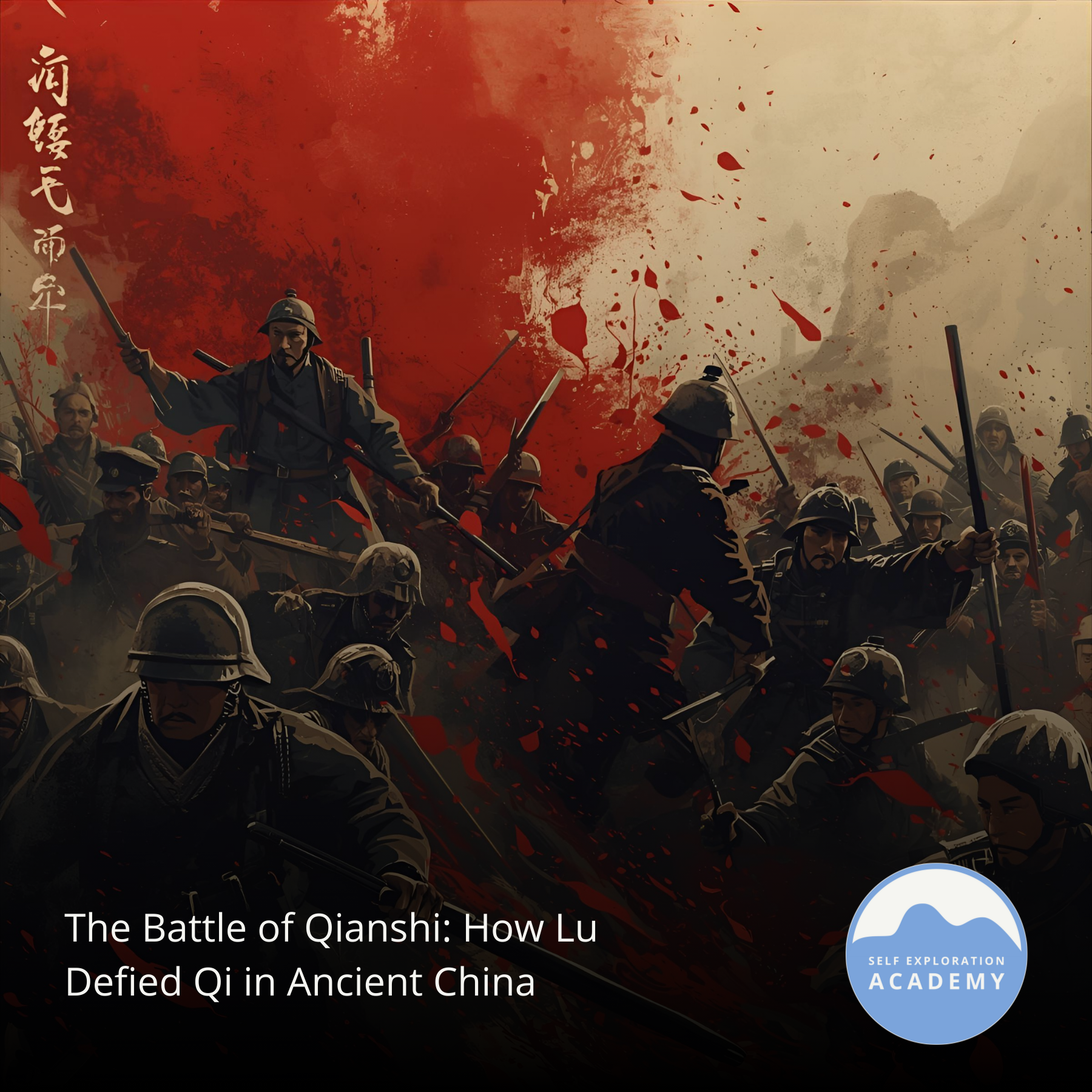
Explore the gripping tale of Duke Huan of Lu's improbable victory at the Battle of Qianshi, a pivotal moment that challenged the might of Qi in the tumultuous Spring and Autumn period.
In the tumultuous Spring and Autumn period of ancient China, states constantly vied for supremacy, their borders fluid and their alliances shifting like desert sands. Among these, the powerful State of Qi often cast a long shadow over its neighbors, including the State of Lu, known more for its cultural heritage and the teachings of Confucius than for its military might. Yet, history records moments when the underdog rises, defying expectations and reshaping the political landscape. One such pivotal event, though less widely chronicled than some, was the Battle of Qianshi on what would correspond to August 8th, where Duke Huan of Lu achieved a remarkable victory against invading forces, momentarily securing dominance in the State of Qi. This was not merely a skirmish; it was a desperate defense against an aggressive power, with the very sovereignty and future of Lu hanging in the balance.
The Moment Itself
The context of the Battle of Qianshi was one of perennial tension. Qi, a larger and often more militarily formidable state, frequently sought to assert its influence over Lu, demanding tribute or territorial concessions. On this particular occasion, a significant Qi force had crossed Lu's borders, intent on subjugating or severely weakening its neighbor. Duke Huan of Lu, a ruler known for his sagacity and a keen understanding of both military strategy and the diplomatic chess game of the era, faced a critical juncture. His forces, though brave, were often outmatched in sheer numbers or equipment by Qi's well-drilled armies. The Battle of Qianshi, fought on a specific terrain chosen perhaps for its tactical advantages, saw Lu's forces, under Duke Huan's direct or delegated command, employ a strategy that exploited the invading army's weaknesses or the terrain itself. What exactly transpired on that field remains shrouded in the mists of time, but the outcome was undeniable: the Qi invaders were decisively defeated, their advance halted, and their forces routed. This unexpected triumph not only repelled the immediate threat but, for a time, shifted the regional balance, giving Lu a rare moment of ascendancy over its powerful neighbor.
The Emotional Landscape
Before the battle, the atmosphere in Lu would have been thick with apprehension. The specter of Qi's armies on their land, the thought of their cities besieged, and the potential loss of independence surely fueled widespread fear among the populace and a grim determination among the soldiers. For Duke Huan, the burden of leadership must have been immense, balancing the desire to protect his people with the daunting odds. Yet, the victory at Qianshi would have unleashed an outpouring of relief and exultation. The triumph of the underdog, the successful defense of their homeland, would have been met with widespread jubilation and a renewed sense of national pride. On the Qi side, the defeat would have brought humiliation and anger, a blow to their prestige and a stark reminder that even the mighty could be challenged. This emotional aftermath, a blend of elation and despair, underscored the high stakes of warfare in an age where a single battle could redefine a state's destiny.
A Lesson in Social Emotional Learning
The Battle of Qianshi offers a profound lesson in Responsible Decision-Making. Duke Huan of Lu, facing a superior invading force, had to make critical choices under immense pressure. His decision to engage, rather than capitulate, and the specific strategic choices made on the battlefield, demonstrate a leader's ability to assess complex situations, weigh potential outcomes, and commit to a course of action that, against all odds, yielded success. This wasn't merely about courage, but about the calculated risk and intelligent application of resources against a perceived stronger opponent. The victory at Qianshi illustrates that responsible decision-making, even in dire circumstances, can lead to improbable triumphs when combined with astute planning and the unwavering resolve to execute. This historical moment reminds us that the ability to make sound, strategic decisions, even when the path is uncertain and the stakes are high, remains a cornerstone of effective leadership and resilience in any era.
Latest Posts












Discover SEA’s 95 Universal Core Competencies—a research-informed, human-centered framework for building the life skills that actually matter. Organized in nine domains, this guide explores what it means to be truly capable.