
Le Griffon's Maiden Voyage: Ambition, Mystery, and the Great Lakes
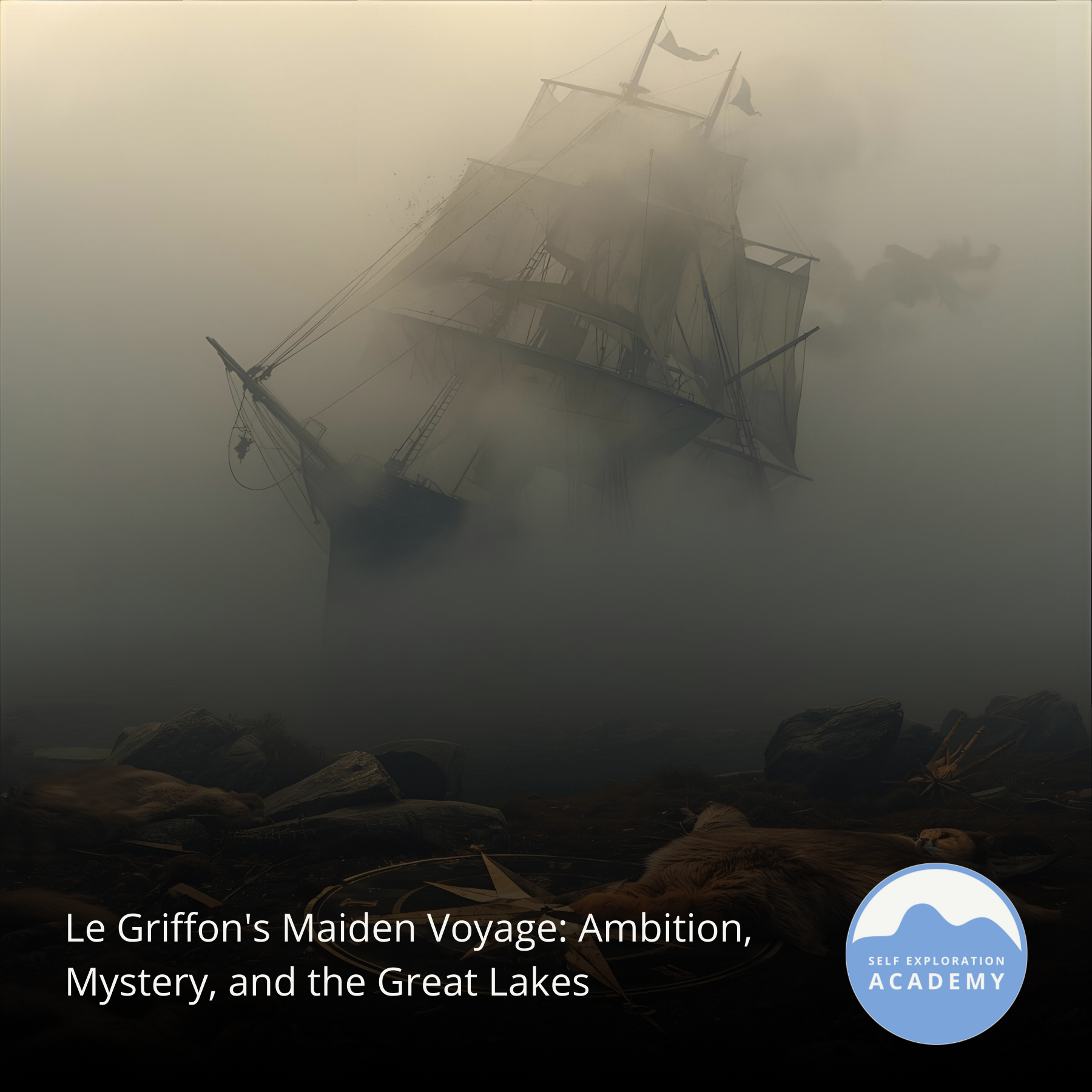
Explore the audacious journey of the first sailing ship on the upper Great Lakes, La Salle's ambitious vision, and its enduring mystery.
On August 7, 1679, a new chapter in North American exploration unfurled on the vast, freshwater seas of the Great Lakes. The ship Le Griffon, a brigantine built by the ambitious French explorer René-Robert Cavelier, Sieur de La Salle, hoisted its sails near Niagara Falls and embarked on its maiden voyage. This was no mere journey; Le Griffon was the first full-sized sailing vessel to navigate the upper Great Lakes, a monumental feat of engineering and perseverance in a wilderness still largely unknown to Europeans. La Salle's grand vision was at stake: to establish a lucrative fur trade route, bypassing the treacherous portages that plagued canoe travel, and to potentially discover the elusive Northwest Passage to Asia. The ship, armed with seven cannons and carrying a crew of around 30, represented a bold assertion of French power and technological prowess, a floating fortress designed to dominate the lucrative fur trade and secure France's claims in the heart of the continent.
The Moment Itself
The construction of Le Griffon itself was an arduous undertaking, built far from established settlements, deep within the territory of indigenous nations. Its launch marked a pivotal moment, symbolizing European determination to conquer the vast interior. As the ship cut through the waters of Lake Erie, then Lake Huron, and finally Lake Michigan, it was a testament to La Salle's audacious spirit. He envisioned Le Griffon as the cornerstone of a vast commercial empire, a vessel that would ferry immense quantities of furs from the interior to his trading posts, securing his fortune and France's dominance. The journey was not without peril; storms, shallow waters, and the ever-present threat of competition from English traders and wary indigenous groups loomed. Upon reaching Green Bay, Wisconsin, the ship was loaded with a valuable cargo of furs, intended to repay La Salle's considerable debts and fund further exploration. However, on September 18, 1679, Le Griffon set sail on its return journey and vanished without a trace, its fate remaining one of North America's enduring maritime mysteries.
The Emotional Landscape
For La Salle, the launch of Le Griffon must have been a moment of profound hope mixed with the gnawing anxiety of immense financial risk. His ambition was boundless, yet his resources were always stretched thin, making the success of this venture paramount. The crew, a mix of seasoned sailors and frontiersmen, likely felt a potent cocktail of awe at the sheer scale of the lakes, trepidation at the unknown, and the thrill of being part of such a pioneering endeavor. Their lives depended on the ship's integrity and La Salle's leadership. For the indigenous nations, who had navigated these waters for millennia in their canoes, the sight of Le Griffon must have been both astonishing and deeply unsettling. This massive, foreign vessel, bristling with weaponry, represented a new, powerful intrusion into their ancestral lands and traditional trade networks, signaling a shift in the balance of power and an uncertain future.
A Lesson in Social Emotional Learning
The saga of Le Griffon offers a compelling lesson in Responsible Decision-Making. La Salle's decision to construct and launch such a vessel was an act of extraordinary ambition, requiring a complex assessment of logistical challenges, financial solvency, political backing, and the inherent dangers of the wilderness. While the ship's disappearance remains unsolved, the very act of its creation and voyage highlights the immense risks involved in pioneering ventures. It underscores that even the most meticulously planned and technologically advanced endeavors can be subject to unpredictable forces, whether natural or human. La Salle's pursuit of his vision, while demonstrating remarkable self-management and perseverance, also serves as a stark reminder of the potential consequences when grand decisions are made in high-stakes environments, where the line between audacious success and catastrophic failure is often razor-thin. The moment still speaks to us today, reminding us of the human drive to explore and conquer, and the enduring power of both ambition and the untamed forces of nature.
Latest Posts












Discover SEA’s 95 Universal Core Competencies—a research-informed, human-centered framework for building the life skills that actually matter. Organized in nine domains, this guide explores what it means to be truly capable.