

WELCOME TO
The Academic Blog
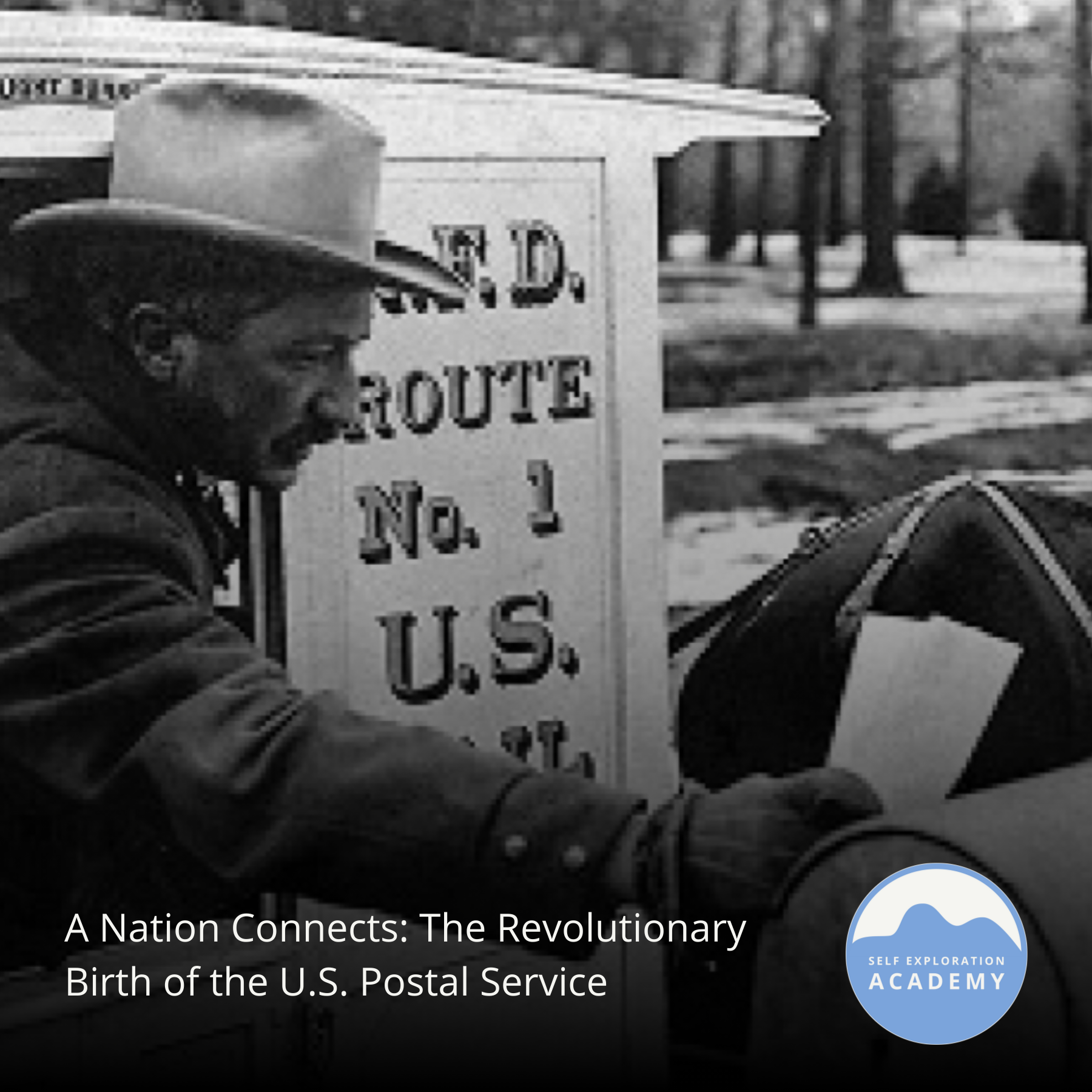
A Nation Connects: The Revolutionary Birth of the U.S. Postal Service
Discover how Benjamin Franklin’s strategic move to create the U.S. Postal Service in 1775 was crucial for American independence, connecting a nation in revolution.
Discover how Benjamin Franklin's strategic vision for communication became the backbone of America's fight for independence.
The Moment Itself
On July 26, 1775, amidst the burgeoning turmoil of the American Revolution, a seemingly administrative act unfolded that would prove pivotal to the nascent nation's survival: the Continental Congress, meeting in Philadelphia, established the U.S. Post Office Department and appointed Benjamin Franklin as its first Postmaster General. This was not a mere bureaucratic formality but a strategic maneuver born of urgent necessity. With British forces occupying Boston and the colonies teetering on the brink of full-scale war, a unified and reliable system of communication was paramount. The existing haphazard network, often reliant on private couriers or British postal routes, was inadequate and vulnerable to disruption. What was at stake was nothing less than the coherence of the revolutionary effort itself—the ability to coordinate military movements, disseminate crucial intelligence, and foster a shared sense of purpose among thirteen disparate colonies. Franklin, a man of profound intellect and extensive experience as a former colonial deputy postmaster general under British rule, possessed the unique understanding and respect necessary to forge this vital link. His appointment signaled the Congress’s intent to build independent institutions capable of sustaining a protracted struggle for freedom.
The Emotional Landscape
The emotional landscape of 1775 was a volatile mix of hope, desperation, and simmering anger. For patriots, the establishment of an American-controlled postal system would have been a beacon of hope, a tangible sign of self-governance taking root amidst chaos. The riders, often risking their lives traversing dangerous routes, became symbols of resilience, embodying the unwavering commitment to a cause larger than themselves. There would have been a collective sigh of relief among leaders receiving critical dispatches, a sense of unity forged through the exchange of letters, pamphlets, and news. Yet, beneath this nascent optimism lay the pervasive fear of discovery, betrayal, and the harsh realities of war. Every letter carried potential danger, every message a risk. The ability to communicate securely, to share both successes and sorrows, was a vital emotional lifeline for a people bound by a shared destiny yet physically separated by vast distances.
A Lesson in Social Emotional Learning
The founding of the U.S. Postal Service provides a profound lesson in Responsible Decision-Making. Faced with existential threats and an urgent need for cohesion, the Continental Congress did not merely react; it deliberately assessed the critical requirement for communication infrastructure and took decisive action to create it. This was a collective exercise in responsible decision-making, where leaders recognized a fundamental need, weighed the strategic implications of unreliable communication, and proactively designed a solution. They chose Franklin, not merely for his administrative acumen, but for his deep understanding of the colonies’ needs and his proven track record. The decision reflected a clear-eyed evaluation of resources, risks, and desired outcomes, demonstrating how foresight and proactive planning, even under immense pressure, can lay the foundation for enduring success. This moment speaks to us today about the enduring power of effective communication and the vital role of sound, collective decision-making in navigating crises and building resilient societies.
Latest Posts












From Pioneer to Founder: Benjamin Franklin's Example for Social Emotional Learning
The story of Dr. Christiaan Barnard, the pioneer of heart transplantation, provides compelling evidence for the importance of social emotional learning (SEL) in online programs. Let's delve into how Barnard's groundbreaking work aligns with SEL principles and explore the profound impact SEL can have on online learners.
How one of the Founding Fathers championed Social Emotional Learning and made a positive impact on the world.
Benjamin Franklin was one of the Founding Fathers of the United States and a polymath who made significant contributions to science and education in colonial America. Here are some of his specific achievements:
Electricity: Franklin is perhaps most famous for his groundbreaking experiments with electricity, including his famous kite experiment that helped prove lightning is electricity. He also invented the lightning rod as a way to protect buildings from being struck by lightning.
Inventions: Franklin was a prolific inventor, developing practical items that improved everyday life. Some of his most notable inventions include bifocals, which allowed people with farsightedness and nearsightedness to see clearly at both distances, and the Franklin stove, a more efficient heating system for homes.
Science: Franklin's curiosity extended beyond electricity. He studied meteorology and mapped the Gulf Stream current, a major ocean current that has a significant impact on weather patterns. He also founded the American Philosophical Society, a learned society that promoted scientific inquiry and collaboration among scholars.
Education: Believing that education was essential for a thriving society, Franklin established the Academy of Philadelphia, a precursor to the University of Pennsylvania. The Academy provided a more practical education than traditional colleges, focusing on subjects like science and engineering alongside classics and philosophy.
Franklin's work in science and education helped to lay the foundation for a more informed and innovative society in colonial America. His legacy continues to inspire scientific exploration and educational progress today.
Featured Courses


The Case for Social Emotional Learning
The story of Benjamin Franklin actually connects to social-emotional learning (SEL) in online programs in a couple of interesting ways, especially considering a program titled "Identity, Expression and Desire" at the Self Exploration Academy. Here's how:
Self-Awareness: Franklin's story highlights the importance of self-awareness, a key component of SEL. He identified his own shortcomings in social interactions and took the initiative to improve himself through his "Junto" project (a club focused on self-improvement). An online program like "Identity, Expression and Desire" could help students explore their own strengths, weaknesses, values, and goals, which is crucial for navigating the complexities of online and offline interactions.
Social Skills: While Franklin's scientific achievements are well-known, his success also hinged on his strong social skills. He developed his ability to persuade others, collaborate effectively, and navigate interpersonal conflicts. "Identity, Expression and Desire" could provide opportunities for students to develop these skills through online discussions, role-playing activities, or even simulations of online interactions.
Growth Mindset: Franklin's lifelong pursuit of learning and self-improvement exemplifies a growth mindset, another core principle of SEL. An online program like this could encourage students to view challenges as opportunities to learn and grow, which is particularly important in online environments where setbacks can be discouraging.
Identity Exploration: The program title "Identity, Expression and Desire" directly addresses core aspects of social-emotional development. By providing a safe space for students to explore these aspects of themselves online, the program could foster self-acceptance and positive self-esteem.
Overall, Benjamin Franklin's story demonstrates that intellectual pursuits go hand-in-hand with social-emotional intelligence. While online programs can deliver strong academic content, incorporating SEL aspects like those potentially covered in "Identity, Expression and Desire" can equip students with the skills they need to thrive in online learning environments and beyond.
Related Posts


Supreme Court Victory: How Women Lawyers Cracked the Code
Before 1879, women couldn't argue before the Supreme Court. Discover how this changed legal education for women forever.
Did Women Always Have the Right to Argue Supreme Court Cases?

The 1879 bill allowing women to argue before the Supreme Court was a significant step forward in both social culture and legal education for women. Here's how:
Social Culture
Challenged gender norms: This legislation directly confronted the idea that law was a man's profession. By demonstrating that women were just as capable as men in the courtroom, it chipped away at these ingrained societal beliefs.
Inspired future generations: Seeing women like Belva Lockwood argue before the highest court in the land undoubtedly inspired other women to pursue legal careers. It showed them that these opportunities were within reach.
Paved the way for further equality: The success of this bill demonstrated the growing power of the women's rights movement and helped pave the way for future legislation promoting gender equality in other areas of life.
Legal Education
Increased demand: With the possibility of arguing before the Supreme Court on the table, more women aspired to enter the legal profession. This naturally led to a rise in demand for legal education for women.
Law school changes: Law schools, recognizing this shift, likely began admitting more female students and potentially even developing programs specifically tailored to their needs and interests.
Precedent for equality: This legislation helped establish a legal precedent for women's equal participation in the legal profession. It showed that women were not only qualified to be lawyers but also deserved the same rights and opportunities as their male counterparts.
Overall, the 1879 bill was a turning point that chipped away at gender barriers in both the legal profession and society as a whole. It paved the way for a future where women would be seen and respected as equals in the courtroom.
Featured Courses
The Case for Social Emotional Learning
The story of women arguing before the Supreme Court connects to social emotional learning (SEL) in online programs in a couple of ways:
Breaking down stereotypes: Similar to how the law profession was once seen as a male domain, online SEL programs like "Identity, Expression and Desire" can address stereotypes and biases students might hold about themselves or others. By exploring identity and expression, these programs can help students develop a strong sense of self-worth and challenge limiting beliefs.
Empowerment and advocacy: The story highlights how women advocated for their right to be in the courtroom. SEL programs can equip students with the skills to advocate for themselves and others. "Identity, Expression and Desire" could focus on communication skills, conflict resolution, and empathy, all of which are essential for effective advocacy.
Here's a specific connection to the program name:
Identity: Legal education for women helped them establish their identity within the legal profession. An "Identity, Expression and Desire" program can help students explore their own identities and build confidence in who they are.
Expression: The ability to argue a case effectively requires strong communication skills. This program can help students develop the skills to express themselves clearly and confidently.
Desire: The desire for equality fueled the fight for women to be lawyers. This program can help students explore their own desires and goals and develop the emotional intelligence to pursue them.
In essence, both the historical event and the online program focus on empowering individuals to find their voice and place in the world. They encourage self-awareness, challenge limitations, and equip individuals with the skills to advocate for themselves and others.
It's important to note that some might debate the effectiveness of teaching SEL skills online. However, the story demonstrates the ongoing need for these skills, regardless of the learning environment.
Related Posts
Discover SEA’s 95 Universal Core Competencies—a research-informed, human-centered framework for building the life skills that actually matter. Organized in nine domains, this guide explores what it means to be truly capable.