

WELCOME TO
The Academic Blog

August 14, 1945: When WWII Ended and Joy Erupted
On August 14, 1945, the world erupted as Japan surrendered, ending WWII. Explore the profound emotions and critical decisions that defined V-J Day, a moment of global relief and reflection.
Dive into the raw emotions and critical decisions that defined August 14, 1945, marking the end of the deadliest war in history.
On August 14, 1945, the world held its breath, then collectively exhaled in a wave of unparalleled relief and jubilation. After nearly six years of unimaginable global conflict, the news broke: Japan had surrendered, bringing World War II to an emphatic, if somber, close. This wasn't merely an announcement; it was the culmination of a brutal war that had claimed tens of millions of lives, reshaped continents, and pushed humanity to its darkest limits.
The Moment Itself
The preceding days had been a terrifying crescendo. On August 6, the United States dropped an atomic bomb on Hiroshima, followed by another on Nagasaki on August 9. Simultaneously, the Soviet Union launched a swift invasion of Japanese-occupied Manchuria. Japan, already reeling from relentless conventional bombing and a suffocating naval blockade, faced utter annihilation if it continued to resist. Emperor Hirohito, a figure of divine authority, made the unprecedented decision to address his nation via radio, announcing Japan's acceptance of the Potsdam Declaration's terms, effectively ending the war. His voice, rarely heard by the common people, delivered the shocking news of surrender, urging his subjects to "endure the unendurable." For the Allied nations, President Harry S. Truman's announcement confirmed what they had desperately awaited. What was at stake was nothing less than the future of civilization, the lives of millions of soldiers poised for a costly invasion of mainland Japan, and the very fabric of human existence in the shadow of atomic power.
The Emotional Landscape
The immediate aftermath was a kaleidoscope of raw human emotion. In Allied cities worldwide, spontaneous celebrations erupted. Strangers embraced, danced in the streets, and wept openly. Iconic images, like the sailor kissing a nurse in Times Square, captured the sheer, unbridled euphoria. It was a release of years of pent-up fear, anxiety, and grief. Families envisioned loved ones returning home; rationing and wartime austerity seemed destined for the past. Yet, beneath the surface of joy, a profound sorrow lingered. The celebrations were tinged with the memory of the fallen, the wounded, and the irreparable damage wrought by the war. For the Japanese, the emotions were far more complex: a mix of profound shame at defeat, relief that the Emperor and the nation had been spared total destruction, and a daunting uncertainty about their future under occupation. The collective exhaustion was palpable, a deep weariness after years of relentless struggle.
A Lesson in Social Emotional Learning
V-J Day offers a stark lesson in Responsible Decision-Making and Social Awareness. The decisions leading to the war's end were fraught with immense ethical and practical dilemmas. President Truman's choice to deploy atomic weapons, while controversial, was presented as a means to prevent a far bloodier invasion, demonstrating a leader's agonizing responsibility to weigh catastrophic options for the perceived greater good. Similarly, Emperor Hirohito's decision to surrender, defying elements of his own military, was a responsible act aimed at preserving his nation from further devastation, prioritizing the survival of his people over a futile, prideful continuation of conflict.
The global outpouring of celebration also highlighted a profound Social Awareness. Despite national differences and wartime animosities, the universal human desire for peace and an end to suffering transcended borders. The collective sigh of relief demonstrated a shared understanding of the common burden that had been lifted, fostering a temporary, albeit fragile, sense of global unity in the face of shared trauma.
This pivotal moment still speaks to us today, reminding us of the immense human cost of conflict, the profound weight of leadership decisions in times of crisis, and the enduring human capacity for both immense destruction and profound, collective relief. It underscores the ongoing need for responsible global leadership and a deep social awareness of our interconnectedness in preventing future catastrophes.
Latest Posts












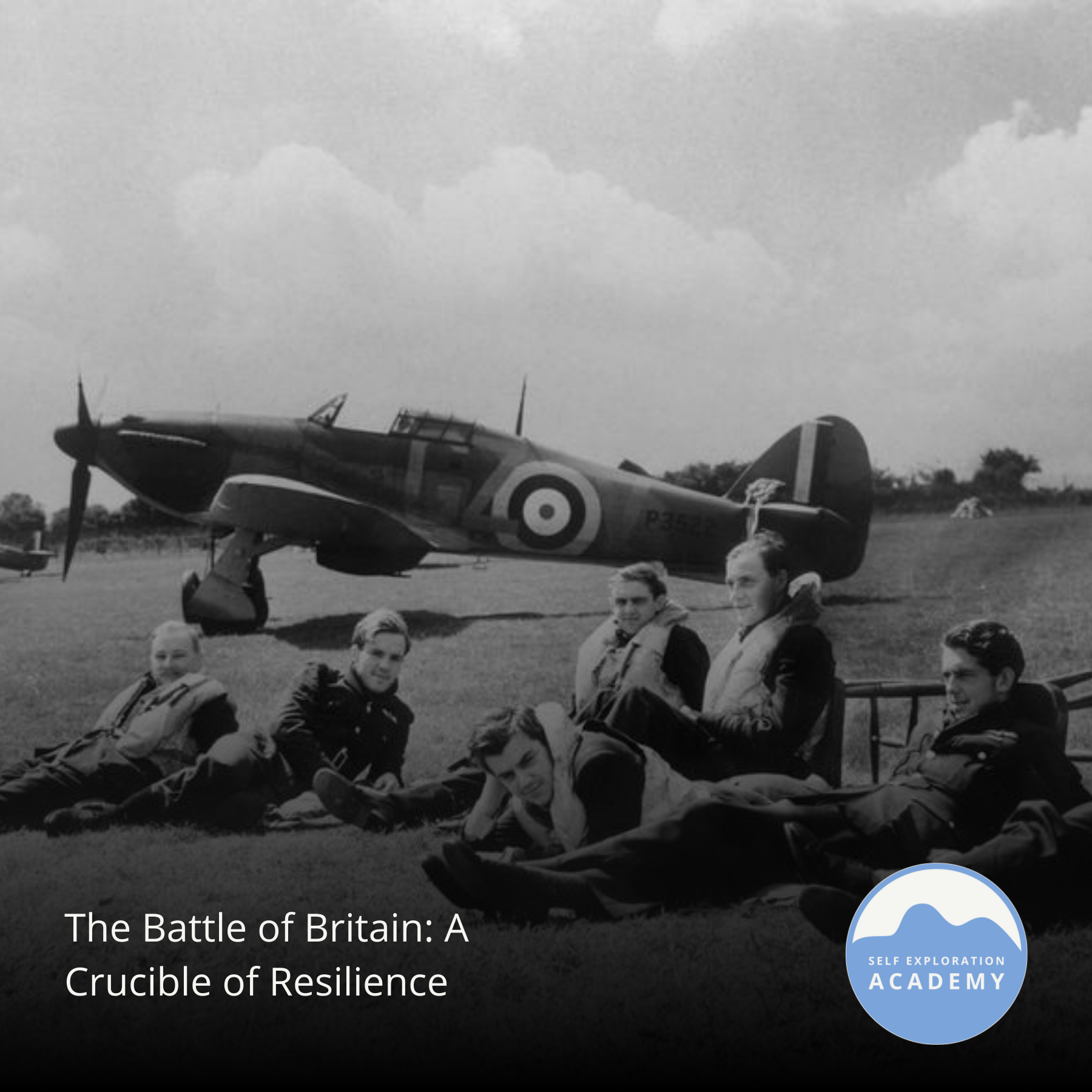
The Battle of Britain: A Crucible of Resilience
Discover the gripping story of the Battle of Britain, launched July 10, 1940. Explore the fear, defiance, and resilience that defined a nation's stand, and uncover its powerful lessons in self-management for today.
Exploring the fear, courage, and unwavering spirit that defined Britain's stand against Nazi Germany in the pivotal air campaign of 1940.
The Moment Itself
On July 10, 1940, the skies over the English Channel became the opening stage for what would be one of World War II's most critical aerial campaigns: the Battle of Britain. Following the fall of France and the evacuation at Dunkirk, Britain stood alone against Nazi Germany, which now controlled most of Western Europe. Adolf Hitler's next objective was Operation Sea Lion, the planned invasion of Britain, but first, the Luftwaffe had to achieve air superiority over the Royal Air Force (RAF). This initial phase, known as "Kanalkampf" (Channel Battle), saw the Luftwaffe begin targeting British shipping in the Channel and coastal convoys.
At stake was nothing less than the survival of democratic Britain and the potential for a German victory that could reshape the global order. Key figures included Air Chief Marshal Hugh Dowding, head of RAF Fighter Command, whose strategic brilliance in conserving his limited fighter force and implementing the integrated air defense system (combining radar, ground observers, and command centers) proved pivotal. On the German side, Hermann Göring, commander-in-chief of the Luftwaffe, underestimated British resolve and the effectiveness of their defenses. The battle was a test of technology, strategy, and sheer human courage, with Britain's Spitfire and Hurricane fighters facing off against German Messerschmitts, Dorniers, and Heinkels. The initial days established the brutal rhythm of aerial combat, where every sortie was a desperate gamble.
The Emotional Landscape
The emotional landscape of Britain during the Battle of Britain was a complex tapestry of fear, defiance, and an almost stoic resolve. For the civilian population, particularly those in southern England and London, the daily drone of approaching bombers and the wail of air raid sirens became a terrifying soundtrack to life. Nights were spent in shelters, praying for dawn. Yet, fear was often overshadowed by a fierce determination not to yield. The collective memory of Dunkirk had forged a powerful sense of unity and shared purpose.
For the RAF pilots, many of them barely out of their teens, the emotions were more visceral: a potent mix of exhilaration in combat, profound grief for fallen comrades, and an exhausting, perpetual readiness for the next scramble. They returned from sorties often covered in sweat and grime, adrenaline coursing through them, only to witness the empty chairs of friends who wouldn't return. Despite the immense pressure and the grim odds, there was also a deep sense of camaraderie and an unshakeable belief in their mission. The famous phrase "never was owed by so many to so few" perfectly captured the public's profound gratitude and the pilots' immense burden.

A Lesson in Social Emotional Learning
The Battle of Britain offers a profound lesson in Self-Management, specifically the competency of resilience. The RAF, outnumbered and constantly under pressure, displayed extraordinary collective resilience. Their ability to persist in the face of overwhelming adversity, to recover from losses, and to maintain morale despite constant threat, was foundational to their success. Dowding's strategic decision-making, which prioritized the preservation of fighter aircraft and pilots, demonstrated a form of organizational self-management, understanding limitations while maximizing strengths.
On an individual level, the pilots exhibited immense emotional regulation and perseverance. They processed fear and grief, yet continued to fly, driven by duty and an understanding of the stakes. This wasn't merely about physical courage but about the mental fortitude to repeatedly face mortal danger. The British public, too, showcased resilience in their daily lives, adapting to bombings, rationing, and uncertainty, yet refusing to succumb to panic or despair. This historical moment speaks to us today by reminding us that true strength often lies not in avoiding challenges, but in the unwavering commitment to endure, adapt, and ultimately, overcome them.
Latest Posts
Discover SEA’s 95 Universal Core Competencies—a research-informed, human-centered framework for building the life skills that actually matter. Organized in nine domains, this guide explores what it means to be truly capable.