

WELCOME TO
The Academic Blog

The Holy Alliance: Europe's Post-Napoleonic Quest for Enduring Order
Unpack the Holy Alliance of 1814: a pivotal post-Napoleonic pact by European monarchs. Discover its historical context, the emotions of the era, and a surprising lesson in social awareness.
Explore the pivotal 1814 pact between Russia, Prussia, and Austria, and its surprising lessons in social awareness for today.
The Moment Itself
On September 26, 1814, in the immediate aftermath of Napoleon’s tumultuous reign, a pivotal declaration emerged from the heart of Europe: the Holy Alliance. Conceived primarily by the deeply religious Emperor Alexander I of Russia, and joined by Emperor Francis I of Austria and King Frederick William III of Prussia, this pact aimed to usher in an era of peace and Christian brotherhood among European monarchs. It was a grand, almost utopian vision, distinct from the more pragmatic Quadruple Alliance (which included Great Britain and focused on military containment of France). At its core, the Holy Alliance sought to bind the signatory powers to govern their respective nations according to the principles of Christianity – justice, charity, and peace.
What was truly at stake was the very future of European order. Decades of revolutionary fervor and Napoleonic wars had shattered old certainties, introducing radical ideas of popular sovereignty and nationalism. The monarchs, having just defeated the revolutionary tide embodied by Napoleon, were determined to prevent its resurgence. The Holy Alliance, while couched in spiritual terms, was a thinly veiled commitment to mutual support against any internal or external threats to their absolute rule. It represented a conservative reaction, a bulwark against liberalism and self-determination, and a symbolic assertion of divine right over popular will. For Alexander I, it was a sincere, if naive, attempt to moralize international relations; for others like Austria’s Metternich, it was a useful, if somewhat mystical, tool for maintaining the status quo.
The Emotional Landscape
The emotional landscape of post-Napoleonic Europe was a complex tapestry woven with threads of profound relief, lingering fear, and burgeoning hope. For the monarchs and their courts, the defeat of Napoleon brought immense relief from existential threat, yet it was quickly replaced by an underlying dread of the revolutionary ideas he had unwittingly spread. There was a palpable desire for restoration and order, a yearning to turn back the clock to a time before the chaos. The Holy Alliance, in this context, offered a psychological anchor, a promise of stability sanctioned by divine authority.
However, for the broader populace, particularly the burgeoning middle classes and intellectuals, emotions were far more conflicted. Years of war had left widespread exhaustion and grief, fostering a deep yearning for peace. Yet, the very ideas of liberty, equality, and national identity, ignited by the French Revolution and carried across Europe by Napoleon’s armies, had taken root. For those who embraced these ideals, the Holy Alliance represented a crushing blow, a cynical pact to suppress their aspirations for constitutional government and self-determination. Their hope for a new, more just Europe was met with the cold reality of monarchical solidarity, breeding resentment, fear of repression, and a quiet determination to continue the struggle for change.

A Lesson in Social Emotional Learning
The Holy Alliance offers a poignant lesson in Social Awareness. While the signatory monarchs demonstrated a keen awareness of their own shared interests, fears, and the need for collective security among themselves, they largely failed to grasp the evolving social and emotional landscape of their subjects. Their vision of peace was predicated on a top-down imposition of order, rather than an understanding of the burgeoning liberal and nationalist sentiments that were sweeping across Europe. They were acutely aware of the threats to their thrones but remarkably unaware, or dismissive, of the legitimate aspirations for greater freedom and participation that resonated with millions.
This deficit in social awareness meant that their "responsible decision-making" was ultimately short-sighted. By prioritizing suppression over adaptation, the Holy Alliance inadvertently fueled the very revolutionary movements it sought to extinguish, leading to future unrest in 1830 and 1848. The moment speaks to us today by highlighting the enduring tension between stability and progress, reminding us that true and lasting peace often requires not just the absence of conflict, but also a deep empathy for, and understanding of, the diverse needs and aspirations of all people within a society.
Latest Posts












The Enigma of Patricia Hearst: Captive, Convert, Criminal?
Dive into the bewildering Patty Hearst saga. From heiress to revolutionary, explore the emotional landscape and profound lessons on identity and decision-making in this captivating historical true crime story.
A deep dive into the 1973 capture of Patty Hearst and the unprecedented saga that captivated America.
The Moment Itself
On September 19, 1973, San Francisco pulsed with an undercurrent of public fascination and relief as federal agents finally apprehended Patricia Campbell Hearst. The capture of the 19-year-old heiress, more than a year after her sensational kidnapping, marked a pivotal moment in a saga that had gripped the nation. Kidnapped from her Berkeley apartment on February 4, 1974, by the Symbionese Liberation Army (SLA), a small, radical left-wing group, Hearst’s ordeal quickly morphed into an unprecedented psychological drama. What began as a desperate search for a victim escalated into widespread bewilderment when, weeks into her captivity, she announced her conversion to the SLA’s cause, adopting the nom de guerre "Tania," and was subsequently seen wielding an M1 carbine during a bank robbery. At stake was not only Hearst’s life and freedom but also the public’s understanding of identity, coercion, and the very nature of rebellion. Her capture, alongside fellow SLA member Wendy Yoshimura, brought a temporary close to a bizarre chapter that blurred the lines between victim and perpetrator, revolutionary and criminal.
The Emotional Landscape
The emotional landscape surrounding Patty Hearst's transformation and capture was a turbulent sea of conflicting feelings. For her wealthy and influential family, the initial terror of her abduction slowly gave way to profound confusion and heartbreak as their daughter appeared to embrace her captors' ideology. Their relief at her eventual capture was undoubtedly immense, yet it was tempered by the daunting legal battle and psychological recovery that lay ahead. The American public, meanwhile, oscillated between sympathy for a kidnapped heiress and outrage at her apparent complicity in violent crimes. There was fear of the SLA's radicalism, fascination with the psychological phenomenon later termed "Stockholm Syndrome," and a deep-seated desire for justice. For Patty herself, the emotional reality must have been a maelstrom of terror, indoctrination, survival instinct, and perhaps, a distorted sense of belonging or purpose forged under unimaginable duress. Her public persona, defiant and revolutionary, likely masked a profound internal struggle for identity and agency.
A Lesson in Social Emotional Learning
The saga of Patty Hearst offers a complex, albeit extreme, lens through which to examine Responsible Decision-Making and Self-Awareness. Her journey from captive to apparent combatant challenges the conventional understanding of choice. Under intense psychological pressure and isolation, her "decisions" to join the SLA and participate in their actions raise crucial questions about agency when one's environment is entirely controlled and one's identity systematically dismantled. It highlights how external forces can severely compromise an individual's capacity for sound judgment and ethical reasoning, demonstrating a failure of responsible decision-making not necessarily by choice, but by circumstance. Furthermore, her case speaks to the profound impact on Self-Awareness when one's core identity is eroded. The public struggled to reconcile the "Patty" they knew with "Tania," reflecting the fragmentation of her own self-perception under duress. The incident forces us to consider the fragility of self and the immense resilience required to reclaim one's identity after such profound trauma. This moment still speaks to us today, reminding us of the insidious power of manipulation, the complexities of victimhood, and the enduring human struggle to maintain autonomy and self in the face of overwhelming external pressures.
Latest Posts

Bosworth Field, 1485: The End of an Era, The Dawn of Another
Unpack the dramatic Battle of Bosworth Field (1485), where Richard III met his end and the Tudor dynasty began. Discover historical context, emotional landscapes, and powerful lessons in responsible decision-making.
Beyond the battlefield: Delving into the human emotions, strategic decisions, and lasting lessons from the turning point of the Wars of the Roses.
The Moment Itself
On August 22, 1485, a muddy Leicestershire field became the crucible where the fate of England was forged, bringing to a bloody close the decades-long Wars of the Roses. This protracted dynastic struggle had pitted the Houses of Lancaster and York against each other in a brutal contest for the English throne, leaving a trail of shattered families, shifting allegiances, and a war-weary populace. At one end stood Richard III, the reigning Plantagenet king, a monarch whose claim was shadowed by accusations of usurping the throne and the mysterious disappearance of his young nephews, the "Princes in the Tower." Despite commanding a larger initial force, Richard faced a crucial vulnerability: the wavering loyalty of key figures, most notably the powerful Stanley brothers, Lord Thomas Stanley and Sir William Stanley. Lord Stanley, in a complex twist of fate, was Richard’s stepfather, yet his stepson, Henry Tudor, was the Lancastrian claimant poised to challenge the king. Henry, having spent years in exile, returned to England with a modest force, banking on the discontent with Richard’s rule and the promise of a new, stable order. The battle itself was a tense affair, with the Stanleys holding their substantial forces in reserve, observing the unfolding chaos. Richard, recognizing the critical moment, launched a desperate, audacious charge directly at Henry Tudor, aiming to end the conflict with a single, decisive blow. It was at this precise juncture that the Stanleys committed their forces, not to Richard, but to Henry, enveloping the king's charge and sealing his fate. Richard III, fighting valiantly, was cut down, the last English king to die in battle, his crown famously found in a hawthorn bush. His defeat marked the end of the Plantagenet dynasty and ushered in the Tudor era, fundamentally reshaping English history.
The Emotional Landscape
The emotional texture of Bosworth Field was a complex tapestry woven from fear, ambition, and the profound exhaustion of a nation. For the soldiers on both sides, fear was a constant companion—fear of death, fear of choosing the losing side and facing brutal retribution, and the deep-seated dread of perpetual civil strife. Yet, amidst this, there was also a desperate hope: for Richard's loyalists, the hope of preserving the established order and their king's reign; for Henry's followers, the fervent hope for a new beginning, an end to the bloodshed, and the promise of stability under a new dynasty. The uncertainty, particularly surrounding the Stanleys' allegiance, must have gnawed at the hearts of many, creating a palpable tension that transcended the battlefield. Richard’s final, desperate charge was an act born of immense pressure and perhaps a touch of fatalism—a king choosing to risk all rather than surrender. For the common people, the news of the battle's outcome would have brought a mix of relief and trepidation; relief that the long war was finally over, but trepidation about what the new reign would bring. Grief, too, was an unspoken undercurrent, for the countless lives lost and the families torn apart by decades of internecine conflict.
A Lesson in Social Emotional Learning
The Battle of Bosworth Field offers a stark lesson in Responsible Decision-Making, particularly under extreme pressure and with high stakes. Richard III's final, courageous charge, while demonstrating immense self-management in the face of imminent defeat, was ultimately a catastrophic failure of responsible decision-making. His gamble to personally eliminate Henry Tudor, rather than adapt his strategy or consolidate his wavering forces, proved fatal. It was a decision driven by desperation and perhaps a rigid adherence to a chivalric ideal, but it ignored the evolving tactical realities and the precariousness of his alliances. Conversely, the Stanley brothers’ calculated delay and eventual intervention exemplify a different, more pragmatic form of responsible decision-making. Their choice was not one of loyalty to a king or a cause, but a cold, rational assessment of which side offered the best prospects for their own survival, power, and the future of their house. They weighed the risks and rewards, observing the shifting tides of battle before committing, ensuring their own strategic advantage. This highlights how "responsible" decisions can be driven by vastly different motivations—from personal courage and desperation to shrewd, self-interested calculation. The moment still speaks to us today, reminding us that the choices we make, particularly when the stakes are highest, can irrevocably alter the course of our lives and, indeed, history itself.
Latest Posts
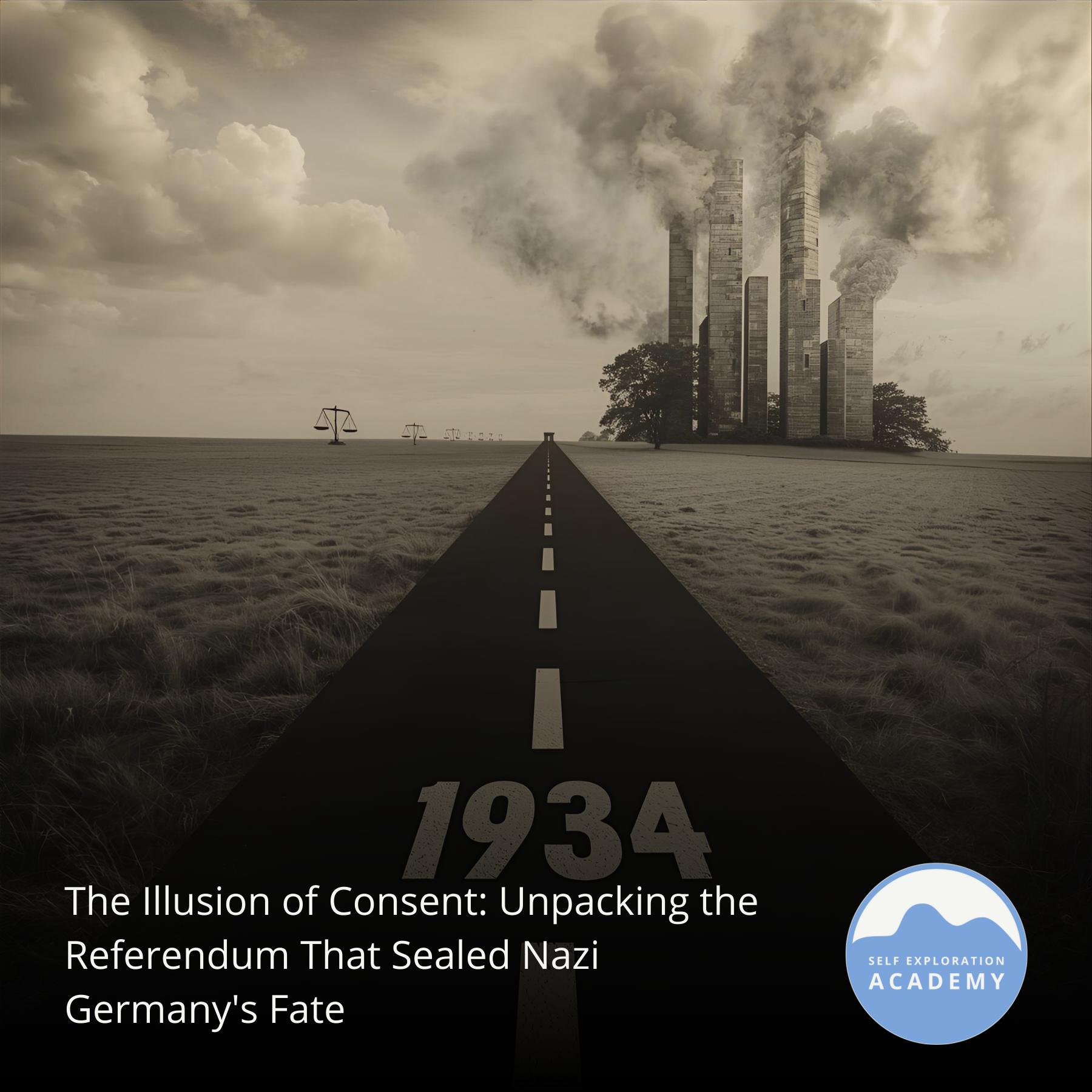
The Illusion of Consent: Unpacking the Referendum That Sealed Nazi Germany's Fate
Explore the 1934 German referendum where Hitler solidified power. This deep dive uncovers the emotional landscape of the time and offers a crucial lesson in responsible decision-making, reflecting on history's enduring impact.
Exploring the pivotal moment when a nation's fate was sealed through a coerced referendum, examining the emotional realities and enduring lessons in social emotional learning.
The Moment Itself
On August 19, 1934, the German populace was called to the polls for a referendum that, on the surface, sought approval for a seemingly administrative change: the merger of the offices of Reich President and Chancellor. Beneath this veneer, however, lay the final, decisive step in Adolf Hitler’s consolidation of absolute power. Just seventeen days prior, on August 2, the revered President Paul von Hindenburg had died. Within hours of his passing, Hitler, already Chancellor since January 1933 and armed with the Enabling Act that had effectively nullified parliamentary opposition, unilaterally declared the two offices combined, assuming the title of "Führer and Reich Chancellor." The referendum was not a democratic exercise but a post-facto legitimization, orchestrated to provide a veneer of popular consent for a dictatorship already firmly in place. What was at stake was the last formal vestige of the Weimar Republic's democratic framework and, with it, the future of Germany and Europe. The "choice" presented to the German people was less about political preference and more about public compliance in an environment where dissent was met with brutal efficiency, exemplified by the recent "Night of the Long Knives" that purged Hitler's internal rivals.
The Emotional Landscape
The emotional landscape surrounding the referendum was a complex tapestry woven from fear, manufactured enthusiasm, and suppressed despair. For many, the pervasive presence of the SA and SS, the omnipresent propaganda, and the chilling knowledge of concentration camps and secret police (Gestapo) instilled a profound sense of terror. Voting "no" or abstaining was an act of immense courage, or perceived foolishness, with potentially dire consequences. Public polling places and the social pressure to conform meant that even private dissent was dangerous. Yet, for others, there was a genuine, if misguided, hope. Years of economic depression, political instability, and national humiliation had left many Germans yearning for order and strength. Hitler’s promises of national revival resonated with these desires, and for some, the referendum represented a definitive step towards stability and a return to perceived greatness. This manufactured enthusiasm, amplified by rallies and media control, created a powerful illusion of national unity, drowning out the quiet dread and resignation of those who understood the true implications of absolute power.
A Lesson in Social Emotional Learning
The August 1934 referendum offers a stark, albeit tragic, lesson in Responsible Decision-Making, particularly when external pressures distort the capacity for ethical choice. At the individual level, citizens faced a profound dilemma: to vote "yes" out of fear, genuine belief, or a desire for self-preservation, or to resist at immense personal risk. The outcome reflects a collective failure to make responsible decisions based on critical thinking and long-term societal well-being, largely due to the systematic suppression of information, the manipulation of fear, and the erosion of civic courage. On a broader societal scale, the event underscores how a nation's leadership, through a series of irresponsible decisions (such as the Enabling Act and the subsequent elimination of democratic checks and balances), can dismantle the very mechanisms that enable responsible governance. The referendum was not a decision made by the people, but rather a decision imposed upon them, highlighting the catastrophic consequences when a society loses its ability to critically assess information, resist coercion, and collectively uphold democratic principles. It serves as a powerful reminder of the enduring importance of cultivating critical thinking, empathy, and civic courage to safeguard against the erosion of freedom and the rise of authoritarianism.
Latest Posts

1947: India's Independence, Partition's Pain, and the Price of Decisions
Explore India's 1947 independence: the jubilation of freedom juxtaposed with the tragedy of Partition. Discover the profound emotional landscape and key lessons in responsible decision-making.
Exploring the jubilation of freedom, the tragedy of division, and the enduring insights into responsible decision-making that shaped a subcontinent.
The Moment Itself
On August 15, 1947, at the stroke of midnight, India awoke to freedom after nearly two centuries of British colonial rule. The air in Delhi crackled with anticipation and jubilation as Jawaharlal Nehru, India's first Prime Minister, delivered his iconic "Tryst with Destiny" speech. This moment marked a monumental milestone in the global decolonization movement, signaling the end of an empire and the birth of two new nations: India and Pakistan. The path to this freedom was paved by decades of relentless struggle, led by figures like Mahatma Gandhi, whose philosophy of non-violent civil disobedience captivated the world. However, the joy of independence was inextricably linked to a profound and tragic decision: the Partition of British India. Driven by the demands of the Muslim League, led by Muhammad Ali Jinnah, for a separate Muslim-majority state, and the British desire for a swift exit, the hastily drawn Radcliffe Line cleaved the subcontinent along religious lines. What was at stake was not just political sovereignty, but the very fabric of society, as millions found their homes, livelihoods, and identities suddenly on the wrong side of a new, arbitrary border.
The Emotional Landscape
The emotional landscape of August 1947 was a jarring tapestry of contrasting extremes. For many, particularly in the major cities, independence brought an explosion of euphoria, a collective sigh of relief and pride after generations of subjugation. Flags waved, celebrations erupted, and a sense of boundless hope for a self-determined future permeated the air. Yet, this elation was brutally juxtaposed with an escalating tide of fear, grief, and unbridled anger in the regions directly affected by Partition. Millions of Hindus, Sikhs, and Muslims were forced to abandon ancestral homes, embarking on perilous journeys across the newly drawn borders. Trains arrived filled with corpses, and communal violence erupted on an unprecedented scale, turning neighbors into enemies. The sheer scale of displacement – estimated at 15 million people – and the accompanying bloodshed created an immediate humanitarian crisis. While public celebrations continued, a deep, collective trauma began to embed itself in the psyche of a generation, a silent sorrow that often overshadowed the declared triumph of freedom.
A Lesson in Social Emotional Learning
The events surrounding India's independence offer a poignant, albeit painful, lesson in Responsible Decision-Making. The decision to partition, while a political compromise aimed at resolving deep communal divisions, was executed with a staggering lack of foresight regarding its human consequences. Key figures, including Lord Mountbatten, the last Viceroy, pushed for an accelerated timetable, seemingly underestimating the logistical nightmare and the human cost of redrawing ancient boundaries overnight. There was a failure to adequately consider the diverse perspectives of all communities, the potential for mass displacement, and the inevitable eruption of violence that would follow. The ethical implications of prioritizing a swift political exit over the safety and well-being of millions were profound. This historical moment underscores that responsible decision-making, especially in leadership, demands not only strategic thinking but also profound empathy, a thorough assessment of potential risks, and a commitment to mitigating harm, even when faced with immense pressure and complex challenges. The echoes of Partition continue to resonate, reminding us of the enduring impact when such crucial decisions are made without full consideration of their human toll.
Latest Posts

Columbus's Trinidad: A Collision of Worlds in 1498
Step back to July 31, 1498, when Columbus encountered Trinidad. This post explores the emotional collision of worlds and uncovers crucial lessons in social awareness from a pivotal moment in history.
Exploring the emotional and cultural earthquake of July 31, 1498, and its enduring lessons in social awareness.
The Moment Itself
On July 31, 1498, Christopher Columbus, nearing the end of his third arduous transatlantic voyage, spotted three distinct peaks on the horizon, an answer to his prayer to the Holy Trinity. He had been sailing westward, driven by a belief that a vast, pearl-rich continent lay south of Hispaniola, and plagued by a severe ophthalmic condition that made every gaze a struggle. This land, which he christened Trinidad, lay at the mouth of the Orinoco River, a freshwater outflow so immense it suggested a continental landmass. Columbus, accompanied by his crew, navigated through challenging currents, eventually landing near the southern tip of the island. What was at stake was not merely the discovery of new territory for the Spanish Crown, but the continuation of European expansion into lands already inhabited by complex societies. The indigenous people, likely Arawakan-speaking groups such as the Warao or Lokono, initially approached with a mixture of curiosity and caution. Columbus, ever the explorer and driven by the Crown's mandate for gold and conversion, sought to establish a foothold and assess the potential for resources, particularly the pearls rumored to be abundant in the nearby Gulf of Paria. His landing marked a pivotal intrusion, shifting the course of history for the island's inhabitants from self-governance to an impending era of colonial subjugation.
The Emotional Landscape
The emotional texture of that moment was a stark contrast between two worlds colliding. For Columbus and his weary crew, the sighting of land after days of uncertainty brought immense relief, triumph, and perhaps a renewed sense of divine providence. They were adventurers, driven by ambition, greed, and a fervent belief in their imperial and religious mission. Their emotions likely swung from the anxiety of the open sea to the exhilaration of "discovery" and the anticipation of riches and glory. For the indigenous inhabitants, the arrival of these strange, pale-skinned men in their massive, sail-driven vessels must have evoked a complex spectrum of emotions. Initial curiosity might have given way to wonder, then apprehension, and soon, likely, profound fear and confusion as the intentions of the newcomers became clearer. Their world, stable for millennia, was suddenly, inexplicably, and irrevocably disrupted. The communal joy of their existing way of life was about to be replaced by the terror of enslavement, disease, and the systematic dismantling of their culture, a seismic shift that would cascade through generations.
A Lesson in Social Emotional Learning
The "discovery" of Trinidad by Columbus offers a poignant, albeit tragic, lesson in the competency of Social Awareness. From the European perspective, Columbus was a figure of bold ambition and perseverance. However, his actions, and those of his contemporaries, demonstrated a profound failure in social awareness regarding the indigenous populations. Social awareness involves understanding the perspectives of and empathizing with others, including those from diverse backgrounds and cultures. Columbus’s approach was rooted in an ethnocentric worldview that rendered the existing societies and rights of the indigenous people invisible. His immediate focus was on claiming land, assessing resources, and asserting dominance, without any genuine attempt to comprehend the established social structures, spiritual beliefs, or complex interrelationships of the people he encountered. This lack of social awareness led directly to responsible decision-making failures, as his choices prioritized colonial gain over the inherent human rights and well-being of the native inhabitants, resulting in immense suffering and the destruction of cultures. This historical moment serves as a powerful reminder that true progress and ethical engagement with diverse communities require deep empathy, respect for differing perspectives, and a commitment to understanding before acting, lessons that still resonate profoundly in our interconnected world today.
Latest Posts

The Unraveling of Spain: July 1936 and the Dawn of Civil War
Explore the dramatic 1936 start of the Spanish Civil War. Uncover the emotional chaos, political stakes, and crucial lessons in responsible decision-making that still resonate today.
Beyond the initial spark: Unpacking the human realities, societal divisions, and the profound SEL insights from the fateful decisions of July 1936.
The quiet summer air of July 17, 1936, in Spanish Morocco was shattered not by a singular, explosive event, but by the orchestrated movement of military units. This was the opening act of a meticulously planned coup d'état, initiated by conservative generals, most notably General Francisco Franco, against the democratically elected Popular Front government of the Second Spanish Republic. Spain had been a cauldron of political and social unrest for years, deeply divided between a progressive, secular Republic attempting land reform and social change, and powerful traditional forces—the military, the Catholic Church, wealthy landowners, and monarchists—who viewed these reforms as an existential threat to their established order. The generals, fearing a slide into communism and perceiving the Republic as weak and chaotic, believed a swift military intervention would restore order and traditional values.
The Moment Itself
The rebellion began with a pronunciamiento—a military declaration against the government—first in Melilla and swiftly spreading across Spanish protectorates in North Africa. The conspirators, including Generals Emilio Mola and José Sanjurjo (who died shortly after), had meticulously planned the coordinated uprisings across garrisons on the mainland. Their aim was a quick overthrow, a surgical strike to dismantle the republican government and replace it with a conservative, authoritarian regime. What they did not anticipate was the widespread popular resistance. As news of the military uprising reached cities like Madrid, Barcelona, and Valencia, ordinary citizens, loyal elements of the military and police, and organized labor groups—anarchists, socialists, communists—rose up to defend the Republic. The streets became battlegrounds, with poorly armed workers confronting professional soldiers. The stakes were immense: the preservation of Spain’s nascent democracy versus the imposition of a right-wing dictatorship, a future of social change against a return to traditional hierarchy. This failure of the swift coup transformed a military mutiny into a brutal civil war.
The Emotional Landscape
The immediate aftermath was a maelstrom of conflicting emotions. For those who supported the rising generals—Nationalists—there was a sense of relief, a belief that order was being restored and traditional values protected from perceived anarchy. For Republicans, the overwhelming emotions were shock, betrayal, and a fierce, desperate anger. Fear gripped many as the initial skirmishes erupted into widespread violence, turning neighbors against neighbors. Yet, alongside fear, immense courage emerged. Factory workers, students, and farmers, many with no military training, armed themselves with whatever they could find—old rifles, shotguns, even tools—to defend their cities and ideals. Hope mingled with despair; hope that the Republic would prevail, despair at the sudden disintegration of peace. The collective emotional fabric was torn, revealing deep ideological fissures, hardening hearts against compromise, and unleashing a torrent of human suffering.
A Lesson in Social Emotional Learning
The genesis of the Spanish Civil War offers a stark lesson in Responsible Decision-Making, particularly in its profound failure at a societal level. The military leadership’s decision to initiate a coup, rather than seek political solutions or engage in democratic processes, was an utterly irresponsible act. Their judgment was clouded by a narrow worldview, an inability to tolerate dissent, and an underestimation of the popular will. They prioritized their ideological vision of a "correct" Spain over the immense human cost of civil conflict, demonstrating a complete disregard for the well-being of the nation. Similarly, while understandable given the context, the fragmented and often ideologically rigid decision-making within the Republican ranks—where internal purges and lack of unified command hampered the war effort—also contributed to the tragic prolongation and outcome of the conflict. The war’s very existence stemmed from a collective societal failure to make responsible decisions about conflict resolution, leading to a catastrophe that claimed hundreds of thousands of lives.
This moment serves as a powerful reminder of the fragility of peace and the devastating consequences when leaders and factions fail to engage in responsible decision-making, preferring violent imposition over dialogue and compromise. It speaks to us today about the dangers of extreme polarization and the critical importance of fostering social awareness and relationship skills to navigate societal differences peacefully.
Latest Posts

The Embargo Act: A Case Study in Social-Emotional Learning
The Embargo Act offers a surprising lesson in social-emotional learning. Discover how this historical event can help you build resilience, empathy, and critical thinking skills.
The Embargo Act: More Than Just a Historical Event
The Embargo Act, signed into law on December 22, 1807, was a pivotal moment in the early history of the United States. This act, which aimed to restrict American trade with foreign nations, was a response to the ongoing conflict between Britain and France, known as the Napoleonic Wars.
The Act's origins can be traced back to the British and French practice of seizing American ships and impressing their sailors into their respective navies. These acts of aggression violated American neutrality and led to growing tensions between the United States and both European powers. In an effort to avoid further conflict, President Thomas Jefferson and his administration sought a diplomatic solution. However, when negotiations with Britain and France failed to produce satisfactory results, the Embargo Act was seen as the only viable option.
The Embargo Act, which was passed by Congress with overwhelming bipartisan support, prohibited American ships from sailing to foreign ports. It also banned the importation of goods from foreign countries. The primary goal of the Act was to pressure Britain and France to respect American neutrality and cease their practice of impressment.
The Embargo Act had a significant impact on the American economy. With the closure of foreign markets, American merchants and farmers suffered significant losses. The Act also led to a decline in shipping activity, which had been a major source of income for many Americans. In response to the economic hardship caused by the Embargo Act, many Americans began to focus on domestic manufacturing and economic education.
The Embargo Act also had a political impact. Opposition to the Act grew within the Democratic-Republican Party, leading to the formation of a new faction known as the War Hawks. The War Hawks advocated for a more aggressive foreign policy and eventually succeeded in persuading Congress to declare war on Britain in 1812.
The Embargo Act was eventually repealed in 1809, after it became clear that it had failed to achieve its intended goals. However, the Act had a lasting impact on the American economy and society. It encouraged the development of domestic manufacturing and led to increased focus on economic education. The Embargo Act also helped to solidify American nationalism and prepare the country for its role as a major world power.
Featured Courses


The Case for Social Emotional Learning
The Embargo Act offers a compelling historical example that can support the case for social-emotional learning (SEL) in online programs like "Identity, Expression, and Desire" at Self Exploration Academy.
Here's how the Embargo Act relates to SEL:
Adaptability and Resilience: The Embargo Act forced Americans to adapt to a sudden and significant change in their economic circumstances. This historical event demonstrates the importance of developing resilience and adaptability in the face of adversity, skills that are crucial for SEL.
Empathy and Understanding: The Embargo Act likely led to increased empathy and understanding among Americans as they faced shared hardships. This experience highlights the value of cultivating empathy and understanding in interpersonal relationships, which are essential components of SEL.
Critical Thinking and Problem-Solving: In response to the economic challenges posed by the Embargo Act, many Americans turned to domestic manufacturing and economic education. This demonstrates the importance of developing critical thinking and problem-solving skills, which are key aspects of SEL.
Communication and Collaboration: The Embargo Act likely required increased communication and collaboration among Americans as they worked together to address the economic crisis. This highlights the value of developing effective communication and collaboration skills, which are essential for building strong relationships and achieving common goals.
In conclusion, the Embargo Act offers a historical example of the importance of developing social-emotional skills in the face of adversity. By incorporating SEL into online programs like "Identity, Expression, and Desire," Self Exploration Academy can help students develop the skills they need to navigate the challenges of life and build strong, fulfilling relationships.


"I Have a Dream": The Impact of the March on Washington
Learn about the powerful "I Have a Dream" speech and its lasting impact on civil rights.
A Commemoration of a Historic Event
The March on Washington
The March on Washington for Jobs and Freedom was a pivotal moment in the American Civil Rights Movement. It was a culmination of years of grassroots activism and growing momentum for racial equality. The march was organized by a coalition of civil rights organizations, including the March on Washington Committee, led by A. Philip Randolph. The committee aimed to draw attention to the ongoing discrimination faced by African Americans in employment, housing, education, and voting rights.
On August 28, 1963, an estimated 250,000 people gathered on the National Mall in Washington, D.C. The march was a diverse assembly, with participants from all walks of life. The event featured speeches from prominent civil rights leaders, including Roy Wilkins, James Farmer, and John Lewis. However, it was Dr. Martin Luther King Jr.'s powerful address that captured the nation's attention and became an iconic moment in American history.
In his "I Have a Dream" speech, King eloquently articulated the dream of a society free from racial segregation and discrimination. He called for an end to the injustices faced by African Americans and urged the nation to live up to the ideals of its founding documents. The speech resonated with the crowd and millions of Americans who watched it on television. It helped to galvanize public support for the Civil Rights Movement and put pressure on policymakers to address racial inequality.
The March on Washington and King's speech had a profound impact on discussions on civil rights and equality in education. The event highlighted the urgent need to dismantle the system of segregation that existed in schools across the South. It inspired renewed calls for integration and equal educational opportunities for all children. In the years following the march, the Civil Rights Act of 1964 was passed, which outlawed segregation in public schools and other public accommodations. This landmark legislation marked a significant step forward in the struggle for racial equality.
However, it is important to note that the March on Washington did not mark the end of the fight for civil rights. Despite the progress made in the 1960s, racial disparities in education persisted. The legacy of segregation and discrimination continued to have a lasting impact on the educational opportunities of African American students. Today, the fight for educational equity continues, as advocates work to address the achievement gap and ensure that all students have access to a quality education.
Ultimately, the March on Washington for Jobs and Freedom was a watershed moment in the American Civil Rights Movement. It brought together a diverse coalition of people who were united in their demand for racial equality. Dr. Martin Luther King Jr.'s "I Have a Dream" speech was a powerful call to action that inspired millions of Americans. The march and the speech had a profound impact on discussions on civil rights and equality in education, helping to pave the way for the passage of landmark legislation like the Civil Rights Act of 1964. While significant progress has been made, the struggle for educational equity continues, as advocates work to ensure that all students have access to a quality education.
Featured Courses
The Case for Social Emotional Learning
The story of the March on Washington for Jobs and Freedom offers valuable insights into the importance of social emotional learning (SEL) in online programs like "Identity, Expression, and Desire" at Self Exploration Academy. While the march was a physical event, its underlying themes of community, empathy, and advocacy are essential components of effective SEL programs.
Here are some ways in which the story supports the case for SEL in online programs:
Community and Belonging: The March on Washington was a powerful demonstration of collective action and solidarity. It brought together people from diverse backgrounds who were united in their pursuit of racial equality. Similarly, SEL programs can foster a sense of community and belonging among participants, even in online environments. By providing opportunities for connection, collaboration, and shared experiences, these programs can help individuals feel supported and empowered.
Empathy and Understanding: The "I Have a Dream" speech was a powerful expression of empathy and understanding. Dr. King's ability to connect with his audience and articulate their shared aspirations was a key factor in the speech's success. SEL programs can help individuals develop empathy and understanding by teaching them to recognize and appreciate the perspectives of others. This can be particularly important in online environments, where it can be easy to lose sight of the human element.
Advocacy and Social Justice: The March on Washington was a powerful act of advocacy for social justice. Participants were demanding an end to racial discrimination and segregation. SEL programs can help individuals develop the skills and knowledge needed to be effective advocates for themselves and others. By teaching them about social justice issues and providing opportunities for civic engagement, these programs can empower individuals to make a positive difference in their communities.
Identity and Self-Expression: The March on Washington was a celebration of identity and self-expression. Participants were proud to be part of the African American community and were willing to stand up for their rights. SEL programs can help individuals explore their own identities and develop healthy ways to express themselves. This can be particularly important for young people who may be struggling to find their place in the world.
In conclusion, the story of the March on Washington for Jobs and Freedom offers valuable lessons about the importance of social emotional learning. By fostering community, empathy, advocacy, and identity development, SEL programs can help individuals thrive in online environments and make a positive impact on the world.

From Pioneer to Founder: Benjamin Franklin's Example for Social Emotional Learning
The story of Dr. Christiaan Barnard, the pioneer of heart transplantation, provides compelling evidence for the importance of social emotional learning (SEL) in online programs. Let's delve into how Barnard's groundbreaking work aligns with SEL principles and explore the profound impact SEL can have on online learners.
How one of the Founding Fathers championed Social Emotional Learning and made a positive impact on the world.
Benjamin Franklin was one of the Founding Fathers of the United States and a polymath who made significant contributions to science and education in colonial America. Here are some of his specific achievements:
Electricity: Franklin is perhaps most famous for his groundbreaking experiments with electricity, including his famous kite experiment that helped prove lightning is electricity. He also invented the lightning rod as a way to protect buildings from being struck by lightning.
Inventions: Franklin was a prolific inventor, developing practical items that improved everyday life. Some of his most notable inventions include bifocals, which allowed people with farsightedness and nearsightedness to see clearly at both distances, and the Franklin stove, a more efficient heating system for homes.
Science: Franklin's curiosity extended beyond electricity. He studied meteorology and mapped the Gulf Stream current, a major ocean current that has a significant impact on weather patterns. He also founded the American Philosophical Society, a learned society that promoted scientific inquiry and collaboration among scholars.
Education: Believing that education was essential for a thriving society, Franklin established the Academy of Philadelphia, a precursor to the University of Pennsylvania. The Academy provided a more practical education than traditional colleges, focusing on subjects like science and engineering alongside classics and philosophy.
Franklin's work in science and education helped to lay the foundation for a more informed and innovative society in colonial America. His legacy continues to inspire scientific exploration and educational progress today.
Featured Courses
The Case for Social Emotional Learning
The story of Benjamin Franklin actually connects to social-emotional learning (SEL) in online programs in a couple of interesting ways, especially considering a program titled "Identity, Expression and Desire" at the Self Exploration Academy. Here's how:
Self-Awareness: Franklin's story highlights the importance of self-awareness, a key component of SEL. He identified his own shortcomings in social interactions and took the initiative to improve himself through his "Junto" project (a club focused on self-improvement). An online program like "Identity, Expression and Desire" could help students explore their own strengths, weaknesses, values, and goals, which is crucial for navigating the complexities of online and offline interactions.
Social Skills: While Franklin's scientific achievements are well-known, his success also hinged on his strong social skills. He developed his ability to persuade others, collaborate effectively, and navigate interpersonal conflicts. "Identity, Expression and Desire" could provide opportunities for students to develop these skills through online discussions, role-playing activities, or even simulations of online interactions.
Growth Mindset: Franklin's lifelong pursuit of learning and self-improvement exemplifies a growth mindset, another core principle of SEL. An online program like this could encourage students to view challenges as opportunities to learn and grow, which is particularly important in online environments where setbacks can be discouraging.
Identity Exploration: The program title "Identity, Expression and Desire" directly addresses core aspects of social-emotional development. By providing a safe space for students to explore these aspects of themselves online, the program could foster self-acceptance and positive self-esteem.
Overall, Benjamin Franklin's story demonstrates that intellectual pursuits go hand-in-hand with social-emotional intelligence. While online programs can deliver strong academic content, incorporating SEL aspects like those potentially covered in "Identity, Expression and Desire" can equip students with the skills they need to thrive in online learning environments and beyond.
Related Posts

Supreme Court Victory: How Women Lawyers Cracked the Code
Before 1879, women couldn't argue before the Supreme Court. Discover how this changed legal education for women forever.
Did Women Always Have the Right to Argue Supreme Court Cases?

The 1879 bill allowing women to argue before the Supreme Court was a significant step forward in both social culture and legal education for women. Here's how:
Social Culture
Challenged gender norms: This legislation directly confronted the idea that law was a man's profession. By demonstrating that women were just as capable as men in the courtroom, it chipped away at these ingrained societal beliefs.
Inspired future generations: Seeing women like Belva Lockwood argue before the highest court in the land undoubtedly inspired other women to pursue legal careers. It showed them that these opportunities were within reach.
Paved the way for further equality: The success of this bill demonstrated the growing power of the women's rights movement and helped pave the way for future legislation promoting gender equality in other areas of life.
Legal Education
Increased demand: With the possibility of arguing before the Supreme Court on the table, more women aspired to enter the legal profession. This naturally led to a rise in demand for legal education for women.
Law school changes: Law schools, recognizing this shift, likely began admitting more female students and potentially even developing programs specifically tailored to their needs and interests.
Precedent for equality: This legislation helped establish a legal precedent for women's equal participation in the legal profession. It showed that women were not only qualified to be lawyers but also deserved the same rights and opportunities as their male counterparts.
Overall, the 1879 bill was a turning point that chipped away at gender barriers in both the legal profession and society as a whole. It paved the way for a future where women would be seen and respected as equals in the courtroom.
Featured Courses
The Case for Social Emotional Learning
The story of women arguing before the Supreme Court connects to social emotional learning (SEL) in online programs in a couple of ways:
Breaking down stereotypes: Similar to how the law profession was once seen as a male domain, online SEL programs like "Identity, Expression and Desire" can address stereotypes and biases students might hold about themselves or others. By exploring identity and expression, these programs can help students develop a strong sense of self-worth and challenge limiting beliefs.
Empowerment and advocacy: The story highlights how women advocated for their right to be in the courtroom. SEL programs can equip students with the skills to advocate for themselves and others. "Identity, Expression and Desire" could focus on communication skills, conflict resolution, and empathy, all of which are essential for effective advocacy.
Here's a specific connection to the program name:
Identity: Legal education for women helped them establish their identity within the legal profession. An "Identity, Expression and Desire" program can help students explore their own identities and build confidence in who they are.
Expression: The ability to argue a case effectively requires strong communication skills. This program can help students develop the skills to express themselves clearly and confidently.
Desire: The desire for equality fueled the fight for women to be lawyers. This program can help students explore their own desires and goals and develop the emotional intelligence to pursue them.
In essence, both the historical event and the online program focus on empowering individuals to find their voice and place in the world. They encourage self-awareness, challenge limitations, and equip individuals with the skills to advocate for themselves and others.
It's important to note that some might debate the effectiveness of teaching SEL skills online. However, the story demonstrates the ongoing need for these skills, regardless of the learning environment.
Related Posts