

WELCOME TO
The Academic Blog

The Desert's Unfolding Drama: Italy's Invasion of Egypt, 1939
Unpack Italy's 1939 invasion of Egypt: a pivotal WWII moment. Explore the strategic gamble, the emotional landscape of war, and a powerful lesson in responsible decision-making that still resonates today.
Delve into the emotional landscape and the critical decisions that defined Italy's 1939 push into Egypt.
The Moment Itself
On September 13, 1939, just twelve days after Germany’s invasion of Poland ignited World War II in Europe, Fascist Italy launched its own offensive, crossing the Libyan border into Egypt. This was not merely a localized skirmish but a calculated move by Benito Mussolini to expand his "New Roman Empire" and challenge British dominance in North Africa. Libya, an Italian colony, served as the springboard for Marshal Rodolfo Graziani's Tenth Army, whose objective was to seize the Suez Canal, a vital artery for British imperial trade and military supply lines. At stake was not just territory, but control over a crucial strategic choke point that linked the Mediterranean to the Indian Ocean, and the very prestige of the burgeoning Axis powers. The British, though caught somewhat off guard by the timing, understood the profound implications. Their forces in Egypt, under General Archibald Wavell, were numerically inferior but well-entrenched, preparing for a defense that would determine the fate of the North African front.
The Emotional Landscape
The emotional texture of this moment was a complex tapestry woven with ambition, fear, and grim determination. For the Italian soldiers, many of whom were conscripts, there was likely a mix of patriotic fervor fueled by Fascist propaganda, and underlying apprehension about the vast, unforgiving desert and the formidable British Empire. The initial advance, though slow, might have instilled a sense of triumphalism in Rome, a belief in Italy's martial prowess. In Egypt, the local population, long accustomed to British oversight, faced the chilling prospect of a new, potentially more brutal, colonial master. Fear and uncertainty would have been palpable, alongside a deep-seated resentment of any foreign presence. For the British and their Commonwealth allies, the invasion solidified the grim reality of a global conflict. Their emotions would have ranged from steely resolve to defend vital interests, to the quiet anxiety of being outnumbered and fighting far from home, defending an empire under unprecedented strain.

A Lesson in Social Emotional Learning
This historical moment offers a stark lesson in Responsible Decision-Making. Mussolini’s decision to invade Egypt, while seemingly opportunistic, was a profound failure in this competency. Driven by a desire to emulate Hitler’s rapid successes and to assert Italy’s status as a major power, his choice was based less on a pragmatic assessment of military capabilities and logistical realities, and more on ego and an inflated sense of national destiny. He underestimated the British resolve and the sheer difficulty of sustaining a large-scale offensive across vast desert distances. The invasion quickly stalled, bogged down by supply issues and a surprisingly resilient British defense, ultimately leading to significant Italian losses and a protracted, costly campaign that drained resources rather than securing strategic gains. The moment underscores the critical importance of thorough analysis, humility, and foresight in leadership, demonstrating how decisions fueled by hubris and a lack of realistic self-assessment can lead to disastrous consequences for all involved. It reminds us that truly responsible decisions require a clear-eyed view of both one's own strengths and limitations, and the complex realities of the external environment.
Latest Posts













Manassas, 1862: Lee's Triumph and Pope's Folly
Relive the Second Battle of Bull Run (Manassas), a pivotal Civil War clash. Explore the strategic blunders, emotional toll, and critical leadership lessons from this decisive Confederate victory. A deep dive into history.
How one of the Civil War's most significant battles shaped human emotions and revealed vital truths about decision-making under pressure.
The Second Battle of Bull Run (Manassas), culminating on August 30, 1862, stands as a stark testament to the brutal realities and strategic complexities of the American Civil War. Following the Union’s failed Peninsula Campaign, General John Pope’s newly formed Army of Virginia was tasked with protecting Washington D.C. and engaging Confederate forces in northern Virginia. Opposing him was General Robert E. Lee, whose Army of Northern Virginia, though often outnumbered, was led by brilliant and audacious commanders like Stonewall Jackson and James Longstreet. What was at stake was not just a battle, but the strategic initiative in the Eastern Theater, the morale of both sides, and potentially the very course of the war.
The Moment Itself
Lee, recognizing Pope’s aggressive but often impetuous nature, conceived a daring plan to divide his forces. On August 25, Stonewall Jackson embarked on a lightning flank march, circling Pope’s right wing to destroy the massive Union supply depot at Manassas Junction, deep behind enemy lines. This audacious move threw the Union command into disarray. For two days, Pope, convinced he had trapped Jackson, launched piecemeal attacks against Jackson’s entrenched positions along an unfinished railroad grade. He failed to grasp the full Confederate strategy, particularly the rapid approach of Longstreet’s wing, which was marching to reinforce Jackson. On August 30, as Pope pressed his attacks against Jackson, Longstreet unleashed a devastating counterattack on the exposed Union left flank. Thousands of Union soldiers were swept from the field in a chaotic retreat, suffering heavy casualties and abandoning their positions. The battlefield, once again, belonged to the Confederates.
The Emotional Landscape
The emotional landscape after Second Bull Run was sharply divided. For the Union, it was a profound blow, a second major defeat on the same ground that had witnessed their first great humiliation. Soldiers and civilians alike grappled with demoralization, frustration, and a deep sense of betrayal by their leadership. The sight of wounded men pouring back into Washington D.C. and the realization that the Confederate army was once again on the offensive fueled fear and anger. Hope, which had flickered after early Union successes in the West, was now dimming. On the Confederate side, the mood was one of exhilaration and renewed confidence. Lee’s audacious strategy had paid off, and his generals were lauded as invincible. Despite the exhaustion and the grim toll of battle, a palpable sense of pride and invincibility permeated their ranks, reinforcing their belief in their cause and their ability to defeat a numerically superior foe.
A Lesson in Social Emotional Learning
The Second Battle of Bull Run offers a critical lesson in Responsible Decision-Making. General Pope’s command was plagued by a series of poor decisions rooted in misjudgment and a lack of accurate social awareness regarding his opponent's capabilities and intentions. His failure to adequately scout and confirm the presence of Longstreet's corps, his persistent belief that he had isolated Jackson, and his piecemeal commitment of troops against a well-entrenched enemy all demonstrate a critical breakdown in responsible decision-making under pressure. In contrast, Lee’s decisions, though risky, were calculated and based on a keen understanding of Pope’s psychology and the terrain. The outcome underscores how critical it is for leaders, in any context, to gather comprehensive information, accurately assess situations, and make choices that are not only bold but also grounded in reality. The battle serves as a stark reminder that even in moments of intense pressure, sound judgment and a clear understanding of the broader context are paramount for success, and their absence can lead to devastating consequences.
Latest Posts

The Battle of Fallen Timbers: A Turning Point in America's Frontier
Explore the 1794 Battle of Fallen Timbers: a swift, brutal clash that reshaped the American frontier. Understand the high stakes, emotional landscape, and critical lessons in responsible decision-making from this pivotal historical event.
Exploring the pivotal moment when US forces faced a Native American Confederacy, forever changing the landscape of the American West.
The Moment Itself
On August 20, 1794, the dense forest near present-day Maumee, Ohio, became the crucible for a decisive clash that would shape the future of the American frontier. This was the Battle of Fallen Timbers, the culmination of the Northwest Indian War. For over a decade, a confederacy of Native American tribes—primarily the Miami, Shawnee, Delaware, and Wyandot, led by formidable figures like Little Turtle and Blue Jacket—had fiercely resisted American expansion into the fertile Ohio Valley. Their resolve was hardened by two prior, devastating defeats inflicted upon U.S. forces in 1790 and 1791, which had claimed hundreds of American lives. The stakes were nothing less than sovereignty over ancestral lands for the tribes and the secure westward expansion for the nascent United States. General Anthony Wayne, known as "Mad Anthony" for his aggressive tactics, commanded the newly formed Legion of the United States. His mission was clear: break the confederacy's power. The battle itself was swift and brutal. Wayne's troops exploited a natural obstacle—a swathe of tornado-felled trees that had forced the Native American lines to spread thinly—and launched a bayonet charge. The element of surprise, combined with the disciplined training of Wayne's Legion, shattered the confederacy's resistance in under an hour. The British, who had covertly supported the tribes from nearby Fort Miami, famously kept their gates shut, refusing refuge to their retreating allies.
The Emotional Landscape
The emotional landscape surrounding Fallen Timbers was a tapestry woven with desperation, defiance, and ultimately, profound grief and disillusionment. For the Native American warriors, the fight was an existential one, fueled by a deep-seated anger at the relentless encroachment on their homelands and a desperate hope to preserve their way of life. Their courage was immense, born of a sacred duty to protect their families and heritage. The defeat, however, brought a crushing wave of despair, compounded by the bitter realization of British betrayal. The sight of their villages and crops subsequently destroyed by Wayne’s forces cemented a sense of irreversible loss. On the American side, the prevailing emotions were a mix of grim determination and underlying fear, given the previous U.S. failures. Wayne's Legion carried the burden of restoring national pride and securing the frontier. Their victory brought immense relief, a surge of triumph, and a renewed sense of manifest destiny, albeit one built on conquest and displacement.
A Lesson in Social Emotional Learning
The Battle of Fallen Timbers offers a stark lesson in Responsible Decision-Making, particularly when considering the long-term consequences of choices made under pressure and competing interests. For the United States, the decision to pursue military conquest, despite the human cost of previous defeats, was driven by a national imperative for expansion and control of resources. While achieving its immediate objective, this decision set a precedent for future conflicts and the systematic displacement of indigenous peoples, leading to centuries of unresolved grievances. For the Native American Confederacy, the decision to resist, while courageous and morally justifiable from their perspective, ultimately led to devastating losses and the forced cession of vast territories through the Treaty of Greenville. The British decision to abandon their allies at the critical moment also highlights a failure of responsible decision-making, prioritizing their own geopolitical interests over the lives and sovereignty of the tribes they had encouraged to fight. This moment underscores how decisions, especially those involving power dynamics and land, have profound and lasting impacts on all involved, shaping historical trajectories and leaving complex legacies that echo into the present day. It reminds us of the critical need to consider broader ethical implications and long-term societal impacts when making choices, particularly those affecting vulnerable populations.
Latest Posts

The Battle of Minden: Discipline, Miscommunication, and the Birth of a Victory
Discover how a shocking miscommunication during the 1759 Battle of Minden led to an unexpected victory and profound lessons in courage, discipline, and responsible decision-making.
How a misinterpretation on the battlefield led to an incredible act of bravery and revealed timeless insights into human behavior under pressure.
The Moment Itself
On August 1, 1759, amidst the sprawling European conflict known as the Seven Years' War, a pivotal engagement unfolded near Minden in present-day Germany. Allied Anglo-German forces, commanded by Prince Ferdinand of Brunswick, faced the French army under Marshal de Contades and Duc de Broglie. The morning fog, combined with miscommunication, set the stage for an extraordinary and perhaps unintended act of bravery. An order, intended to instruct the British infantry to advance "with cavalry" (or through a gap created by it), was somehow interpreted by six British infantry regiments and two Hanoverian battalions as an order to advance directly "through" the cavalry line, into the teeth of the massed French cavalry. What followed was an act of astonishing discipline and courage. With parade-ground precision, these infantry units marched directly across the battlefield, flags flying, drums beating, ignoring repeated orders to halt from their own cavalry commander, Lord George Sackville. They met the French cavalry charges head-on, firing disciplined volleys that shattered the elite French horsemen and then pressed forward into the main French lines, routing their infantry. This audacious, almost suicidal, advance utterly broke the French center, sealing a decisive Allied victory that ensured the safety of Hanover and shifted the strategic balance in the German theater.
The Emotional Landscape
The emotional texture of Minden was a complex tapestry woven from fear, confusion, unwavering courage, and ultimately, triumphant relief. For the British and Hanoverian soldiers making that seemingly inexplicable charge, the initial sensation must have been a chilling blend of duty and disbelief as they advanced unprotected towards formidable enemy cavalry. Yet, their discipline held, transforming potential panic into a grim resolve. Their unwavering advance, a testament to extensive drilling and unit cohesion, was a collective act of courage that overcame individual fear. On the French side, the sight of infantry calmly marching into cavalry charges, and not breaking, likely induced confusion that quickly gave way to alarm and then rout. The Allied camp, witnessing this unexpected success, would have experienced a surge of hope and elation as the battle turned decisively in their favor. The cost, however, was also clear: hundreds lay dead or wounded on both sides, and the triumph was tempered by the stark reality of war's human toll. The "Minden Roses" legend, where soldiers plucked flowers from the field to adorn their caps, speaks to the emotional high of victory, a small, vibrant gesture against the backdrop of grim combat.
A Lesson in Social Emotional Learning
The Battle of Minden offers a compelling, albeit complex, lesson in Responsible Decision-Making, particularly when viewed through the lens of individual and collective action under extreme pressure. The initial advance of the British infantry was born from a fundamental miscommunication – a failure in clear instruction that could have been disastrous. Yet, the soldiers, in their disciplined adherence to what they believed was the order, made a collective "decision" to press forward. This highlights how a sense of duty and the ability to self-manage fear (components of Self-Management) can lead to profoundly impactful actions, even when based on flawed information. Their disciplined march was a testament to training and collective trust, enabling them to make the "right" decision (to obey, to advance) in a volatile, ambiguous situation, despite the immense personal risk.
Conversely, the controversy surrounding Lord George Sackville's refusal to commit his cavalry for the pursuit after the French rout demonstrates the complexities of responsible decision-making at a strategic level. His caution, though perhaps defensively rationalized, was viewed as a failure to capitalize fully on a decisive victory, leading to his court-martial. This illustrates that "responsible" actions in high-stakes environments are not always clear-cut, can be deeply influenced by individual judgment and perceived risk, and may be heavily scrutinized in hindsight.
The Battle of Minden, therefore, speaks to us today about the critical importance of clear communication, the power of collective discipline in achieving extraordinary outcomes, and the enduring challenge of making "responsible" decisions when information is incomplete, stakes are high, and the path forward is fraught with risk. It reminds us that even when intentions are good, or discipline is strong, the human element—misinterpretation, caution, courage—shapes the course of history.
Latest Posts

Echoes of the Marne: A Story of Desperation and Resolve
Relive the Second Battle of the Marne, WWI's intense turning point. Discover the desperate strategies, raw emotions, and crucial lessons in responsible decision-making from this pivotal historical moment.
How Germany's final offensive in 1918 became a testament to both leadership failure and strategic brilliance, offering insights into human decision-making under duress.
The Moment Itself
By the summer of 1918, the Western Front was a crucible of attrition, and Germany, despite significant gains from its Spring Offensive, was acutely aware that time was not on its side. The arrival of fresh, eager American troops was tilting the balance of manpower and morale decisively towards the Allies. General Erich Ludendorff, the effective commander of the German war effort, knew he needed one final, decisive blow before the American strength became overwhelming. He planned a grand offensive, Operation Marneschutz-Reims, aimed at splitting the French armies, securing a crucial railway hub, and ultimately enveloping Paris. On July 15, 1918, under the cover of dense fog and a thunderous artillery barrage, German stormtroopers launched their attack across a broad front near the Marne River, a haunting echo of the first battle that had halted their advance in 1914. This time, however, the Allies were prepared. French General Ferdinand Foch, the Allied supreme commander, had anticipated the attack due to intelligence gathered from captured German prisoners and reconnaissance. Instead of a rigid defense, Foch ordered a flexible, elastic defense, allowing German forces to advance into pre-prepared killing zones before unleashing devastating counter-fire. Crucially, French, British, and American divisions, including the seasoned U.S. 3rd Division, held their ground with resolute tenacity, particularly along the Marne itself. The gamble was on; the fate of the Western Front hung in the balance.
The Emotional Landscape
The emotional texture of that July morning was a volatile mix of hope, exhaustion, and desperate resolve. For the German soldiers, it was perhaps a final, desperate surge of belief that this push would finally break the stalemate and bring them home. Yet, beneath that manufactured optimism lay the profound weariness of four years of brutal trench warfare, starvation, and endless sacrifice. Many must have felt a chilling dread, knowing the odds against success were growing steeper. On the Allied side, the initial shock of the barrage quickly morphed into a fierce determination. For the French, defending their homeland was a visceral imperative. For the arriving Americans, it was their true baptism of fire, a chance to prove their mettle and contribute decisively. There was collective fear, certainly, as shells exploded and comrades fell, but also a raw courage born of necessity and a shared desire for the conflict to end. As the German advance faltered and then stalled, a palpable sense of hope began to replace despair, solidifying into steely resolve for the imminent counter-offensive.
A Lesson in Social Emotional Learning
The Second Battle of the Marne offers a powerful, albeit grim, lesson in Responsible Decision-Making. Ludendorff's decision to launch this final, exhaustive offensive was a catastrophic failure of this competency. Despite dwindling resources, exhausted troops, and clear intelligence suggesting the Allies were anticipating the attack, he pressed forward, driven by a desperate gamble rather than a sober assessment of reality. This highlights the dangers of decisions made under extreme pressure without sufficient Self-Awareness of one's own limitations or Social Awareness of the opponent's capabilities and morale. Conversely, General Foch's leadership demonstrates successful Responsible Decision-Making. His decision to adopt an elastic defense, based on accurate intelligence and a deep understanding of battlefield dynamics, allowed his forces to absorb the German blow effectively and conserve strength for a devastating counter-attack. He exhibited strong Social Awareness, correctly gauging the German's desperate intent, and Self-Management, avoiding the impulse to meet the attack head-on with a rigid defense.
Today, this moment still speaks to us about the critical importance of measured judgment, especially in high-stakes situations, and the profound consequences when desperate hope overrides rational assessment.
Latest Posts
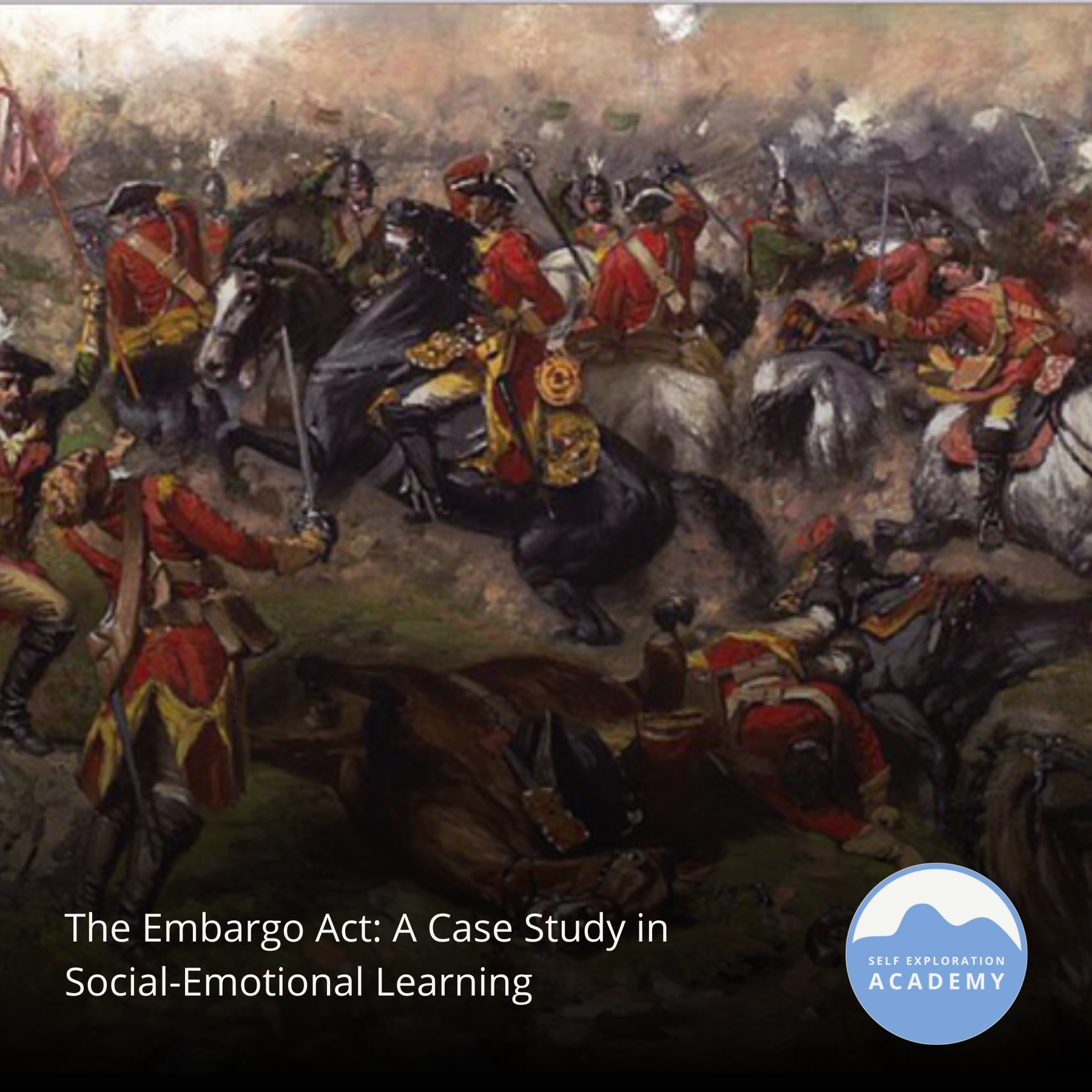
Aughrim, 1691: The Battle That Shaped Ireland's Fate
Explore the Battle of Aughrim (1691), a pivotal moment that cemented English rule in Ireland. Discover its emotional landscape and the profound lessons it offers in responsible decision-making and collective identity.
Exploring the pivotal 1691 battle that cemented English rule and its lasting impact on Irish identity and resilience.
The Battle of Aughrim, fought on July 12, 1691, was not merely a clash of armies but a pivotal moment that irrevocably shaped the future of Ireland. Occurring during the Williamite-Jacobite War, this conflict saw the Protestant Williamite forces, largely composed of English, Dutch, Danish, and Huguenot troops under the command of Godert de Ginkel, face off against the predominantly Catholic Jacobite army, fighting for the deposed Catholic King James II and led by the French general Charles Chalmot, Marquis de Saint-Ruth. At stake was nothing less than sovereignty, religious dominance, and the very identity of the Irish nation. A Jacobite victory might have preserved Catholic land ownership and political power; a Williamite triumph would solidify Protestant ascendancy and English control for centuries.
The Moment Itself
The battlefield was a boggy, challenging terrain near Aughrim in County Galway, favoring the Jacobite defensive position. Saint-Ruth, confident in his strong lines, underestimated Ginkel's determination and tactical adaptability. The battle commenced with fierce Williamite assaults on the Jacobite flanks, bogged down by the difficult ground. The turning point arrived when Saint-Ruth, believing his lines impenetrable, committed a critical error by descending from his vantage point to direct a counter-attack. A sudden cannonball struck and killed him, plunging the Jacobite command into disarray. Without their charismatic leader and a clear chain of command, their resistance faltered. Despite pockets of heroic, desperate fighting, the Jacobite army eventually broke and fled, suffering catastrophic losses. The sheer scale of the Jacobite defeat, with thousands dead and many more captured or dispersed, effectively ended their organized resistance in Ireland.
The Emotional Landscape
The aftermath of Aughrim was steeped in a complex array of emotions. For the victorious Williamites, there was relief, triumph, and a sense of divine vindication, though tempered by the brutal cost of the battle. For the Jacobites and the Catholic populace of Ireland, the defeat unleashed a torrent of despair, grief for lost loved ones, and profound bitterness. Hope, which had flickered following earlier engagements, was extinguished, replaced by a bleak acceptance of their subjugated future. There was undoubtedly immense fear among the defeated, knowing the repercussions of defying English authority. Yet, intertwined with this sorrow was a hardened resolve and a nascent sense of collective identity forged in shared suffering. The event solidified centuries of resentment, embedding itself deeply into the cultural memory as a symbol of injustice and the loss of autonomy, perpetuating a cycle of grievance and quiet resilience.
A Lesson in Social Emotional Learning
The Battle of Aughrim provides a poignant, albeit tragic, illustration of Responsible Decision-Making and its profound consequences. Saint-Ruth's fatal decision to leave his strategic overview to personally lead a charge, and the Jacobite command’s lack of a clear succession plan, proved disastrous. His decision, perhaps driven by a blend of overconfidence (a lack of self-awareness regarding his own tactical blind spots) and a desire for personal glory, ultimately undermined the entire Jacobite effort. Had he remained at his post, maintaining a broader tactical perspective, or had a robust contingency plan been in place for command succession, the outcome, while not guaranteed to be different, would certainly not have been so decisively one-sided. This moment highlights how individual decisions, particularly those made under immense pressure and with high stakes, can have far-reaching and irreversible impacts on collective destinies. The echoes of Aughrim still resonate, a stark reminder of the long shadow cast by critical choices in times of conflict.
Latest Posts

The Emotional Aftermath of Gettysburg: A Turning Point in the Civil War
Step into the Battle of Gettysburg, the Civil War's dramatic turning point. Explore the pivotal decisions, raw emotions, and human resilience that defined this historic moment and its enduring lessons.
Explore the raw realities of July 3, 1863, and how this turning point in the American Civil War offers profound insights into human resilience and decision-making.
The Moment Itself
On July 3, 1863, the fields outside Gettysburg, Pennsylvania, became the crucible for the American Civil War’s most pivotal clash. For two days, Union and Confederate forces had grappled in brutal, relentless fighting. Confederate General Robert E. Lee, emboldened by past victories and believing the Union line vulnerable, made a fateful decision: a direct, frontal assault on the Union center atop Cemetery Ridge. Around 1 PM, over 12,000 Confederate infantrymen, under the command of General George Pickett and others, emerged from the tree line and began their mile-long march across open fields, under scorching summer sun, directly into the concentrated fire of Union artillery and infantry. They marched with precision, their battle flags fluttering, a defiant wave against an unyielding tide. Union artillery tore vast holes in their ranks, followed by a torrent of musket fire as they approached. Despite horrific casualties, small pockets of Confederates reached the Union line, breaching it momentarily before being overwhelmed. By late afternoon, the charge had utterly collapsed, leaving thousands of dead and wounded Confederates sprawled across the fields. The attack, a desperate gamble, had failed catastrophically, marking the high-water mark of the Confederacy and cementing a Union victory that irrevocably shifted the war's momentum.
The Emotional Landscape
The emotional landscape of Gettysburg was one of profound extremes. For the Confederate soldiers, it began with a mixture of determined resolve and grim fatalism, fueled by loyalty to their cause and commanders. As they advanced into the maelstrom, courage morphed into raw terror, then despair, as their ranks disintegrated under fire. The silence that followed the repulse was filled not with triumph for the living, but with the groans of the dying and the dazed shock of those who had survived. Grief was palpable for comrades lost, and a collective sense of crushing failure descended. On the Union side, the initial fear and tension of waiting for the charge gave way to a surge of adrenaline as they held their ground, followed by immense relief and exhaustion. Yet, even in victory, the sight of the mangled battlefield, littered with thousands of men from both sides, brought a sobering wave of sorrow and weariness. The local civilians, who had huddled in cellars listening to the cacophony of battle, emerged to a landscape transformed into an unimaginable charnel house, grappling with the trauma of bearing witness and the immense task of tending to a staggering number of wounded.
A Lesson in Social Emotional Learning
The Battle of Gettysburg provides stark insights into Responsible Decision-Making and Self-Management. General Lee's decision to order Pickett's Charge, while bold, stands as a contentious example of decision-making under extreme pressure. It suggests a potential failure in responsible decision-making, where an overreliance on past success and an underestimation of the adversary’s strength led to a gamble with catastrophic human cost. The decision prioritized a direct, decisive blow over a comprehensive assessment of tactical feasibility and the immense risks to his troops, highlighting how even seasoned leaders can miscalculate when driven by desperation or overconfidence. Conversely, the individual soldiers on both sides exemplified profound Self-Management. Facing unimaginable terror, the ability of these men to control their fear, maintain formation (for the charging Confederates), and unleash devastating firepower (for the defending Union troops) speaks to an extraordinary capacity for emotional regulation and grit in the face of imminent death. This moment reminds us that while strategic decisions shape outcomes, the personal resolve and resilience of individuals can define the texture of historical events. The enduring legacy of Gettysburg still speaks to us today, not just of a turning point in war, but of the complex interplay between leadership, human endurance, and the profound consequences of choices made in moments of crisis.
Latest Posts