

WELCOME TO
The Academic Blog

9/11: A Moment of Unprecedented Terror, Unforgettable Resilience
Explore 9/11's profound impact: from the moment itself to the emotional landscape and vital lessons in Social Emotional Learning. A deep dive into a day that changed the world.
Recounting the pivotal moments of 9/11 and examining the emotional landscape and social-emotional lessons that emerged.
The Moment Itself
On the morning of September 11, 2001, a clear Tuesday, the United States was irrevocably altered. Nineteen al-Qaeda terrorists, reportedly operating in four teams, hijacked four commercial airliners. At 8:46 AM Eastern Time, American Airlines Flight 11 struck the North Tower of the World Trade Center in New York City, followed just seventeen minutes later by United Airlines Flight 175 hitting the South Tower. The initial impact, a surreal explosion of fire and debris against the iconic Manhattan skyline, plunged the city and the nation into bewildered horror. As the towers burned, a third plane, American Airlines Flight 77, crashed into the Pentagon in Arlington, Virginia, at 9:37 AM, tearing a gaping hole in the symbol of American military might. Meanwhile, passengers and crew aboard United Flight 93, learning of the earlier attacks, bravely fought back against their hijackers, causing the plane to crash into a field in Shanksville, Pennsylvania, at 10:03 AM, likely preventing it from reaching its intended target, believed to be the U.S. Capitol or the White House. Within hours, both World Trade Center towers, weakened by the impacts and subsequent fires, collapsed into massive clouds of dust and twisted steel. Nearly 3,000 people were killed in the coordinated assault, including civilians from over 90 nations, first responders, and military personnel. What was at stake was not just human life, but the nation’s sense of security, its economic stability, and its place in a rapidly globalizing world.
The Emotional Landscape
The emotional landscape of 9/11 was a maelstrom of raw, profound human experience. For those in New York, Washington D.C., and Shanksville, immediate terror and confusion reigned. People ran from collapsing buildings, covered in dust, searching for loved ones, or simply trying to survive. The courage of firefighters, police officers, and paramedics, who rushed into the burning towers as others fled, was an overwhelming testament to selflessness in the face of certain death. Grief became a collective burden, palpable in the stunned silence that fell over cities, punctuated by the wails of sirens and the desperate calls from families seeking news. Yet, alongside the despair, an extraordinary wave of solidarity and hope emerged. Communities rallied, strangers offered help, blood banks were overwhelmed with donors, and flags flew everywhere. There was a fierce anger, too, a unified outrage directed at the perpetrators, fueling a national resolve that transcended political divides, even as it laid the groundwork for future conflicts.

A Lesson in Social Emotional Learning
The events of September 11, 2001, offer stark lessons in Social Awareness and Responsible Decision-Making. The perpetrators demonstrated a catastrophic failure of social awareness, utterly devoid of empathy for human life and blind to the global repercussions of their actions. Conversely, the immediate aftermath showcased an extraordinary surge in social awareness among ordinary citizens. People from all walks of life, without prompting, demonstrated profound empathy, compassion, and a deep understanding of collective suffering. They recognized the shared humanity of the victims and the interconnectedness of their communities, leading to an unprecedented outpouring of aid and support. The passengers on United Flight 93 epitomized responsible decision-making under unimaginable duress. Faced with certain death, they made a collective, ethical choice to confront their hijackers, understanding that their sacrifice could prevent further loss of life. Their decision, born of courage and a clear assessment of the dire situation, was a profound act of selflessness. This moment still speaks to us today, reminding us of the fragility of peace, the enduring power of human resilience, and the critical importance of fostering empathy and making ethical choices in a complex world.
Latest Posts













Gertrude Ederle's Channel Triumph: A Story of Resilience
In 1926, Gertrude Ederle became the first woman to swim the English Channel. Discover her incredible journey of self-management and resilience, proving true strength goes beyond physical limits.
Explore the emotional journey and profound self-management that propelled the first woman to swim the English Channel.
The Moment Itself
On August 6, 1926, the world watched, some with skepticism, as a young American woman named Gertrude Ederle plunged into the frigid waters of the English Channel at Cap Gris-Nez, France. The Channel, a treacherous 21-mile stretch of water notorious for its strong currents, unpredictable weather, and chilling temperatures, had been conquered by only five men before her. No woman had ever succeeded. Ederle, a former Olympic gold medalist in swimming, was not merely attempting a physical feat; she was challenging deeply ingrained societal perceptions of female strength and endurance. Her first attempt the previous year had ended in failure, with her trainer, Jabez Wolffe, pulling her from the water against her will, citing concerns for her safety. This time, under the guidance of her new trainer, T.W. Burgess, Ederle was determined to prove her mettle. She wore a unique two-piece swimsuit and goggles, a departure from the heavy, restrictive attire typically worn by female swimmers, allowing for greater freedom of movement. The stakes were immense: her personal vindication, the shattering of a formidable athletic barrier, and a powerful statement about the capabilities of women in the burgeoning era of the "flapper."
The Emotional Landscape
The emotional texture of Ederle’s swim was a complex tapestry of individual grit and collective anticipation. For Ederle herself, the journey was an agonizing test of will against profound physical discomfort. Battling jellyfish stings, nausea from the choppy waves, and the relentless, numbing cold, her spirit must have wavered, yet she pushed through. Her support crew, navigating alongside her in a tugboat, offered encouragement, hot chocolate, and the occasional record played on a phonograph to keep her spirits up. On shore, the public oscillated between doubt and fervent hope. Many believed a woman simply lacked the stamina for such an ordeal. When news broke that she had not only completed the swim but had done so in an astonishing 14 hours and 34 minutes—beating the fastest men’s time by nearly two hours—a wave of euphoria swept across America. Her triumphant return to New York was met with a ticker-tape parade, a testament to the sheer awe and inspiration she had ignited. Her success was a moment of immense pride, particularly for women, who saw in her achievement a tangible symbol of breaking free from traditional constraints.
A Lesson in Social Emotional Learning
Gertrude Ederle's legendary swim offers profound insights into Self-Management and Self-Awareness. Her success was a masterclass in self-management, demonstrating an extraordinary capacity to regulate her emotions, thoughts, and behaviors under extreme duress. Despite the physical agony, the mental fatigue, and the immense pressure, she maintained her focus and discipline, refusing to yield to the Channel's relentless challenges. Her perseverance, the unwavering commitment to her goal even when her body screamed for surrender, epitomizes this competency. Furthermore, Ederle exhibited remarkable self-awareness. She understood her own formidable swimming strengths, but also the monumental nature of the challenge. Her meticulous preparation, including covering herself in lanolin for insulation and developing a powerful, efficient stroke, showcased her understanding of what was required to overcome such an obstacle. This blend of knowing her capabilities and managing her response to adversity allowed her to redefine what was possible. Today, Ederle’s swim continues to speak to us as a powerful reminder that true strength lies not just in physical prowess, but in the unwavering will to manage oneself through trials and to understand one's own potential.
Latest Posts
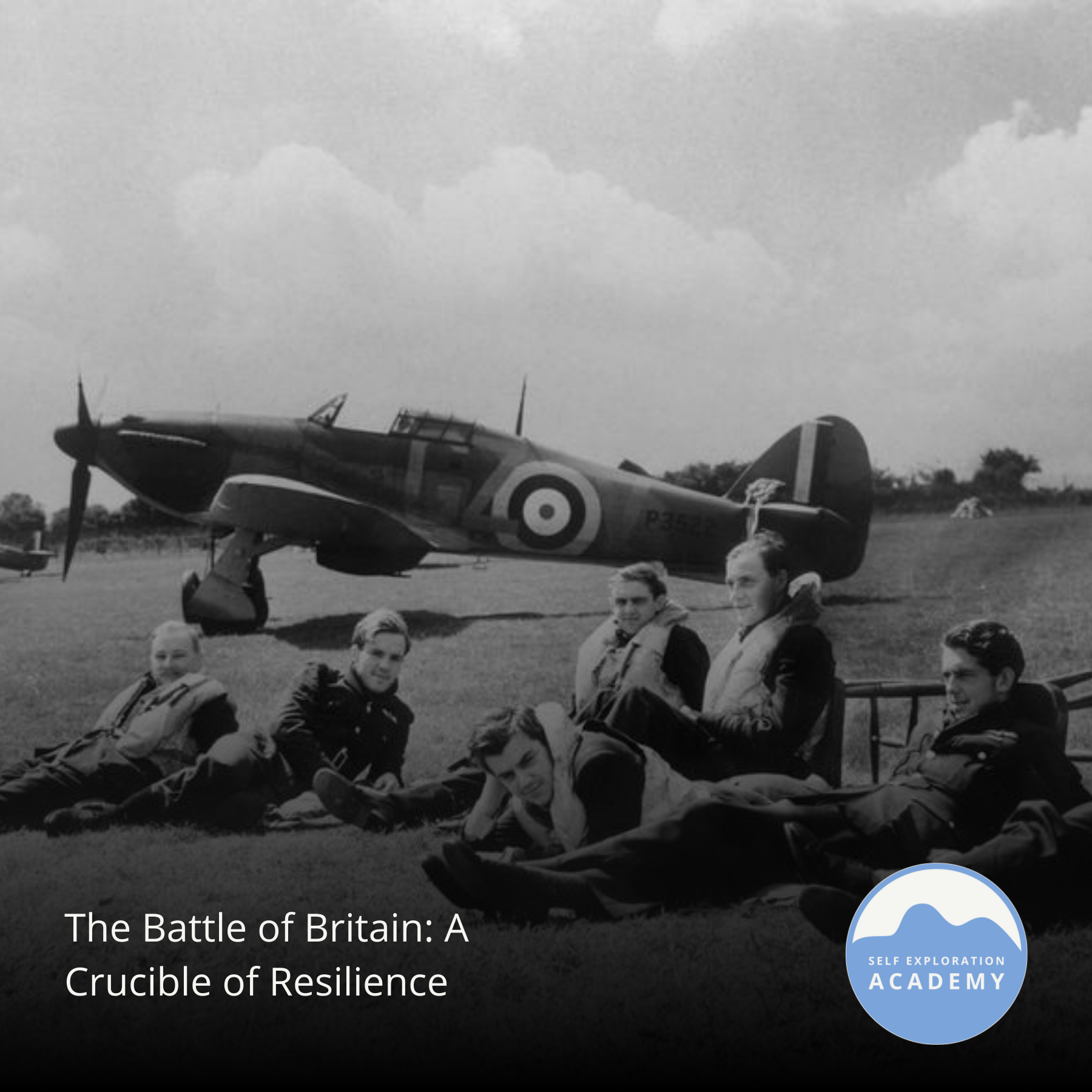
The Battle of Britain: A Crucible of Resilience
Discover the gripping story of the Battle of Britain, launched July 10, 1940. Explore the fear, defiance, and resilience that defined a nation's stand, and uncover its powerful lessons in self-management for today.
Exploring the fear, courage, and unwavering spirit that defined Britain's stand against Nazi Germany in the pivotal air campaign of 1940.
The Moment Itself
On July 10, 1940, the skies over the English Channel became the opening stage for what would be one of World War II's most critical aerial campaigns: the Battle of Britain. Following the fall of France and the evacuation at Dunkirk, Britain stood alone against Nazi Germany, which now controlled most of Western Europe. Adolf Hitler's next objective was Operation Sea Lion, the planned invasion of Britain, but first, the Luftwaffe had to achieve air superiority over the Royal Air Force (RAF). This initial phase, known as "Kanalkampf" (Channel Battle), saw the Luftwaffe begin targeting British shipping in the Channel and coastal convoys.
At stake was nothing less than the survival of democratic Britain and the potential for a German victory that could reshape the global order. Key figures included Air Chief Marshal Hugh Dowding, head of RAF Fighter Command, whose strategic brilliance in conserving his limited fighter force and implementing the integrated air defense system (combining radar, ground observers, and command centers) proved pivotal. On the German side, Hermann Göring, commander-in-chief of the Luftwaffe, underestimated British resolve and the effectiveness of their defenses. The battle was a test of technology, strategy, and sheer human courage, with Britain's Spitfire and Hurricane fighters facing off against German Messerschmitts, Dorniers, and Heinkels. The initial days established the brutal rhythm of aerial combat, where every sortie was a desperate gamble.
The Emotional Landscape
The emotional landscape of Britain during the Battle of Britain was a complex tapestry of fear, defiance, and an almost stoic resolve. For the civilian population, particularly those in southern England and London, the daily drone of approaching bombers and the wail of air raid sirens became a terrifying soundtrack to life. Nights were spent in shelters, praying for dawn. Yet, fear was often overshadowed by a fierce determination not to yield. The collective memory of Dunkirk had forged a powerful sense of unity and shared purpose.
For the RAF pilots, many of them barely out of their teens, the emotions were more visceral: a potent mix of exhilaration in combat, profound grief for fallen comrades, and an exhausting, perpetual readiness for the next scramble. They returned from sorties often covered in sweat and grime, adrenaline coursing through them, only to witness the empty chairs of friends who wouldn't return. Despite the immense pressure and the grim odds, there was also a deep sense of camaraderie and an unshakeable belief in their mission. The famous phrase "never was owed by so many to so few" perfectly captured the public's profound gratitude and the pilots' immense burden.
A Lesson in Social Emotional Learning
The Battle of Britain offers a profound lesson in Self-Management, specifically the competency of resilience. The RAF, outnumbered and constantly under pressure, displayed extraordinary collective resilience. Their ability to persist in the face of overwhelming adversity, to recover from losses, and to maintain morale despite constant threat, was foundational to their success. Dowding's strategic decision-making, which prioritized the preservation of fighter aircraft and pilots, demonstrated a form of organizational self-management, understanding limitations while maximizing strengths.
On an individual level, the pilots exhibited immense emotional regulation and perseverance. They processed fear and grief, yet continued to fly, driven by duty and an understanding of the stakes. This wasn't merely about physical courage but about the mental fortitude to repeatedly face mortal danger. The British public, too, showcased resilience in their daily lives, adapting to bombings, rationing, and uncertainty, yet refusing to succumb to panic or despair. This historical moment speaks to us today by reminding us that true strength often lies not in avoiding challenges, but in the unwavering commitment to endure, adapt, and ultimately, overcome them.
Latest Posts

The Embargo Act: A Case Study in Social-Emotional Learning
The Embargo Act offers a surprising lesson in social-emotional learning. Discover how this historical event can help you build resilience, empathy, and critical thinking skills.
The Embargo Act: More Than Just a Historical Event
The Embargo Act, signed into law on December 22, 1807, was a pivotal moment in the early history of the United States. This act, which aimed to restrict American trade with foreign nations, was a response to the ongoing conflict between Britain and France, known as the Napoleonic Wars.
The Act's origins can be traced back to the British and French practice of seizing American ships and impressing their sailors into their respective navies. These acts of aggression violated American neutrality and led to growing tensions between the United States and both European powers. In an effort to avoid further conflict, President Thomas Jefferson and his administration sought a diplomatic solution. However, when negotiations with Britain and France failed to produce satisfactory results, the Embargo Act was seen as the only viable option.
The Embargo Act, which was passed by Congress with overwhelming bipartisan support, prohibited American ships from sailing to foreign ports. It also banned the importation of goods from foreign countries. The primary goal of the Act was to pressure Britain and France to respect American neutrality and cease their practice of impressment.
The Embargo Act had a significant impact on the American economy. With the closure of foreign markets, American merchants and farmers suffered significant losses. The Act also led to a decline in shipping activity, which had been a major source of income for many Americans. In response to the economic hardship caused by the Embargo Act, many Americans began to focus on domestic manufacturing and economic education.
The Embargo Act also had a political impact. Opposition to the Act grew within the Democratic-Republican Party, leading to the formation of a new faction known as the War Hawks. The War Hawks advocated for a more aggressive foreign policy and eventually succeeded in persuading Congress to declare war on Britain in 1812.
The Embargo Act was eventually repealed in 1809, after it became clear that it had failed to achieve its intended goals. However, the Act had a lasting impact on the American economy and society. It encouraged the development of domestic manufacturing and led to increased focus on economic education. The Embargo Act also helped to solidify American nationalism and prepare the country for its role as a major world power.
Featured Courses


The Case for Social Emotional Learning
The Embargo Act offers a compelling historical example that can support the case for social-emotional learning (SEL) in online programs like "Identity, Expression, and Desire" at Self Exploration Academy.
Here's how the Embargo Act relates to SEL:
Adaptability and Resilience: The Embargo Act forced Americans to adapt to a sudden and significant change in their economic circumstances. This historical event demonstrates the importance of developing resilience and adaptability in the face of adversity, skills that are crucial for SEL.
Empathy and Understanding: The Embargo Act likely led to increased empathy and understanding among Americans as they faced shared hardships. This experience highlights the value of cultivating empathy and understanding in interpersonal relationships, which are essential components of SEL.
Critical Thinking and Problem-Solving: In response to the economic challenges posed by the Embargo Act, many Americans turned to domestic manufacturing and economic education. This demonstrates the importance of developing critical thinking and problem-solving skills, which are key aspects of SEL.
Communication and Collaboration: The Embargo Act likely required increased communication and collaboration among Americans as they worked together to address the economic crisis. This highlights the value of developing effective communication and collaboration skills, which are essential for building strong relationships and achieving common goals.
In conclusion, the Embargo Act offers a historical example of the importance of developing social-emotional skills in the face of adversity. By incorporating SEL into online programs like "Identity, Expression, and Desire," Self Exploration Academy can help students develop the skills they need to navigate the challenges of life and build strong, fulfilling relationships.


From Disaster to Discovery: How Self-Exploration Benefits from Social-Emotional Learning
The story of Dr. Christiaan Barnard, the pioneer of heart transplantation, provides compelling evidence for the importance of social emotional learning (SEL) in online programs. Let's delve into how Barnard's groundbreaking work aligns with SEL principles and explore the profound impact SEL can have on online learners.
Shaanxi Earthquake: A Lesson in Resilience for Online Learners

While the exact details are unclear, historical records suggest the 1556 Shaanxi earthquake did spark discussions about mitigating future earthquake damage. Here's what we know:
Uniquely detailed records: Local chronicles from the region dating back centuries documented the 1556 event in exceptional detail compared to other earthquake records [Britannica]. This suggests a heightened focus on understanding and potentially preventing such disasters.
Inspiring new approaches: These records indicate the earthquake prompted people in the affected region to explore ways to minimise damage from future earthquakes [Britannica]. This could have involved discussions on building techniques or emergency planning.
However, it's important to remember the context:
Limited technology: In 1556, the scientific understanding of earthquakes and engineering principles to withstand them was far less developed than today. Discussions likely focused on more practical solutions within the knowledge of the time.
Limited reach of information: Dissemination of information in 16th century China would have been slow and localised. While discussions may have occurred, implementing widespread changes would have been a bigger challenge.
Overall, the 1556 Shaanxi earthquake likely served as a wake-up call, prompting local discussions on how to better prepare for future earthquakes. However, the development of a formal field of earthquake engineering came much later.
Featured Courses
The Case for Social Emotional Learning
To be transparent, the initial connection between the 1556 Shaanxi earthquake and "Identity, Expression and Desire" at Self Exploration Academy wasn't the strongest. Let's look at a different approach that ties the historical event to the importance of SEL in online programs focused on personal growth.
The Earthquake as a Catalyst for Self-Reflection
Imagine a young person living in Shaanxi before the earthquake. Their world likely revolved around their family, community, and established traditions. The earthquake's devastation would have forced them to grapple with profound questions:
Who am I in the face of such immense loss? (Identity)
How can I express the emotions I'm feeling? (Expression)
What desires do I hold onto in a world that's changed so drastically? (Desire)
SEL Skills for Navigating Personal Upheaval
Here's where social-emotional learning (SEL) becomes crucial:
Self-Awareness: The earthquake would have demanded a deep understanding of one's own emotions – fear, grief, confusion. SEL can equip students with tools to identify and understand their emotions, which is vital for navigating personal growth.
Self-Management: Coping with the aftermath would require managing overwhelming emotions. SEL skills like stress management and coping mechanisms can help students navigate difficult situations and maintain focus on their personal goals.
Relationship Skills: Rebuilding a life after the earthquake would necessitate strong social connections. SEL fosters skills like empathy, communication, and conflict resolution – all essential for building and maintaining healthy online relationships that support identity exploration.
Finding Meaning Through Self Exploration
While "Identity, Expression and Desire" might not directly address disaster preparedness, it provides a safe space for students to explore these questions in a personal context. Imagine an online forum where students discuss:
How their experiences shape their identity.
How to express difficult emotions in a healthy way.
How to find meaning and purpose even when life throws curveballs.
The Takeaway
The 1556 Shaanxi earthquake, while a tragic event, highlights the need for introspection and emotional resilience during times of personal upheaval. By incorporating SEL into online programs like "Identity, Expression and Desire," Self Exploration Academy can provide a supportive environment where students can develop the skills needed to navigate challenges, understand themselves better, and ultimately explore their identities and aspirations.
Related Posts