

WELCOME TO
The Academic Blog

Foundations of Justice: The Judiciary Act of 1789
Uncover the pivotal 1789 Judiciary Act, which established the US federal court system. Explore the historical context, emotional landscape, and lasting lessons in social emotional learning from this foundational moment.
In 1789, a nascent nation grappled with defining its legal backbone. Discover the challenges, compromises, and lasting legacy of the Judiciary Act.
The establishment of the United States federal government was a monumental undertaking, fraught with both promise and peril. Just months after the Constitution's ratification, the newly convened First U.S. Congress faced the daunting task of transforming a theoretical framework into a functioning republic. Among its most critical early acts was the passage of the Judiciary Act on September 24, 1789. This was not merely a piece of legislation; it was the birth certificate of the nation's judicial branch, a cornerstone without which the entire edifice of American governance might have crumbled.
The Moment Itself
The Constitution, a masterpiece of compromise, had created a Supreme Court but left the details of the federal judiciary largely undefined, stating only that "The judicial Power of the United States, shall be vested in one supreme Court, and in such inferior Courts as the Congress may from time to time ordain and establish." This ambiguity was deliberate, a concession to Anti-Federalist concerns about an overly powerful central government. However, it placed immense pressure on the First Congress to fill the void. Led by figures like Senator Oliver Ellsworth of Connecticut, the architect of much of the Act, and guided by the constitutional vision of James Madison, Congress grappled with fundamental questions: How many Supreme Court justices? What would be the scope of federal court jurisdiction? Should there be lower federal courts, and if so, what kind? The stakes were immense. Without a robust and independent judiciary, federal laws could not be uniformly enforced, disputes between states would fester, and the very concept of a national government would remain a fragile ideal. The debates were intense, reflecting the deep-seated tension between states' rights and the imperative for national unity and order. The final Act established a Supreme Court with a Chief Justice and five Associate Justices, three circuit courts, and thirteen district courts, laying the groundwork for the dual court system that endures today.

The Emotional Landscape
The atmosphere surrounding the Judiciary Act's passage was a complex tapestry of emotions. There was an overriding sense of hope and optimism among Federalists, who saw the Act as a vital step towards a stable, legitimate republic, capable of enforcing its laws and protecting its citizens. Yet, this hope was tempered by anxiety. Many, particularly those who had resisted the Constitution, harbored fears of federal overreach, envisioning a distant, powerful judiciary trampling on individual liberties and state sovereignty. For others, there was a palpable determination to make this grand experiment in self-governance succeed, to prove that a nation could be built on principles of law and justice rather than brute force. The compromises embedded within the Act—such as granting state courts concurrent jurisdiction over many federal cases—were born out of a pragmatic understanding of these varied sentiments, an acknowledgment that the new government needed to build trust and legitimacy incrementally. The relief among those who had championed a strong federal government would have been immense, knowing that a vital piece of the constitutional puzzle was finally in place.
A Lesson in Social Emotional Learning
The passage of the Judiciary Act of 1789 offers a profound lesson in Responsible Decision-Making and Social Awareness. The members of the First Congress were tasked with making choices that would not only address immediate governance needs but also shape the long-term trajectory of a nascent nation. Their decision-making process involved a deep consideration of diverse viewpoints, weighing the concerns of states' rights advocates against the necessity of a strong federal system. This required immense social awareness—the ability to understand and empathize with the varying legal traditions, economic interests, and political anxieties across the thirteen states. The Act was a product of careful deliberation, compromise, and a collective commitment to creating a functional and legitimate government. It demonstrated the capacity to make complex, consequential decisions by considering the broader societal impact and striving for a solution that, while imperfect, served the greater good. The legacy of the Judiciary Act reminds us that the foundations of a just society are built not on rigid ideology, but on foresight, empathy, and the courage to make responsible choices for the collective future.
Latest Posts












The Birth of a Nation: A Lesson from Constitution Day
Go beyond the parchment to explore the intense debates, raw emotions, and crucial compromises that shaped the U.S. Constitution in 1787. Discover timeless lessons in responsible decision-making and human connection.
Explore the intense debates, profound emotions, and crucial compromises that shaped the United States Constitution in 1787, and discover its enduring lessons for today.
The Moment Itself
The United States Constitution, signed on September 17, 1787, in Philadelphia, represents far more than a legal document; it is a testament to human will, compromise, and the desperate gamble for a fledgling nation's survival. The summer of 1787 saw 55 delegates from twelve states (Rhode Island notably absent) convene in secret, cloistered in the sweltering Pennsylvania State House. The young republic, barely a decade removed from its hard-won independence, teetered on the brink of collapse under the feckless Articles of Confederation. States, acting as sovereign nations, squabbled over trade, currency, and territory. Economic depression gripped the populace, and events like Shays' Rebellion in Massachusetts highlighted the alarming weakness of the central government to maintain order.
At stake was the very idea of a unified American experiment. Would it devolve into a collection of squabbling, vulnerable states, or could a new framework forge a lasting union? Figures like James Madison, the intellectual architect of the Virginia Plan, and the venerable George Washington, whose mere presence lent immense legitimacy to the proceedings, wrestled with fundamental questions: how to balance federal power with states' rights, how to reconcile the interests of large states with small ones, and the morally fraught question of slavery. The Convention was a crucible of intense debate, marked by profound disagreements that threatened to derail the entire enterprise. The resulting document, often called a "bundle of compromises," was imperfect but essential, signed by 39 weary but hopeful delegates.
The Emotional Landscape
Within the stifling confines of the Convention hall, the emotional landscape was a volatile mix of frustration, exhaustion, and an overwhelming sense of responsibility. Delegates grappled with the enormity of their task, knowing that failure could plunge their nascent nation into anarchy or re-subjugation. There were moments of despair, as impassioned arguments over representation or the institution of slavery seemed insurmountable. Yet, underlying this tension was a shared, pragmatic determination to find common ground. Outside, the public watched with a blend of anxiety and cautious hope. Memories of the war were fresh, as was the recent economic turmoil. There was a deep-seated fear of centralized power, a legacy of British tyranny, yet also a yearning for stability and prosperity that only a stronger union could provide. The signing brought a collective sigh of relief, tempered by the daunting task of ratification, which would ignite fierce debates across the states.
A Lesson in Social Emotional Learning
The Constitutional Convention offers a profound lesson in Responsible Decision-Making and Relationship Skills. The delegates, representing diverse interests and ideologies, were forced to engage in a sustained act of collective responsible decision-making. They had to weigh immediate concerns against long-term national viability, understanding that their choices would echo for generations. This required a high degree of Social Awareness—the ability to understand the perspectives and needs of others, even those with whom they fundamentally disagreed. Their success hinged on their Relationship Skills: the capacity to negotiate, compromise, and build consensus despite deep divisions. Benjamin Franklin's famous plea for unity on the final day, urging delegates to doubt their own infallibility and embrace the collective good, epitomizes this. While the compromises made, particularly regarding slavery, represent profound contradictions, the very act of reaching an agreement under such duress highlights the critical importance of these social-emotional competencies in forging a functional society. The moment still speaks to us today, reminding us that progress often demands difficult conversations, mutual respect, and a willingness to prioritize the common good over individual or factional interests.
Latest Posts
The Birth of a Name: How "United States of America" Forged a Nation in 1776
On Sept 9, 1776, the Continental Congress named the "United States of America." Discover the emotional landscape, historical context, and SEL lessons from this pivotal moment in nation-building.
Beyond a mere resolution, discover the emotional texture and profound implications of the Continental Congress's decision to name the new nation amidst war.
The Moment Itself
On September 9, 1776, amidst the tumultuous early days of the American Revolutionary War, the Continental Congress, meeting in Philadelphia, quietly but profoundly altered the course of history. With a simple, yet momentous, resolution, they officially adopted the name "United States of America," replacing the provisional "United Colonies." This act, occurring just over two months after the Declaration of Independence had severed ties with Great Britain, was far more than a mere semantic change. It was a deliberate, declarative step towards solidifying a new national identity. At stake was not just a name, but the very essence of their nascent sovereignty. The delegates, representing thirteen disparate colonies, were engaged in a desperate fight against the most powerful empire in the world. The shift from "colonies" to "states" underscored their claim to independent nationhood, signaling to both their own people and to the international community that they were no longer a collection of rebellious territories, but a unified entity with a shared destiny. This decision, made by men like John Adams, Thomas Jefferson, and Benjamin Franklin, was a foundational stone laid in the crucible of war, a testament to their unwavering commitment to a future free from imperial rule.
The Emotional Landscape
The atmosphere in Philadelphia in September 1776 was a complex tapestry of emotions. Hope, born from the audacious Declaration of Independence, mingled with gnawing fear. The war was not going well; Washington’s forces had suffered significant defeats in New York, and the British military machine seemed unstoppable. Delegates wrestled with the immense personal risk of treason, knowing that failure meant execution. Yet, beneath this apprehension lay an unyielding current of courage and determination. There was a palpable sense of shared purpose, a collective resolve to forge a new path, even if it led through the valley of death. The adoption of the name "United States of America" likely evoked a mixture of pride in their burgeoning identity and a sober realization of the monumental task ahead. It was a moment of collective affirmation, a public declaration of their intent to endure, to fight, and ultimately, to define themselves as a singular, independent nation.
A Lesson in Social Emotional Learning
The Continental Congress's decision to adopt the name "United States of America" offers a compelling insight into Responsible Decision-Making and Social Awareness. In a period of profound uncertainty and existential threat, the delegates engaged in a collective act of responsible decision-making. They weighed the symbolic power of a unified name against the immediate, brutal realities of war, understanding that a clear, cohesive identity was crucial for internal cohesion and external recognition. This was not a rash choice but a deliberate, strategic move to define their collective future. Furthermore, their actions demonstrated a keen Social Awareness. The shift from "colonies" to "states" reflected an understanding of the evolving collective consciousness among the populace—a growing desire to transcend individual colonial loyalties in favor of a broader, shared American identity. It was a recognition that to succeed, they needed to tap into and formalize this nascent sense of unity. The moment still speaks to us today about the power of collective identity, the courage required to make foundational decisions under duress, and the profound impact of a shared vision in shaping a nation’s destiny.
Latest Posts
Theodore Roosevelt and the Birth of "Big Stick" Diplomacy
Explore Theodore Roosevelt's iconic "Speak softly and carry a big stick" speech. Uncover its historical impact on US foreign policy, the emotional landscape of the era, and a powerful lesson in responsible decision-making.
Delve into the emotional and political landscape surrounding Theodore Roosevelt's pivotal 1901 speech, and discover its enduring lesson in responsible decision-making.
The Moment Itself
On September 6, 1901, at the Minnesota State Fair, Vice President Theodore Roosevelt delivered a speech that would etch itself into the annals of American foreign policy. Before a crowd eager to hear from the dynamic young politician, Roosevelt articulated a philosophy that would define his presidency and the nation's burgeoning role on the global stage: "Speak softly and carry a big stick; you will go far." This seemingly simple phrase, delivered with Roosevelt's characteristic vigor, was far more than a rhetorical flourish. It was a declaration of intent, signaling a departure from traditional American isolationism and an embrace of robust international engagement, backed by demonstrable military strength.
At this pivotal moment, the United States was still digesting its recent victory in the Spanish-American War, which had yielded new territories and thrust the nation into the uncomfortable spotlight of global power. The debate between interventionism and non-interventionism raged, and Roosevelt, a staunch advocate for a strong navy and assertive foreign policy, was laying out his vision. What was at stake was nothing less than America's identity in the 20th century: would it remain a regional power, or would it assert its influence commensurate with its growing economic and military might? Roosevelt's words were a clear signal that he intended the latter, particularly as he envisioned the construction of the Panama Canal and the protection of American interests in the Western Hemisphere.
The Emotional Landscape
The emotional landscape surrounding Roosevelt's pronouncement was complex. For many Americans, still reeling from the recent war and grappling with the responsibilities of an emerging empire, the "big stick" offered a sense of security and pride. It tapped into a nascent jingoism, a belief in American exceptionalism and the right to project power. There was an underlying current of anxiety, too—the fear of being drawn into endless foreign entanglements, a sentiment rooted in the nation's founding principles. Roosevelt, however, embodied a confident, almost audacious spirit, and his words likely resonated with those who felt the nation needed to assert itself decisively. Internationally, the phrase was met with a mix of respect and apprehension. Nations watched as the United States, previously a peripheral player, now openly declared its readiness to use force if diplomacy failed, reshaping the delicate balance of global power.
A Lesson in Social Emotional Learning
Theodore Roosevelt's "Speak softly and carry a big stick" offers a compelling lesson in Responsible Decision-Making. This competency involves the ability to make constructive choices about personal and social behavior, considering ethical standards, safety concerns, realistic evaluations of consequences, and the well-being of self and others. Roosevelt's policy was not about reckless aggression. Instead, it was a calculated strategy: the "speak softly" component emphasized diplomacy and negotiation as the primary means of engagement, reflecting a responsible approach to conflict resolution. However, the "big stick" underscored the necessity of being prepared and having the capacity to enforce one's will when diplomatic avenues were exhausted. This duality highlights a mature decision-making process where peaceful means are prioritized, but the potential for decisive action is maintained as a deterrent or a last resort. It's about understanding the full spectrum of tools available and making a deliberate choice about when and how to deploy them, weighing the consequences of both action and inaction.
This historical moment continues to speak to us today, serving as a reminder of the enduring tension between diplomatic engagement and the projection of power. It prompts reflection on how nations, and indeed individuals, navigate complex relationships, balancing the desire for peace with the need for strength and preparedness.
Latest Posts

The Olive Branch Petition: America's Last Plea for Peace
Discover the Olive Branch Petition: America's last desperate plea for peace in 1775. Uncover the emotional drama and the King's pivotal rejection that propelled the colonies toward independence.
Explore the pivotal moment when American colonists sought reconciliation, only to be met with royal rejection, solidifying the path to independence.
The Moment Itself
On July 5, 1775, amidst the escalating fervor of rebellion and the fresh wounds of Lexington and Concord, the Second Continental Congress in Philadelphia made a final, desperate plea for peace. This was the Olive Branch Petition, a document drafted primarily by John Dickinson of Pennsylvania, a man who, despite his staunch defense of colonial rights, harbored a deep reluctance to break entirely with Great Britain. The colonies, though already engaged in armed conflict, were far from unified on the path to independence. Many delegates still clung to the hope of reconciliation with King George III. What was at stake was monumental: the very future of the American colonies, caught between the promise of self-governance and the loyalty to a crown they believed had betrayed them. The petition itself was a deferential address to the King, professing loyalty and imploring him to intercede on behalf of his American subjects, to redress their grievances, and to halt the hostile actions of Parliament. It was a paradoxical move, simultaneously sending an appeal for peace while, days earlier, appointing George Washington commander-in-chief of the newly formed Continental Army.
The Emotional Landscape
The emotional landscape surrounding the Olive Branch Petition was a tumultuous blend of fear, hope, and burgeoning resentment. For Dickinson and his supporters, there was the profound fear of civil war, a conflict that would pit brother against brother and devastate their nascent society. Their hope lay in the King's supposed benevolent nature, believing he was misguided by corrupt ministers rather than inherently tyrannical. They hoped this earnest appeal would bypass Parliament and restore harmony. Conversely, figures like John Adams, already convinced of the futility of reconciliation, viewed the petition with exasperation, seeing it as a dangerous delay tactics. Their emotions were dominated by a growing anger at perceived British tyranny and a grim determination to fight for liberty. The colonists at large felt a mixture of anxiety about the unknown future and a hardening resolve against what they saw as oppressive policies. When King George III, upon receiving the petition, refused to even read it and declared the colonies in open rebellion, it was a profound blow to those clinging to hope, solidifying the despair and driving many towards the irreversible path of independence.
A Lesson in Social Emotional Learning
The Olive Branch Petition offers a poignant lesson in Responsible Decision-Making and the breakdown of Relationship Skills. The delegates, despite their internal divisions, collectively chose to pursue every avenue for peace before fully committing to war. This demonstrated an attempt at responsible decision-making, weighing the devastating consequences of armed conflict against the slim possibility of a peaceful resolution. Their decision reflected a desire to exhaust all diplomatic options, showcasing a deliberate, albeit ultimately unsuccessful, effort to act prudently in the face of immense pressure. However, the King's outright rejection highlighted a severe breakdown in relationship skills. His refusal to engage with the petition, viewing it as an act of treason rather than a genuine plea, revealed an inability to empathize, listen, or negotiate. This lack of reciprocal engagement from the Crown ultimately severed the already strained relationship beyond repair. The moment speaks to us today about the critical importance of open communication and genuine willingness to engage in dialogue, even when grievances are deep. It illustrates that when one party completely shuts down communication and refuses to acknowledge the other's perspective, the path to resolution becomes impossible, and conflict often becomes the only remaining option.
Latest Posts
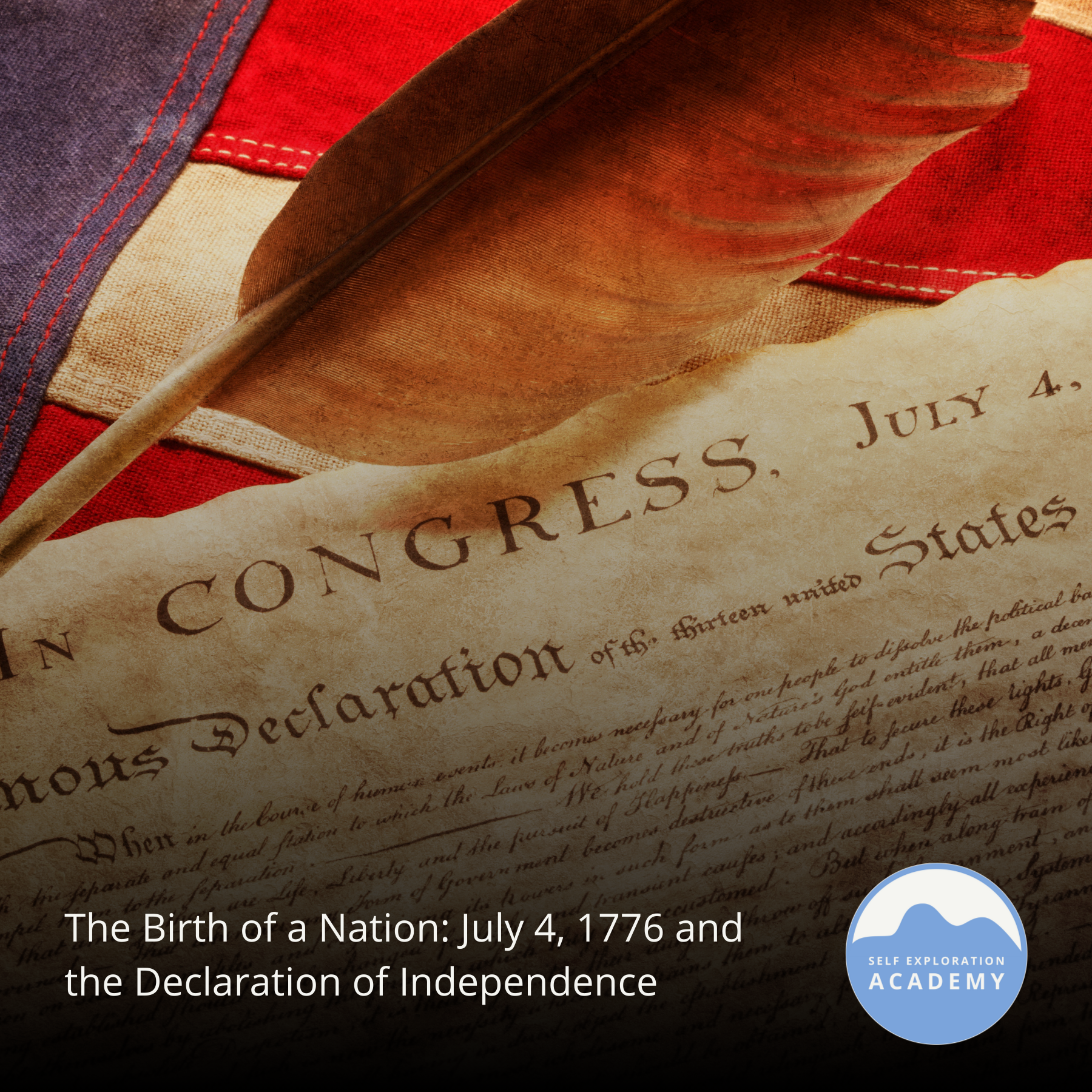
The Birth of a Nation: July 4, 1776 and the Declaration of Independence
Go beyond the fireworks of July 4th. Discover the raw courage, fear, and profound decisions of 1776 that forged a nation. Explore the emotional journey behind America's Declaration of Independence.
Explore the courage, fear, and profound decisions that forged the United States, and discover lasting lessons in human resilience.
The Moment Itself
On July 4, 1776, in the sweltering heat of Philadelphia, a revolutionary act was formalized. For over a year, the Second Continental Congress had debated the fate of the American colonies, which had been chafing under British rule. Decades of escalating tensions, marked by economic exploitation, punitive legislation like the Stamp Act and the Intolerable Acts, and the burgeoning philosophical currents of the Enlightenment advocating for natural rights and self-governance, had pushed the colonies to the brink. The armed conflicts at Lexington and Concord, followed by Bunker Hill, had already ignited a war, yet the colonies had not officially broken ties. Thomas Jefferson, a young Virginian lawyer and philosopher, had been tasked with drafting a document that articulated the colonies' grievances and their decision for complete separation. Influenced by John Locke and other Enlightenment thinkers, Jefferson meticulously crafted a declaration asserting the universal rights of "life, liberty, and the pursuit of happiness," and outlining a litany of King George III's abuses. The Congress, after rigorous debate and some modifications, adopted this Declaration of Independence. What was at stake was not merely a change in government, but the very existence of a new nation founded on radical principles, and for those who signed it, the immediate risk of being tried and executed for treason by the world’s most powerful empire.
The Emotional Landscape
The adoption of the Declaration was met with a complex tapestry of emotions across the nascent United States. For the delegates, particularly those who affixed their names to the document, the predominant emotions must have been a profound mixture of audacious courage and an undeniable undercurrent of fear. They were committing an act of rebellion against a formidable power, knowing full well the potential personal cost. Their families and fortunes were on the line. Among the general populace, sentiments were equally varied. Patriots felt a surge of hope, a defiant pride in casting off the shackles of tyranny, and an invigorating sense of collective identity. Yet, this hope was tempered by the palpable fear of the unknown—the specter of a long, brutal war against a superior military force, the disruption of daily life, and the potential for utter failure and harsher subjugation. For Loyalists, the Declaration represented betrayal and anarchy, likely evoking anger, confusion, and despair for the fracturing of their familiar world and allegiance to the Crown. The air was thick with uncertainty, a blend of patriotic fervor and the chilling realization of the immense sacrifices yet to be made.
A Lesson in Social Emotional Learning
The adoption of the Declaration of Independence offers a potent lesson in Responsible Decision-Making. The decision to declare independence was not impulsive; it was the culmination of years of deliberation, debate, and the careful weighing of monumental risks against deeply held principles. The delegates, representing diverse colonies, had to engage in intense relationship skills—negotiating, compromising, and building consensus—to arrive at a unified stance. Their collective self-awareness of the injustices they faced and their shared identity as Americans, distinct from Britons, fueled their resolve. This process required significant self-management, as individuals set aside personal reservations and fears for the greater collective good. The act itself was a deliberate choice to commit to a perilous path, fully understanding the dire consequences of failure, but prioritizing the long-term vision of a free and self-governing people. The moment speaks to us today about the courage required to make transformative decisions, not out of recklessness, but from a place of principled conviction and a clear understanding of the stakes involved, even when faced with overwhelming odds.
Latest Posts