

WELCOME TO
The Academic Blog

The Desert's Unfolding Drama: Italy's Invasion of Egypt, 1939
Unpack Italy's 1939 invasion of Egypt: a pivotal WWII moment. Explore the strategic gamble, the emotional landscape of war, and a powerful lesson in responsible decision-making that still resonates today.
Delve into the emotional landscape and the critical decisions that defined Italy's 1939 push into Egypt.
The Moment Itself
On September 13, 1939, just twelve days after Germany’s invasion of Poland ignited World War II in Europe, Fascist Italy launched its own offensive, crossing the Libyan border into Egypt. This was not merely a localized skirmish but a calculated move by Benito Mussolini to expand his "New Roman Empire" and challenge British dominance in North Africa. Libya, an Italian colony, served as the springboard for Marshal Rodolfo Graziani's Tenth Army, whose objective was to seize the Suez Canal, a vital artery for British imperial trade and military supply lines. At stake was not just territory, but control over a crucial strategic choke point that linked the Mediterranean to the Indian Ocean, and the very prestige of the burgeoning Axis powers. The British, though caught somewhat off guard by the timing, understood the profound implications. Their forces in Egypt, under General Archibald Wavell, were numerically inferior but well-entrenched, preparing for a defense that would determine the fate of the North African front.
The Emotional Landscape
The emotional texture of this moment was a complex tapestry woven with ambition, fear, and grim determination. For the Italian soldiers, many of whom were conscripts, there was likely a mix of patriotic fervor fueled by Fascist propaganda, and underlying apprehension about the vast, unforgiving desert and the formidable British Empire. The initial advance, though slow, might have instilled a sense of triumphalism in Rome, a belief in Italy's martial prowess. In Egypt, the local population, long accustomed to British oversight, faced the chilling prospect of a new, potentially more brutal, colonial master. Fear and uncertainty would have been palpable, alongside a deep-seated resentment of any foreign presence. For the British and their Commonwealth allies, the invasion solidified the grim reality of a global conflict. Their emotions would have ranged from steely resolve to defend vital interests, to the quiet anxiety of being outnumbered and fighting far from home, defending an empire under unprecedented strain.

A Lesson in Social Emotional Learning
This historical moment offers a stark lesson in Responsible Decision-Making. Mussolini’s decision to invade Egypt, while seemingly opportunistic, was a profound failure in this competency. Driven by a desire to emulate Hitler’s rapid successes and to assert Italy’s status as a major power, his choice was based less on a pragmatic assessment of military capabilities and logistical realities, and more on ego and an inflated sense of national destiny. He underestimated the British resolve and the sheer difficulty of sustaining a large-scale offensive across vast desert distances. The invasion quickly stalled, bogged down by supply issues and a surprisingly resilient British defense, ultimately leading to significant Italian losses and a protracted, costly campaign that drained resources rather than securing strategic gains. The moment underscores the critical importance of thorough analysis, humility, and foresight in leadership, demonstrating how decisions fueled by hubris and a lack of realistic self-assessment can lead to disastrous consequences for all involved. It reminds us that truly responsible decisions require a clear-eyed view of both one's own strengths and limitations, and the complex realities of the external environment.
Latest Posts












Lascaux Caves: How Teenagers Discovered a Paleolithic Masterpiece Amidst WWII
In 1940, four teenagers stumbled upon the ancient Lascaux Caves amidst WWII. Discover this incredible story of art, history, and responsible decision-making in a world at war.
A deep dive into the unexpected unveiling of humanity's ancient artistic heritage during one of its darkest hours.
The Moment Itself
On September 12, 1940, in the midst of World War II, a group of four French teenagers—Marcel Ravidat, Jacques Marsal, Georges Agniel, and Simon Coencas—along with Marcel’s dog, Robot, stumbled upon one of humanity’s most profound artistic treasures. The boys were exploring a rabbit hole near Montignac, in the Dordogne region of occupied France, when Robot disappeared into a narrow fissure. Marcel, curious, widened the opening and slid into the darkness, followed by his friends. What they found beneath the earth was not merely a cave, but a vast gallery of Paleolithic art, a breathtaking collection of paintings and engravings dating back approximately 17,000 years. The walls of Lascaux, as it would come to be known, depicted hundreds of animals—aurochs, horses, deer, bison, felines—rendered with astonishing skill and vitality, illuminated by the boys' flickering lamps. This discovery occurred under the shadow of Nazi occupation, a time when France was grappling with invasion and uncertainty. The world outside the cave was one of destruction and conflict, yet within this hidden chamber, an ancient testament to human creativity had remained untouched for millennia, waiting to be rediscovered. The stakes were immense: the preservation of an unparalleled archaeological and artistic record, and the understanding of early human culture.
The Emotional Landscape
For the four teenagers, the initial descent into Lascaux must have been a whirlwind of curiosity, trepidation, and then overwhelming awe. Imagine the sheer disbelief and wonder as their small lights danced across vibrant, ancient murals, revealing a world of prehistoric beasts frozen in time. This was not just a cave; it was a cathedral of human ingenuity from a forgotten era. Their immediate response was a mix of excitement and a deep, unspoken understanding of the magnitude of their find. They kept the secret for a few days, exploring further, before sharing their incredible discovery with their former schoolteacher, Léon Laval, who then alerted the renowned prehistorian Henri Breuil. For Breuil and other archaeologists, the emotional landscape would have been one of profound scientific validation, immense responsibility, and a sense of connection to their ancient ancestors. In a world consumed by the brutal realities of war, the unveiling of Lascaux offered a stark, poignant contrast—a reminder of enduring human artistry and the timeless pursuit of meaning, even as contemporary society spiraled into chaos. It was a moment of unexpected beauty and hope, a testament to the resilience of the human spirit amidst the darkest of times.
A Lesson in Social Emotional Learning
The discovery of Lascaux offers a compelling lesson in Responsible Decision-Making. Faced with an unprecedented find, the teenagers made the crucial choice to involve adults and experts rather than exploit or inadvertently damage the site. Their decision to alert their teacher, who in turn contacted archaeologists, demonstrates a profound sense of responsibility for a treasure that transcended personal ownership. In an era of global conflict, where destruction was rampant, their actions ensured the preservation of a fragile, irreplaceable piece of human heritage. This was not merely an act of reporting; it was a conscious, constructive choice that prioritized the collective good and the long-term scientific and cultural value of the caves. Their responsible decision-making allowed for the systematic study, documentation, and eventual protection of Lascaux, enabling generations to connect with the artistic expressions of our distant past. The moment speaks to us today as a powerful reminder that even in times of great upheaval, individual choices rooted in responsibility and foresight can safeguard invaluable legacies for all humanity.
Latest Posts
The Day the World Changed: Britain & France Declare War on Germany, 1939
Step back to September 3, 1939, when Britain and France declared war on Germany. Explore the emotional landscape and critical lessons on responsible decision-making from this pivotal moment in history.
Relive the tension, fear, and resolve as nations plunged into the deadliest conflict in human history, and discover the enduring lessons on responsible leadership.
The Moment Itself
On September 3, 1939, at 11:15 AM British Summer Time, Prime Minister Neville Chamberlain’s voice, somber and resolute, crackled over the radio waves. "I am speaking to you from the Cabinet Room at 10 Downing Street," he began, his words carrying the weight of an era's end. Just two days prior, on September 1, Germany had invaded Poland, unleashing its Blitzkrieg with terrifying speed and brutality. Britain and France, having issued an ultimatum demanding German withdrawal, now faced the grim reality of its rejection. At 9:00 AM, the British ultimatum expired, and two hours later, Chamberlain announced to a stunned nation and the world that "this country is now at war with Germany." Shortly after, France followed suit. The fragile peace that had clung to Europe since the Great War shattered, plunging the continent and soon much of the globe into the deadliest conflict in human history. What was at stake was not merely the sovereignty of Poland, but the very principle of international law, the balance of power, and the future of democratic ideals against an aggressive, expansionist totalitarianism.
The Emotional Landscape
Across Britain and France, the declaration was met with a complex tapestry of emotions. For many, particularly those who had lived through the horrors of World War I, there was a profound sense of dread and resignation. The promise of "peace in our time," so optimistically declared by Chamberlain after Munich, had evaporated, replaced by the chilling certainty of another generation's sacrifice. Parents clutched their children tighter, remembering gas masks and air raid drills. Yet, alongside the fear, there was also a pervasive sense of grim determination and, for some, even relief. The policy of appeasement had failed; the moment for decisive action, long urged by figures like Winston Churchill, had finally arrived. There was a collective understanding that this was not a war of choice, but one of necessity, forced upon them by an unyielding aggressor. The streets, while not erupting in celebratory jingoism as in 1914, held a quiet, steely resolve, a shared anxiety for the unknown future, and a deep-seated anger at the violation of peace.
A Lesson in Social Emotional Learning
The events of September 1939 offer a stark lesson in Responsible Decision-Making. For years leading up to this moment, the major powers grappled with the complex decision of how to respond to Hitler's escalating aggression. The policy of appeasement, epitomized by the Munich Agreement, was a series of decisions driven by a desire to avoid war at almost any cost, reflecting a failure in foresight regarding the true nature of the threat. It demonstrated a collective inability to make difficult, unpopular decisions that prioritized long-term security over short-term peace. When the invasion of Poland finally occurred, Britain and France were compelled to make the ultimate responsible decision: to uphold their commitments and confront aggression, even if it meant war. This moment underscores that responsible decision-making, particularly in times of crisis, requires courage, a clear understanding of consequences, and the willingness to act on principles, even when the path is fraught with peril. The echoes of this historical moment still resonate today, reminding us of the critical importance of principled leadership and the collective responsibility to safeguard peace through decisive, ethical action.
Latest Posts

August 14, 1945: When WWII Ended and Joy Erupted
On August 14, 1945, the world erupted as Japan surrendered, ending WWII. Explore the profound emotions and critical decisions that defined V-J Day, a moment of global relief and reflection.
Dive into the raw emotions and critical decisions that defined August 14, 1945, marking the end of the deadliest war in history.
On August 14, 1945, the world held its breath, then collectively exhaled in a wave of unparalleled relief and jubilation. After nearly six years of unimaginable global conflict, the news broke: Japan had surrendered, bringing World War II to an emphatic, if somber, close. This wasn't merely an announcement; it was the culmination of a brutal war that had claimed tens of millions of lives, reshaped continents, and pushed humanity to its darkest limits.
The Moment Itself
The preceding days had been a terrifying crescendo. On August 6, the United States dropped an atomic bomb on Hiroshima, followed by another on Nagasaki on August 9. Simultaneously, the Soviet Union launched a swift invasion of Japanese-occupied Manchuria. Japan, already reeling from relentless conventional bombing and a suffocating naval blockade, faced utter annihilation if it continued to resist. Emperor Hirohito, a figure of divine authority, made the unprecedented decision to address his nation via radio, announcing Japan's acceptance of the Potsdam Declaration's terms, effectively ending the war. His voice, rarely heard by the common people, delivered the shocking news of surrender, urging his subjects to "endure the unendurable." For the Allied nations, President Harry S. Truman's announcement confirmed what they had desperately awaited. What was at stake was nothing less than the future of civilization, the lives of millions of soldiers poised for a costly invasion of mainland Japan, and the very fabric of human existence in the shadow of atomic power.
The Emotional Landscape
The immediate aftermath was a kaleidoscope of raw human emotion. In Allied cities worldwide, spontaneous celebrations erupted. Strangers embraced, danced in the streets, and wept openly. Iconic images, like the sailor kissing a nurse in Times Square, captured the sheer, unbridled euphoria. It was a release of years of pent-up fear, anxiety, and grief. Families envisioned loved ones returning home; rationing and wartime austerity seemed destined for the past. Yet, beneath the surface of joy, a profound sorrow lingered. The celebrations were tinged with the memory of the fallen, the wounded, and the irreparable damage wrought by the war. For the Japanese, the emotions were far more complex: a mix of profound shame at defeat, relief that the Emperor and the nation had been spared total destruction, and a daunting uncertainty about their future under occupation. The collective exhaustion was palpable, a deep weariness after years of relentless struggle.
A Lesson in Social Emotional Learning
V-J Day offers a stark lesson in Responsible Decision-Making and Social Awareness. The decisions leading to the war's end were fraught with immense ethical and practical dilemmas. President Truman's choice to deploy atomic weapons, while controversial, was presented as a means to prevent a far bloodier invasion, demonstrating a leader's agonizing responsibility to weigh catastrophic options for the perceived greater good. Similarly, Emperor Hirohito's decision to surrender, defying elements of his own military, was a responsible act aimed at preserving his nation from further devastation, prioritizing the survival of his people over a futile, prideful continuation of conflict.
The global outpouring of celebration also highlighted a profound Social Awareness. Despite national differences and wartime animosities, the universal human desire for peace and an end to suffering transcended borders. The collective sigh of relief demonstrated a shared understanding of the common burden that had been lifted, fostering a temporary, albeit fragile, sense of global unity in the face of shared trauma.
This pivotal moment still speaks to us today, reminding us of the immense human cost of conflict, the profound weight of leadership decisions in times of crisis, and the enduring human capacity for both immense destruction and profound, collective relief. It underscores the ongoing need for responsible global leadership and a deep social awareness of our interconnectedness in preventing future catastrophes.
Latest Posts

The Quit India Movement: India's Defining Demand for Freedom
Unpack the Quit India Movement: discover the raw emotions, strategic decisions, and profound self-management that powered India's pivotal demand for independence in 1942.
From Gandhi's "Do or Die" call to a nation's unified stand, discover the emotional and strategic dynamics of the Quit India Movement and its timeless insights into collective action.
The Moment Itself
On August 9, 1942, a pivotal moment in India's struggle for independence unfolded as the Indian National Congress, under the leadership of Mahatma Gandhi, launched the "Quit India" Movement. This was not a sudden outburst but the culmination of growing frustration with British colonial rule, exacerbated by World War II. Britain had unilaterally declared India a belligerent in the war without consulting Indian leaders, and the subsequent Cripps Mission, offering dominion status after the war, was deemed insufficient and too late by the Congress.
Gandhi, addressing the All-India Congress Committee in Bombay just before the movement's launch, delivered his electrifying "Do or Die" speech, urging Indians to act as if they were free and to resist British authority non-violently. The stakes were immense: the immediate end of British rule versus the continuation of colonial subjugation, especially during a global conflict. Key figures like Jawaharlal Nehru, Sardar Patel, and Abul Kalam Azad stood alongside Gandhi, endorsing the resolution for immediate independence. The British response was swift and brutal; within hours, Gandhi and almost the entire Congress leadership were arrested, and the Congress Party was banned. This pre-emptive strike, however, backfired, transforming a planned civil disobedience campaign into a spontaneous, leaderless mass uprising across the subcontinent.
The Emotional Landscape
The emotional landscape surrounding the Quit India Movement was a volatile mix of fervent hope, simmering anger, and profound fear, yet underpinned by an extraordinary resilience. For millions, Gandhi's "Do or Die" call ignited a powerful sense of courage and self-sacrifice. There was an overwhelming hope that this final push would dismantle the shackles of colonial rule. The widespread arrests and brutal suppression by the British, including lathi charges, firing on crowds, and mass detentions, fueled intense anger against the oppressors. People responded in real time with widespread strikes, hartals (cessation of work), demonstrations, and acts of sabotage against government property, railways, and communication lines, often despite the absence of central leadership.
Fear was palpable – fear of imprisonment, torture, and death. Yet, this fear was often overshadowed by a collective determination. The movement, though suppressed, revealed the deep-seated desire for self-determination and the emotional unity of a diverse populace against a common adversary. While some, like the Muslim League, remained aloof due to their own political aspirations, the dominant emotion among the participants was a fierce, unyielding commitment to freedom, demonstrating a collective emotional fortitude that transcended individual anxieties.
A Lesson in Social Emotional Learning
The Quit India Movement offers profound insights into Responsible Decision-Making and Self-Management. The Congress leadership's decision to launch the movement during wartime, knowing the immense risks of British retaliation and potential internal discord, exemplifies high-stakes responsible decision-making. They weighed the ethical imperative of self-governance against the immediate dangers, prioritizing the long-term well-being and dignity of the nation. This was a collective decision rooted in a deep assessment of the political climate and the moral obligation to act.
Furthermore, the widespread, often leaderless, participation in the movement showcased remarkable Self-Management on a national scale. Despite brutal repression and the absence of direct guidance from arrested leaders, millions of Indians regulated their impulses, persevered through hardship, and largely adhered to the spirit of non-violent resistance. This required immense emotional control and discipline in the face of provocation, demonstrating a collective capacity to channel anger into determined action rather than chaotic violence. The movement, though it did not immediately achieve independence, laid bare the unshakeable resolve of a people committed to their freedom, a lesson in collective courage and self-direction that continues to resonate today.
Latest Posts

The Trinity Test: When the World Changed Forever
Step back to July 16, 1945. The Trinity nuclear test wasn't just a flash in the desert; it was a moment of intense triumph, dread, and a profound shift in human history. Explore its emotional and ethical landscape.
A deep dive into the moments before, during, and after the Trinity test, and its lasting impact on humanity's understanding of power and responsibility.
The Moment Itself
In the pre-dawn darkness of July 16, 1945, at the remote Jornada del Muerto desert in New Mexico, a momentous and terrifying event was about to unfold. Code-named "Trinity," this was the culmination of the Manhattan Project, a top-secret endeavor born out of the urgent need for the United States to develop an atomic weapon before Nazi Germany. The world was embroiled in the final throes of World War II, and the stakes were impossibly high: an invention that could either swiftly end the deadliest conflict in human history or unleash an unimaginable new era of destruction. At the epicenter stood J. Robert Oppenheimer, the scientific director, a man burdened by the weight of the theoretical becoming terrifyingly real. Along with General Leslie Groves, the project's military head, and a cadre of the world's most brilliant scientists, they watched from bunkers miles away. At 5:29:45 AM Mountain War Time, the device, nicknamed "The Gadget," detonated. A blinding flash, brighter than a thousand suns, instantly lit up the desert, followed by an immense roar and a shockwave that reverberated for miles. Then, the signature mushroom cloud ascended, a terrifying harbinger of a new age, reaching over 38,000 feet into the sky. The success of the test confirmed humanity's mastery over atomic energy, transforming the nature of warfare and global power forever.
The Emotional Landscape
The emotional landscape surrounding the Trinity test was a tempest of contrasting and often contradictory human feelings. For many of the scientists involved, the initial moments after the detonation were marked by a profound sense of awe and triumph – the successful culmination of years of relentless, clandestine work. Yet, this exhilaration was quickly tempered by a chilling dread. Oppenheimer famously recalled the Bhagavad Gita: "Now I am become Death, the destroyer of worlds," encapsulating the profound moral reckoning that struck many as the true destructive potential became clear. There was relief among military leaders, seeing a swift end to the war and a means to potentially save countless American lives in a planned invasion of Japan. But for those who understood the implications beyond the immediate conflict, fear and uncertainty loomed large. The raw, unbridled power witnessed that morning ignited a silent, collective anxiety about humanity’s future. It was a victory shadowed by an existential threat, a moment of scientific marvel that simultaneously opened the door to unprecedented global vulnerability and an uneasy peace maintained by the threat of mutual assured destruction.
A Lesson in Social Emotional Learning
The Trinity test offers a stark lesson in Responsible Decision-Making. The decision to pursue and then detonate an atomic weapon was arguably the most significant and consequential technical-political choice of the 20th century. In the immediate context of World War II, the decision was framed by the perceived necessity of ending the war quickly and saving Allied lives. However, this moment dramatically illustrates how decisions, even those made with seemingly clear, immediate objectives, can have unforeseen, monumental, and often catastrophic long-term consequences. The scientists, military, and political leaders involved were making choices based on the information and ethical frameworks available to them at the time, under immense pressure. Yet, the subsequent arms race, the Cold War, and the enduring threat of nuclear annihilation reveal a profound lack of foresight regarding the broader implications for global stability and human survival. The Trinity moment underscores the critical need for comprehensive scenario planning, deep ethical reflection, and a robust understanding of potential systemic impacts when making high-stakes decisions, particularly in areas of scientific advancement with global reach. It reminds us that powerful choices carry responsibilities that extend far beyond the immediate horizon, speaking to us today about our collective obligation to wield our advancements with wisdom and profound caution.
Latest Posts
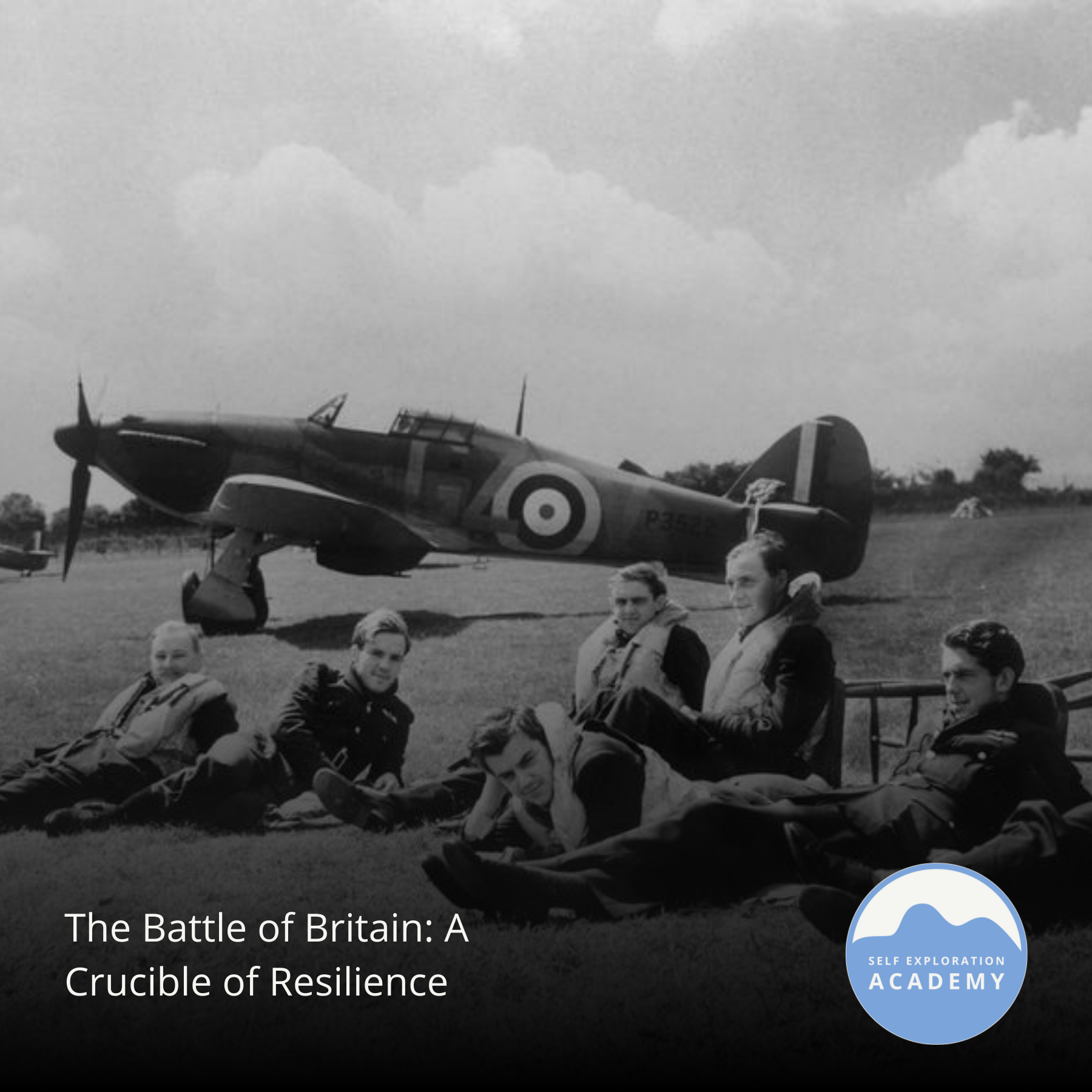
The Battle of Britain: A Crucible of Resilience
Discover the gripping story of the Battle of Britain, launched July 10, 1940. Explore the fear, defiance, and resilience that defined a nation's stand, and uncover its powerful lessons in self-management for today.
Exploring the fear, courage, and unwavering spirit that defined Britain's stand against Nazi Germany in the pivotal air campaign of 1940.
The Moment Itself
On July 10, 1940, the skies over the English Channel became the opening stage for what would be one of World War II's most critical aerial campaigns: the Battle of Britain. Following the fall of France and the evacuation at Dunkirk, Britain stood alone against Nazi Germany, which now controlled most of Western Europe. Adolf Hitler's next objective was Operation Sea Lion, the planned invasion of Britain, but first, the Luftwaffe had to achieve air superiority over the Royal Air Force (RAF). This initial phase, known as "Kanalkampf" (Channel Battle), saw the Luftwaffe begin targeting British shipping in the Channel and coastal convoys.
At stake was nothing less than the survival of democratic Britain and the potential for a German victory that could reshape the global order. Key figures included Air Chief Marshal Hugh Dowding, head of RAF Fighter Command, whose strategic brilliance in conserving his limited fighter force and implementing the integrated air defense system (combining radar, ground observers, and command centers) proved pivotal. On the German side, Hermann Göring, commander-in-chief of the Luftwaffe, underestimated British resolve and the effectiveness of their defenses. The battle was a test of technology, strategy, and sheer human courage, with Britain's Spitfire and Hurricane fighters facing off against German Messerschmitts, Dorniers, and Heinkels. The initial days established the brutal rhythm of aerial combat, where every sortie was a desperate gamble.
The Emotional Landscape
The emotional landscape of Britain during the Battle of Britain was a complex tapestry of fear, defiance, and an almost stoic resolve. For the civilian population, particularly those in southern England and London, the daily drone of approaching bombers and the wail of air raid sirens became a terrifying soundtrack to life. Nights were spent in shelters, praying for dawn. Yet, fear was often overshadowed by a fierce determination not to yield. The collective memory of Dunkirk had forged a powerful sense of unity and shared purpose.
For the RAF pilots, many of them barely out of their teens, the emotions were more visceral: a potent mix of exhilaration in combat, profound grief for fallen comrades, and an exhausting, perpetual readiness for the next scramble. They returned from sorties often covered in sweat and grime, adrenaline coursing through them, only to witness the empty chairs of friends who wouldn't return. Despite the immense pressure and the grim odds, there was also a deep sense of camaraderie and an unshakeable belief in their mission. The famous phrase "never was owed by so many to so few" perfectly captured the public's profound gratitude and the pilots' immense burden.
A Lesson in Social Emotional Learning
The Battle of Britain offers a profound lesson in Self-Management, specifically the competency of resilience. The RAF, outnumbered and constantly under pressure, displayed extraordinary collective resilience. Their ability to persist in the face of overwhelming adversity, to recover from losses, and to maintain morale despite constant threat, was foundational to their success. Dowding's strategic decision-making, which prioritized the preservation of fighter aircraft and pilots, demonstrated a form of organizational self-management, understanding limitations while maximizing strengths.
On an individual level, the pilots exhibited immense emotional regulation and perseverance. They processed fear and grief, yet continued to fly, driven by duty and an understanding of the stakes. This wasn't merely about physical courage but about the mental fortitude to repeatedly face mortal danger. The British public, too, showcased resilience in their daily lives, adapting to bombings, rationing, and uncertainty, yet refusing to succumb to panic or despair. This historical moment speaks to us today by reminding us that true strength often lies not in avoiding challenges, but in the unwavering commitment to endure, adapt, and ultimately, overcome them.
Latest Posts