

WELCOME TO
The Academic Blog

The Day the World Changed: Britain & France Declare War on Germany, 1939
Step back to September 3, 1939, when Britain and France declared war on Germany. Explore the emotional landscape and critical lessons on responsible decision-making from this pivotal moment in history.
Relive the tension, fear, and resolve as nations plunged into the deadliest conflict in human history, and discover the enduring lessons on responsible leadership.
The Moment Itself
On September 3, 1939, at 11:15 AM British Summer Time, Prime Minister Neville Chamberlain’s voice, somber and resolute, crackled over the radio waves. "I am speaking to you from the Cabinet Room at 10 Downing Street," he began, his words carrying the weight of an era's end. Just two days prior, on September 1, Germany had invaded Poland, unleashing its Blitzkrieg with terrifying speed and brutality. Britain and France, having issued an ultimatum demanding German withdrawal, now faced the grim reality of its rejection. At 9:00 AM, the British ultimatum expired, and two hours later, Chamberlain announced to a stunned nation and the world that "this country is now at war with Germany." Shortly after, France followed suit. The fragile peace that had clung to Europe since the Great War shattered, plunging the continent and soon much of the globe into the deadliest conflict in human history. What was at stake was not merely the sovereignty of Poland, but the very principle of international law, the balance of power, and the future of democratic ideals against an aggressive, expansionist totalitarianism.
The Emotional Landscape
Across Britain and France, the declaration was met with a complex tapestry of emotions. For many, particularly those who had lived through the horrors of World War I, there was a profound sense of dread and resignation. The promise of "peace in our time," so optimistically declared by Chamberlain after Munich, had evaporated, replaced by the chilling certainty of another generation's sacrifice. Parents clutched their children tighter, remembering gas masks and air raid drills. Yet, alongside the fear, there was also a pervasive sense of grim determination and, for some, even relief. The policy of appeasement had failed; the moment for decisive action, long urged by figures like Winston Churchill, had finally arrived. There was a collective understanding that this was not a war of choice, but one of necessity, forced upon them by an unyielding aggressor. The streets, while not erupting in celebratory jingoism as in 1914, held a quiet, steely resolve, a shared anxiety for the unknown future, and a deep-seated anger at the violation of peace.
A Lesson in Social Emotional Learning
The events of September 1939 offer a stark lesson in Responsible Decision-Making. For years leading up to this moment, the major powers grappled with the complex decision of how to respond to Hitler's escalating aggression. The policy of appeasement, epitomized by the Munich Agreement, was a series of decisions driven by a desire to avoid war at almost any cost, reflecting a failure in foresight regarding the true nature of the threat. It demonstrated a collective inability to make difficult, unpopular decisions that prioritized long-term security over short-term peace. When the invasion of Poland finally occurred, Britain and France were compelled to make the ultimate responsible decision: to uphold their commitments and confront aggression, even if it meant war. This moment underscores that responsible decision-making, particularly in times of crisis, requires courage, a clear understanding of consequences, and the willingness to act on principles, even when the path is fraught with peril. The echoes of this historical moment still resonate today, reminding us of the critical importance of principled leadership and the collective responsibility to safeguard peace through decisive, ethical action.
Latest Posts









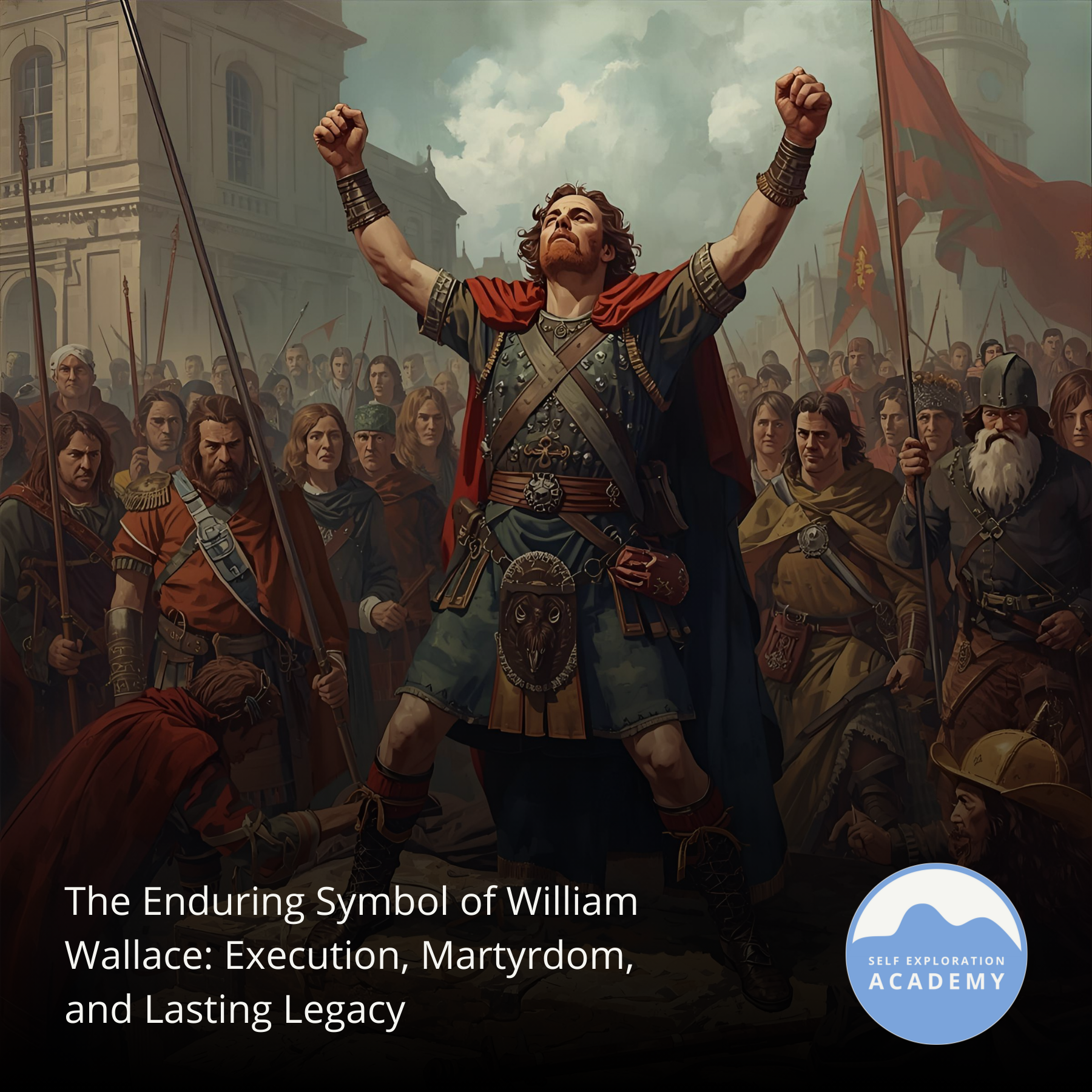
The Enduring Symbol of William Wallace: Execution, Martyrdom, and Lasting Legacy
On August 23, 1305, William Wallace's execution ignited a legend. Explore the emotional landscape of this pivotal moment in Scottish history and its profound lessons in self-awareness and responsible decision-making.
Delve into the pivotal moment of August 23, 1305, uncovering the raw human realities and the timeless insights from William Wallace's ultimate sacrifice.
On August 23, 1305, a pivotal moment in Scottish history unfolded in London, marking the brutal end of one man's life and the fiery birth of an enduring legend.
The Moment Itself
The air in Smithfield, London, was thick with anticipation and malice. William Wallace, the Scottish knight who had defied King Edward I of England, stood condemned. His capture, after years as a fugitive following his defeat at the Battle of Falkirk in 1298, was a monumental triumph for the English crown. Wallace, once the Guardian of Scotland, had rallied his countrymen to a stunning victory at Stirling Bridge in 1297, briefly liberating much of his homeland from English occupation. Now, accused of treason against a king he never recognized as his own, Wallace faced the full, gruesome spectacle of medieval justice: he was hanged, drawn, and quartered. His intestines were burned before his eyes, his head severed and impaled on London Bridge, and his limbs dispatched to four corners of Scotland—Newcastle, Berwick, Perth, and Aberdeen—as a stark warning. For Edward I, this was the definitive crushing of Scottish rebellion; for Scotland, it was a profound act of martyrdom.
The Emotional Landscape
The execution of William Wallace elicited a kaleidoscope of raw human emotions. Among the English, there was a palpable sense of triumph and relief, a belief that justice had been served against a dangerous rebel who threatened the stability of the realm. The public display of his dismembered body was intended to instill fear and deter further defiance. Yet, for the Scots, the reaction was far more complex and deeply visceral. Initial shock and despair likely gave way to profound grief and seething anger. The barbarity of Wallace's end, rather than extinguishing the flame of resistance, ignited it further. He transformed from a military leader into an immortal symbol of Scottish nationhood, a martyr whose sacrifice fueled an unyielding resolve for independence. His death was not an end but a catalyst, hardening the hearts of a people determined to throw off the English yoke.

A Lesson in Social Emotional Learning
William Wallace's final stand offers a compelling insight into Self-Awareness and Responsible Decision-Making. His unwavering refusal to plead guilty to treason, asserting that he could not betray a king to whom he owed no allegiance, demonstrates an profound self-awareness of his identity and his core values. He understood his purpose as a champion of Scottish freedom, and this conviction remained unshaken even in the face of excruciating death. His decision, and by extension, the Scottish people's subsequent decision to continue their fight for independence, embodies a form of responsible decision-making rooted in collective identity and a deep-seated commitment to sovereignty. While the immediate outcome was tragic, the long-term impact of his martyrdom galvanized a nation, proving that some decisions, though seemingly futile in the moment, can forge an unbreakable spirit of resistance. Wallace's story continues to resonate today as a powerful testament to the human spirit's capacity for defiance and the enduring power of a cause greater than oneself.
Latest Posts
Discover SEA’s 95 Universal Core Competencies—a research-informed, human-centered framework for building the life skills that actually matter. Organized in nine domains, this guide explores what it means to be truly capable.