
The Enduring Symbol of William Wallace: Execution, Martyrdom, and Lasting Legacy
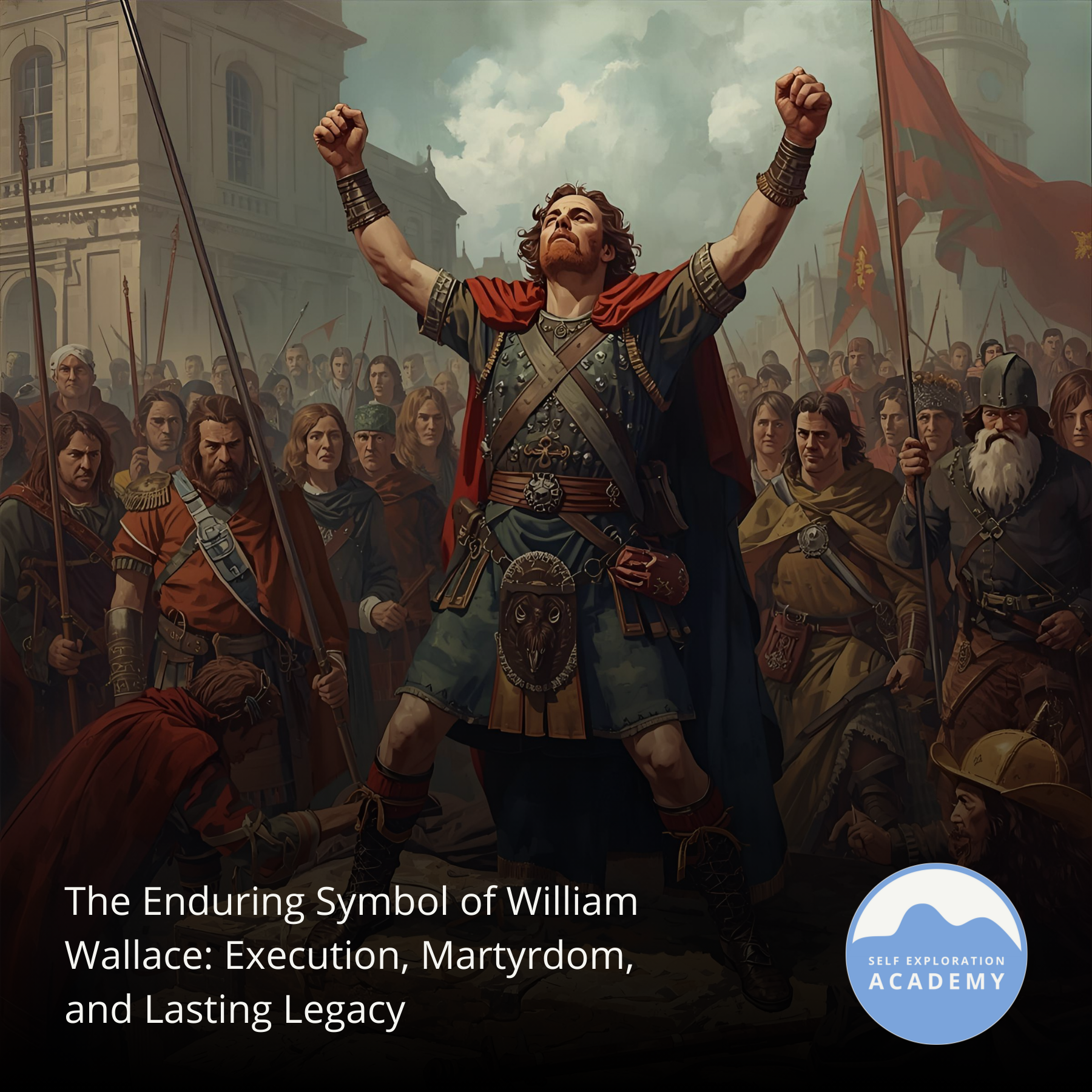
Delve into the pivotal moment of August 23, 1305, uncovering the raw human realities and the timeless insights from William Wallace's ultimate sacrifice.
On August 23, 1305, a pivotal moment in Scottish history unfolded in London, marking the brutal end of one man's life and the fiery birth of an enduring legend.
The Moment Itself
The air in Smithfield, London, was thick with anticipation and malice. William Wallace, the Scottish knight who had defied King Edward I of England, stood condemned. His capture, after years as a fugitive following his defeat at the Battle of Falkirk in 1298, was a monumental triumph for the English crown. Wallace, once the Guardian of Scotland, had rallied his countrymen to a stunning victory at Stirling Bridge in 1297, briefly liberating much of his homeland from English occupation. Now, accused of treason against a king he never recognized as his own, Wallace faced the full, gruesome spectacle of medieval justice: he was hanged, drawn, and quartered. His intestines were burned before his eyes, his head severed and impaled on London Bridge, and his limbs dispatched to four corners of Scotland—Newcastle, Berwick, Perth, and Aberdeen—as a stark warning. For Edward I, this was the definitive crushing of Scottish rebellion; for Scotland, it was a profound act of martyrdom.
The Emotional Landscape
The execution of William Wallace elicited a kaleidoscope of raw human emotions. Among the English, there was a palpable sense of triumph and relief, a belief that justice had been served against a dangerous rebel who threatened the stability of the realm. The public display of his dismembered body was intended to instill fear and deter further defiance. Yet, for the Scots, the reaction was far more complex and deeply visceral. Initial shock and despair likely gave way to profound grief and seething anger. The barbarity of Wallace's end, rather than extinguishing the flame of resistance, ignited it further. He transformed from a military leader into an immortal symbol of Scottish nationhood, a martyr whose sacrifice fueled an unyielding resolve for independence. His death was not an end but a catalyst, hardening the hearts of a people determined to throw off the English yoke.
A Lesson in Social Emotional Learning
William Wallace's final stand offers a compelling insight into Self-Awareness and Responsible Decision-Making. His unwavering refusal to plead guilty to treason, asserting that he could not betray a king to whom he owed no allegiance, demonstrates an profound self-awareness of his identity and his core values. He understood his purpose as a champion of Scottish freedom, and this conviction remained unshaken even in the face of excruciating death. His decision, and by extension, the Scottish people's subsequent decision to continue their fight for independence, embodies a form of responsible decision-making rooted in collective identity and a deep-seated commitment to sovereignty. While the immediate outcome was tragic, the long-term impact of his martyrdom galvanized a nation, proving that some decisions, though seemingly futile in the moment, can forge an unbreakable spirit of resistance. Wallace's story continues to resonate today as a powerful testament to the human spirit's capacity for defiance and the enduring power of a cause greater than oneself.
Latest Posts











Discover SEA’s 95 Universal Core Competencies—a research-informed, human-centered framework for building the life skills that actually matter. Organized in nine domains, this guide explores what it means to be truly capable.