

WELCOME TO
The Academic Blog

9/11: A Moment of Unprecedented Terror, Unforgettable Resilience
Explore 9/11's profound impact: from the moment itself to the emotional landscape and vital lessons in Social Emotional Learning. A deep dive into a day that changed the world.
Recounting the pivotal moments of 9/11 and examining the emotional landscape and social-emotional lessons that emerged.
The Moment Itself
On the morning of September 11, 2001, a clear Tuesday, the United States was irrevocably altered. Nineteen al-Qaeda terrorists, reportedly operating in four teams, hijacked four commercial airliners. At 8:46 AM Eastern Time, American Airlines Flight 11 struck the North Tower of the World Trade Center in New York City, followed just seventeen minutes later by United Airlines Flight 175 hitting the South Tower. The initial impact, a surreal explosion of fire and debris against the iconic Manhattan skyline, plunged the city and the nation into bewildered horror. As the towers burned, a third plane, American Airlines Flight 77, crashed into the Pentagon in Arlington, Virginia, at 9:37 AM, tearing a gaping hole in the symbol of American military might. Meanwhile, passengers and crew aboard United Flight 93, learning of the earlier attacks, bravely fought back against their hijackers, causing the plane to crash into a field in Shanksville, Pennsylvania, at 10:03 AM, likely preventing it from reaching its intended target, believed to be the U.S. Capitol or the White House. Within hours, both World Trade Center towers, weakened by the impacts and subsequent fires, collapsed into massive clouds of dust and twisted steel. Nearly 3,000 people were killed in the coordinated assault, including civilians from over 90 nations, first responders, and military personnel. What was at stake was not just human life, but the nation’s sense of security, its economic stability, and its place in a rapidly globalizing world.
The Emotional Landscape
The emotional landscape of 9/11 was a maelstrom of raw, profound human experience. For those in New York, Washington D.C., and Shanksville, immediate terror and confusion reigned. People ran from collapsing buildings, covered in dust, searching for loved ones, or simply trying to survive. The courage of firefighters, police officers, and paramedics, who rushed into the burning towers as others fled, was an overwhelming testament to selflessness in the face of certain death. Grief became a collective burden, palpable in the stunned silence that fell over cities, punctuated by the wails of sirens and the desperate calls from families seeking news. Yet, alongside the despair, an extraordinary wave of solidarity and hope emerged. Communities rallied, strangers offered help, blood banks were overwhelmed with donors, and flags flew everywhere. There was a fierce anger, too, a unified outrage directed at the perpetrators, fueling a national resolve that transcended political divides, even as it laid the groundwork for future conflicts.

A Lesson in Social Emotional Learning
The events of September 11, 2001, offer stark lessons in Social Awareness and Responsible Decision-Making. The perpetrators demonstrated a catastrophic failure of social awareness, utterly devoid of empathy for human life and blind to the global repercussions of their actions. Conversely, the immediate aftermath showcased an extraordinary surge in social awareness among ordinary citizens. People from all walks of life, without prompting, demonstrated profound empathy, compassion, and a deep understanding of collective suffering. They recognized the shared humanity of the victims and the interconnectedness of their communities, leading to an unprecedented outpouring of aid and support. The passengers on United Flight 93 epitomized responsible decision-making under unimaginable duress. Faced with certain death, they made a collective, ethical choice to confront their hijackers, understanding that their sacrifice could prevent further loss of life. Their decision, born of courage and a clear assessment of the dire situation, was a profound act of selflessness. This moment still speaks to us today, reminding us of the fragility of peace, the enduring power of human resilience, and the critical importance of fostering empathy and making ethical choices in a complex world.
Latest Posts













From Pain to Purpose: Unpacking the Emotional Landscape of King's "I Have a Dream"
Go beyond the famous speech. We explore the emotional landscape—the fear, courage, and intense Social Awareness—that made the 1963 March on Washington a profound success.
How the historic March on Washington, led by Martin Luther King Jr., provides a timeless masterclass in the core competency of Social Awareness.
The Moment Itself
August 28, 1963, dawned hot and humid over Washington D.C., but the air was electric with a sense of historic inevitability. On that day, over 250,000 Americans—Black and white, young and old, laborers and students—converged on the National Mall for the March on Washington for Jobs and Freedom. The objective was clear and profoundly complex: to pressure Congress and the Kennedy administration into passing meaningful civil rights legislation and to highlight the economic disparity faced by African Americans. Key leaders, including A. Philip Randolph, Bayard Rustin, and the heads of the "Big Six" civil rights organizations, orchestrated an event of unprecedented scale and discipline. The stakes could not have been higher. For civil rights activists, it was a demand for the full and immediate realization of the 14th and 15th Amendments; for segregationists, it was seen as an existential threat to the Southern way of life; and for the federal government, it was a crisis point on the national stage.
The culminating moment arrived when Dr. Martin Luther King Jr., the 34-year-old president of the Southern Christian Leadership Conference (SCLC), stepped to the podium at the foot of the Lincoln Memorial. What was planned as a standard, five-minute speech about the civil rights bill transformed mid-delivery. Influenced by the soaring spirit of the crowd and prompted by Mahalia Jackson's shout, "Tell them about the dream, Martin!", King pushed his prepared text aside. He launched into an extemporaneous sermon that elevated the political demands of the March into a timeless, moral aspiration. He spoke not merely of legislation, but of America failing to honor a "promissory note" to its citizens of color. His words, especially the repeated refrain, "I have a dream," articulated a vision of a nation where justice was colorblind, where his children would be judged not by the color of their skin but by the content of their character. This single speech did more than any other event that day to solidify the movement's moral high ground and turn a political demonstration into a transcendent moment of American reckoning.
The Emotional Landscape
The emotional texture of the March was a complex tapestry woven from decades of suppressed pain and a sudden, shared surge of exhilaration. For the demonstrators, the dominant feeling was hope, mixed with a deep, resolute courage. Many had traveled great distances, facing threats and logistical nightmares, yet the sheer mass of the crowd created a protective, validating bubble of community. There was an overwhelming sense of shared purpose and collective identity that temporarily eclipsed the daily indignities of segregation. King's speech tapped into the profound grief and anger over historical injustice by channeling it into an uplifting and unifying vision, not one of bitterness.
Contrast this with the emotions of political leaders and observers. In the halls of Congress and the White House, there was anxiety and apprehension, fueled by the fear that the massive gathering could devolve into violence, which would have irrevocably damaged the movement’s credibility. For those opposed to integration, the event elicited feelings of palpable fear and indignation—a belief that their traditions were under siege. Ultimately, the meticulous planning, discipline, and non-violent conduct of the March proved to be the most powerful emotional statement: a collective demonstration of disciplined restraint and fervent longing.
A Lesson in Social Emotional Learning
The March on Washington and Dr. King’s speech provide a powerful, living demonstration of the Social Emotional Learning competency of Social Awareness. This competency involves understanding the perspectives of others, empathizing with individuals and groups from diverse backgrounds, and recognizing social and ethical norms of behavior.
The organizers of the March exhibited profound Social Awareness by strategically choosing the venue (the Lincoln Memorial, a symbol of freedom), the date (the 100th anniversary of the Emancipation Proclamation), and the tone (non-violent and disciplined). They understood the deeply ingrained social norms of 1963 America—the racial bias, the political climate, and the media's hunger for violence—and leveraged that understanding. By maintaining strict discipline and centering the message on fundamental American values of justice and equality, they effectively managed the nation's perception of the movement, forcing the majority to confront the contradiction between their stated ideals and their systemic reality. King's “dream” was not a personal fantasy but an act of social empathy: he articulated a future not just for African Americans, but for the soul of the entire nation, appealing to the shared values buried beneath racial animosity.
The March on Washington still speaks to us today as a model of how collective Social Awareness can be used as a political and moral tool. It reminds us that meaningful change begins when a marginalized group can effectively communicate the reality of their experience in a way that resonates with the conscience and values of the dominant culture, compelling a necessary and responsible decision-making process.
Latest Posts

John Brown's Raid: The Spark That Ignited a Nation
Explore John Brown's audacious 1859 raid on Harpers Ferry, a pivotal event that escalated tensions before the Civil War. Uncover the emotional landscape of the era and its enduring lessons in responsible decision-making.
A deeper look into John Brown's pivotal assault on Harpers Ferry, revealing the human drama, national divisions, and complex moral questions that shaped a defining moment in American history.
The Moment Itself
On the night of October 16, 1859, a radical abolitionist named John Brown, along with a small band of 18 followers—including five Black men and three of his sons—launched a daring and desperate assault on the federal arsenal at Harpers Ferry, Virginia (now West Virginia). Brown's audacious plan was to seize the armory's weapons, incite a massive slave rebellion across the South, and establish a stronghold for liberated people in the Appalachian Mountains. The stakes were immense: the lives of his men, the future of the abolitionist movement, and potentially the very fabric of a nation already teetering on the brink of civil war.
Brown and his raiders quickly secured the arsenal and several key points, taking hostages, including Colonel Lewis Washington, a distant relative of George Washington. However, the anticipated uprising of enslaved people did not materialize as quickly or broadly as Brown had hoped. Local militia and armed citizens soon surrounded the arsenal, pinning down Brown's force. Within 36 hours, U.S. Marines, under the command of Colonel Robert E. Lee and Lieutenant J.E.B. Stuart, stormed the engine house where Brown and his remaining men had barricaded themselves. The raid was swiftly crushed, resulting in the deaths of ten of Brown's men (including two of his sons), four local citizens, and one Marine. Brown himself was wounded, captured, and subsequently tried for treason, murder, and inciting slave insurrection.
The Emotional Landscape
The emotional landscape surrounding the Harpers Ferry raid was a volatile mix of terror, outrage, and defiant resolve. In the South, the raid ignited widespread panic and fury. White Southerners saw it as a direct act of Northern aggression, confirming their deepest fears of abolitionist plots to incite slave insurrections. The specter of armed Black rebellion, coupled with what they perceived as Northern complicity, solidified a sense of betrayal and pushed many toward secessionist sentiments. Fear of slave revolts, always simmering beneath the surface, now boiled over into widespread paranoia and increased vigilance.
In the North, reactions were deeply divided. While many condemned Brown's violent methods, a significant number of abolitionists, particularly radical ones like Frederick Douglass, initially expressed admiration for his courage and moral conviction, even if they disagreed with his strategy. Brown's trial and subsequent execution transformed him into a martyr for the anti-slavery cause in the eyes of many Northerners, deepening the moral chasm between the sections. Grief for the lives lost mingled with a hardening of resolve on both sides, making compromise seem increasingly impossible.
A Lesson in Social Emotional Learning
John Brown's raid offers a stark, albeit complex, lesson in Responsible Decision-Making. Brown's actions were driven by an unwavering moral conviction that slavery was a profound evil requiring immediate, decisive action. His decision to resort to armed insurrection, however, demonstrates the perilous tightrope walk between deeply held beliefs and the practical consequences of one's choices. While his intent was to liberate, his methods were inherently violent, leading to loss of life and, in the immediate term, failing to achieve his primary objective of a widespread uprising.
The raid highlights how even decisions rooted in a strong moral compass can have unintended and far-reaching societal repercussions, particularly when they involve extreme measures. Brown's decision, while a tactical failure, undeniably ignited a fuse, forcing the nation to confront the irreconcilable differences over slavery with unprecedented urgency. It underscores the critical need to weigh not only the desired outcome but also the feasibility, the potential for unintended harm, and the broader societal impact when making decisions, especially those with such profound moral and political implications. The moment still speaks to us today about the enduring power of conviction, the complexities of justice, and the often-unforeseen consequences of radical action in the face of deep-seated injustice.
Latest Posts

The Day Women Won the Vote: A Century After Suffrage
Discover the untold emotional journey behind the 19th Amendment's certification. From fierce battles to a mother's letter, explore the pivotal moment women secured the right to vote in America.
A look back at the dramatic final days of the suffrage movement, the courageous decisions, and the enduring legacy of the 19th Amendment.
On August 26, 1920, a seemingly bureaucratic act in Washington, D.C., marked the culmination of a seventy-two-year struggle, forever altering the landscape of American democracy. Secretary of State Bainbridge Colby, without ceremony, signed the proclamation certifying the 19th Amendment to the U.S. Constitution, formally granting women the right to vote. This quiet moment belied the ferocious, decades-long battle that preceded it, a fight waged by generations of women and their allies against entrenched societal norms, political opposition, and often violent resistance. The stakes were nothing less than the full citizenship of half the nation's population, challenging fundamental ideas about gender roles, power, and who truly belonged in the public sphere.
The Moment Itself
The amendment's journey to certification hinged on ratification by 36 states. By the summer of 1920, 35 had approved, leaving Tennessee as the final, crucial battleground. Nashville became a vortex of intense lobbying, with "Suffs" (suffragists) in their yellow roses and "Antis" (anti-suffragists) in their red roses clashing openly. The fate of the amendment rested on a single vote in the Tennessee House of Representatives. On August 18, 1920, the vote was deadlocked. Then, a young legislator named Harry Burn, at 24 the youngest member of the House, received a letter from his mother, Phoebe Ensminger Burn. "Dear Son," she wrote, "Hurrah and vote for suffrage and don't forget to be a good boy." Despite wearing a red rose, signifying his anti-suffrage stance, and facing immense pressure from his party, Burn changed his vote from "no" to "aye," breaking the tie and securing ratification by a single vote. His courageous decision, influenced by his mother's plea, sent shockwaves through the chamber and across the nation, paving the way for Colby's signature eight days later.
The Emotional Landscape
The emotional landscape surrounding the 19th Amendment's certification was a tempest of hope, despair, and ultimately, exultation. For suffragists like Carrie Chapman Catt and Alice Paul, the decades had been marked by relentless activism, public ridicule, arrests, hunger strikes, and the heartbreak of repeated legislative defeats. Their hope was a fragile, yet unyielding flame, fueled by a deep conviction in justice. The final days in Tennessee were fraught with anxiety, a culmination of years of sacrifice hanging by a thread. When Harry Burn cast his decisive vote, the immediate reaction was a mixture of stunned silence, then shouts, tears, and spontaneous celebrations among the suffragists. For the "Antis," the emotion was one of profound anger and betrayal, a sense of a world irrevocably altered and, in their view, diminished. This moment encapsulated the raw human experience of a societal paradigm shift: the joy of hard-won victory for some, and the bitter resentment of perceived loss for others.
A Lesson in Social Emotional Learning
The struggle for the 19th Amendment offers profound insights into Social Awareness and Responsible Decision-Making. The suffragists demonstrated extraordinary social awareness by recognizing and articulating the systemic injustice of women's disenfranchisement. They understood the broader societal implications of denying half the population a voice, empathizing with the collective struggle for equality. Their persistent advocacy was rooted in this deep understanding of societal structures and the need for change. Harry Burn's pivotal vote exemplifies responsible decision-making. Faced with intense political pressure and the expectation to vote a certain way, he chose to listen to his conscience and his mother's moral guidance, prioritizing a principle he believed was right over political expediency. His decision, while personally challenging, ultimately served a greater good. The moment still speaks to us today, reminding us that progress often requires individuals to cultivate a deep social awareness of inequities and to make courageous, responsible decisions that challenge the status quo, even when it's unpopular.
Latest Posts

The Great Scourge of 1793: Philadelphia's Yellow Fever Epidemic and Its Enduring Lessons
Step back to 1793 Philadelphia, where a yellow fever epidemic tested a young nation. Discover the fear, heroism, and surprising social-emotional lessons from this pivotal moment in public health history.
Delving into the 1793 Philadelphia yellow fever outbreak to uncover its emotional impact and its enduring lessons for social awareness and community action.
The Moment Itself
On August 21, 1793, in the bustling capital of the young United States, Philadelphia, Dr. Benjamin Rush, a prominent physician and signer of the Declaration of Independence, issued a dire warning. Yellow fever, a terrifying and often fatal disease, was sweeping through the city. What began as isolated cases quickly escalated into a full-blown epidemic, claiming lives with alarming speed. Philadelphia, then the nation's largest city and political heart, was ill-prepared for a public health crisis of this magnitude. The disease, characterized by fever, chills, jaundice, and internal bleeding, was poorly understood. Theories ranged from miasmas rising from decaying matter to imported goods. Rush, despite his later controversial advocacy for aggressive purging and bleeding, was among the first to recognize the severity of the situation and push for official action, initiating a desperate scramble for survival and a nascent public health response in a nation still finding its footing.
The Emotional Landscape
The emotional landscape of Philadelphia during the epidemic was a tapestry of terror, abandonment, and unexpected heroism. Panic gripped the city as thousands fled, including President George Washington and many government officials. Streets once vibrant became eerily silent, save for the rumbling of carts carrying the dead. Fear of contagion led to widespread abandonment of the sick, even by family members. Yet, amidst the despair, extraordinary courage emerged. Dr. Rush himself, despite falling ill, continued to treat patients. Free African Americans, particularly members of the Free African Society led by Richard Allen and Absalom Jones, stepped forward to nurse the sick and bury the dead, often at great personal risk, driven by a profound sense of community duty. Grief was pervasive, as families lost multiple members, and the sheer scale of death overwhelmed traditional burial practices. Hope flickered with the onset of cooler weather, which eventually halted the mosquito-borne disease, but the scars of loss and trauma ran deep.
A Lesson in Social Emotional Learning
The Philadelphia yellow fever epidemic offers a stark lesson in Social Awareness and Responsible Decision-Making. The initial response, marked by widespread flight and fear, highlights a failure in collective social awareness—the inability to fully comprehend and empathize with the suffering of others, leading to societal breakdown. However, the actions of individuals like Dr. Rush and, more profoundly, the Free African Society, exemplify profound social awareness. They recognized the urgent needs of the community and acted with compassion and a sense of civic responsibility, despite personal danger and societal prejudice. Their decision to serve, when many others fled, was a powerful act of responsible decision-making rooted in empathy and a commitment to the greater good. The crisis forced a nascent nation to confront its vulnerabilities and the critical need for collective action and compassion in the face of adversity. This historical moment reminds us that true societal strength lies not just in governance, but in the willingness of its citizens to act with courage, empathy, and shared responsibility, even when fear dictates otherwise.
Latest Posts

The Battle of Fallen Timbers: A Turning Point in America's Frontier
Explore the 1794 Battle of Fallen Timbers: a swift, brutal clash that reshaped the American frontier. Understand the high stakes, emotional landscape, and critical lessons in responsible decision-making from this pivotal historical event.
Exploring the pivotal moment when US forces faced a Native American Confederacy, forever changing the landscape of the American West.
The Moment Itself
On August 20, 1794, the dense forest near present-day Maumee, Ohio, became the crucible for a decisive clash that would shape the future of the American frontier. This was the Battle of Fallen Timbers, the culmination of the Northwest Indian War. For over a decade, a confederacy of Native American tribes—primarily the Miami, Shawnee, Delaware, and Wyandot, led by formidable figures like Little Turtle and Blue Jacket—had fiercely resisted American expansion into the fertile Ohio Valley. Their resolve was hardened by two prior, devastating defeats inflicted upon U.S. forces in 1790 and 1791, which had claimed hundreds of American lives. The stakes were nothing less than sovereignty over ancestral lands for the tribes and the secure westward expansion for the nascent United States. General Anthony Wayne, known as "Mad Anthony" for his aggressive tactics, commanded the newly formed Legion of the United States. His mission was clear: break the confederacy's power. The battle itself was swift and brutal. Wayne's troops exploited a natural obstacle—a swathe of tornado-felled trees that had forced the Native American lines to spread thinly—and launched a bayonet charge. The element of surprise, combined with the disciplined training of Wayne's Legion, shattered the confederacy's resistance in under an hour. The British, who had covertly supported the tribes from nearby Fort Miami, famously kept their gates shut, refusing refuge to their retreating allies.
The Emotional Landscape
The emotional landscape surrounding Fallen Timbers was a tapestry woven with desperation, defiance, and ultimately, profound grief and disillusionment. For the Native American warriors, the fight was an existential one, fueled by a deep-seated anger at the relentless encroachment on their homelands and a desperate hope to preserve their way of life. Their courage was immense, born of a sacred duty to protect their families and heritage. The defeat, however, brought a crushing wave of despair, compounded by the bitter realization of British betrayal. The sight of their villages and crops subsequently destroyed by Wayne’s forces cemented a sense of irreversible loss. On the American side, the prevailing emotions were a mix of grim determination and underlying fear, given the previous U.S. failures. Wayne's Legion carried the burden of restoring national pride and securing the frontier. Their victory brought immense relief, a surge of triumph, and a renewed sense of manifest destiny, albeit one built on conquest and displacement.
A Lesson in Social Emotional Learning
The Battle of Fallen Timbers offers a stark lesson in Responsible Decision-Making, particularly when considering the long-term consequences of choices made under pressure and competing interests. For the United States, the decision to pursue military conquest, despite the human cost of previous defeats, was driven by a national imperative for expansion and control of resources. While achieving its immediate objective, this decision set a precedent for future conflicts and the systematic displacement of indigenous peoples, leading to centuries of unresolved grievances. For the Native American Confederacy, the decision to resist, while courageous and morally justifiable from their perspective, ultimately led to devastating losses and the forced cession of vast territories through the Treaty of Greenville. The British decision to abandon their allies at the critical moment also highlights a failure of responsible decision-making, prioritizing their own geopolitical interests over the lives and sovereignty of the tribes they had encouraged to fight. This moment underscores how decisions, especially those involving power dynamics and land, have profound and lasting impacts on all involved, shaping historical trajectories and leaving complex legacies that echo into the present day. It reminds us of the critical need to consider broader ethical implications and long-term societal impacts when making choices, particularly those affecting vulnerable populations.
Latest Posts

Jamestown, 1619: The Day American Democracy Began to Breathe
Discover the dramatic 1619 founding of America's first legislature, Virginia's House of Burgesses. Unpack its emotional impact and surprising lessons in self-governance and social awareness.
Unpack the critical 1619 moment when colonists forged a new path for governance, exploring the emotions, conflicts, and enduring lessons from America's first legislature.
The Moment Itself
On a sweltering July 30, 1619, in the nascent settlement of Jamestown, Virginia, a pivotal assembly convened. Twenty-two burgesses, elected by the scattered and struggling plantations along the James River, gathered in the choir of the church, their mission to lay the groundwork for what would become the first representative legislative body in the Americas: the General Assembly of Virginia. Presiding was the newly appointed Governor Sir George Yeardley, alongside his six-member Council of State. The stakes were immense. After years of harsh martial law, disease, starvation, and precarious relations with the Powhatan Confederacy, the Virginia Company of London sought to stabilize its struggling venture, attract more settlers, and foster a sense of loyalty among the colonists. This assembly was a strategic concession, an attempt to grant the beleaguered colonists a voice in their own governance, believing that self-interest and participation would lead to greater industry and order. It was a cautious, yet revolutionary, experiment in distant rule, a nascent whisper of autonomy within the vast, imperial ambitions of the British Crown.
The Emotional Landscape
The emotional texture of this moment was undoubtedly a complex tapestry woven with hope, anxiety, and the raw weariness of survival. For the burgesses, men who had endured the brutal realities of the New World, there must have been a profound sense of novelty and responsibility. They carried the weight of their communities' grievances and aspirations, eager to shape laws that would address the immediate concerns of tobacco cultivation, native relations, and local justice. Hope surely mingled with trepidation; this was an untested path, and the authority of the Crown loomed large. Would this nascent self-governance truly empower them, or was it merely a facade? Beneath the formal proceedings, the collective emotions of the colonists ranged from cautious optimism about securing property rights and fairer laws to the quiet despair of those still grappling with high mortality rates and the ever-present threat of disease. For those entirely excluded – the indentured servants, enslaved Africans who had arrived just weeks prior, and the indigenous peoples whose lands were being encroached upon – the day likely unfolded with a chilling indifference to their plights, reinforcing a deeper, unacknowledged layer of societal anxiety and injustice.
A Lesson in Social Emotional Learning
The establishment of Virginia's House of Burgesses offers profound insight into Responsible Decision-Making. The Virginia Company's decision to permit this assembly, while ultimately self-serving in its aim to bolster the colony's viability, represents a significant shift from autocratic rule to a more inclusive (albeit limited) form of governance. It was a recognition that continuing solely with harsh, top-down control was unsustainable and counterproductive to long-term success. They made a responsible, albeit imperfect, decision to empower select colonists, calculating that shared responsibility and a sense of agency would yield better outcomes than coercion.
However, this moment also reveals a glaring contradiction in Social Awareness. While the assembly represented a step forward for some, it simultaneously codified the exclusion of vast segments of the population. The "self-government" initiated that day was solely for land-owning men, utterly disregarding the voices and inherent rights of women, indentured servants, and especially the enslaved Africans who would soon form the backbone of the colony's labor force. This historical snapshot serves as a stark reminder that responsible decision-making, while appearing progressive on one front, can simultaneously perpetuate deeply irresponsible social structures if not underpinned by comprehensive social awareness and empathy for all members of a society. The moment still speaks to us today, urging us to scrutinize whose voices are heard and whose remain silenced, reminding us that true progress demands inclusive representation and genuine social awareness.
Latest Posts

A Revolutionary Gathering: The Story of Seneca Falls, 1848
Step back to 1848 and the Seneca Falls Convention, the pivotal moment that launched the women's rights movement. Discover the passion, challenges, and enduring SEL lessons from this historic gathering.
Discover how a groundbreaking convention in 1848 challenged societal norms and laid the foundation for gender equality, offering insights into historical courage and collective action.
The Moment Itself
On July 19, 1848, a quiet town in upstate New York became the unlikely crucible for a monumental shift in American social consciousness. The Seneca Falls Convention, organized primarily by Elizabeth Cady Stanton and Lucretia Mott, was not born in a vacuum but from years of simmering frustration among women, many of whom were active in the abolitionist movement yet found themselves sidelined and silenced even within progressive circles. Stanton and Mott, having been denied seating at the World Anti-Slavery Convention in London eight years prior solely due to their gender, resolved to hold a convention to discuss women's rights. What transpired over two days at the Wesleyan Chapel was revolutionary. Attendees, numbering around 300—including prominent figures like Frederick Douglass—gathered to deliberate over the "Declaration of Sentiments," a document penned largely by Stanton and modeled on the Declaration of Independence. It boldly asserted that "all men and women are created equal" and enumerated a series of grievances and resolutions concerning women's lack of suffrage, property rights, access to education, and professional opportunities. At stake was not merely a list of demands, but the fundamental redefinition of womanhood and citizenship in a nation built on principles of liberty.
The Emotional Landscape
The emotional texture of the Seneca Falls Convention was a complex tapestry woven with hope, indignation, and a palpable sense of audacious courage. For the women present, many of whom had been denied basic dignities and subjected to legal and social subjugation their entire lives, the convention was a cathartic release—a collective acknowledgment of shared grievances that had long been suffered in isolation. There was a profound sense of unity and determination as they debated and ultimately adopted the radical notion of women's suffrage, a demand so controversial that even some supporters initially hesitated. The atmosphere was charged with a mix of trepidation about the inevitable public backlash and exhilaration at the prospect of challenging deeply entrenched norms. Outside the chapel walls, the initial response from the wider society was often one of ridicule, scorn, and outright hostility. Newspapers derided the attendees, and many religious leaders condemned their actions, reflecting the fear and discomfort felt by those whose positions of power and traditional social order were threatened. Yet, for many others across the nation, Seneca Falls resonated as a powerful call to action, igniting a slow but undeniable fire of reform.
A Lesson in Social Emotional Learning
The Seneca Falls Convention offers a compelling case study in Social Awareness and Responsible Decision-Making. The conveners and participants demonstrated acute social awareness by deeply understanding the prevailing societal norms and power imbalances that systematically oppressed women. They didn't just feel personal frustration; they collectively articulated a comprehensive critique of institutionalized inequality, recognizing that the struggle for women's rights was a systemic issue requiring a broad societal shift. This awareness allowed them to empathize with the silent struggles of countless women and to craft a document that spoke to universal principles of justice. Their responsible decision-making was evident in their deliberate choice to organize the convention, frame their demands within the revered language of the Declaration of Independence, and, most notably, to include the resolution for women’s right to vote. This was a courageous and highly strategic decision, made with full awareness of the potential for public ridicule and ostracization, yet deemed essential for genuine equality. Their actions reflected a commitment to ethical standards and a long-term vision for societal good, despite immediate personal and social costs. The echoes of Seneca Falls still resonate today, reminding us of the enduring power of collective action and the critical importance of challenging injustices with both social acumen and unwavering resolve.
Latest Posts
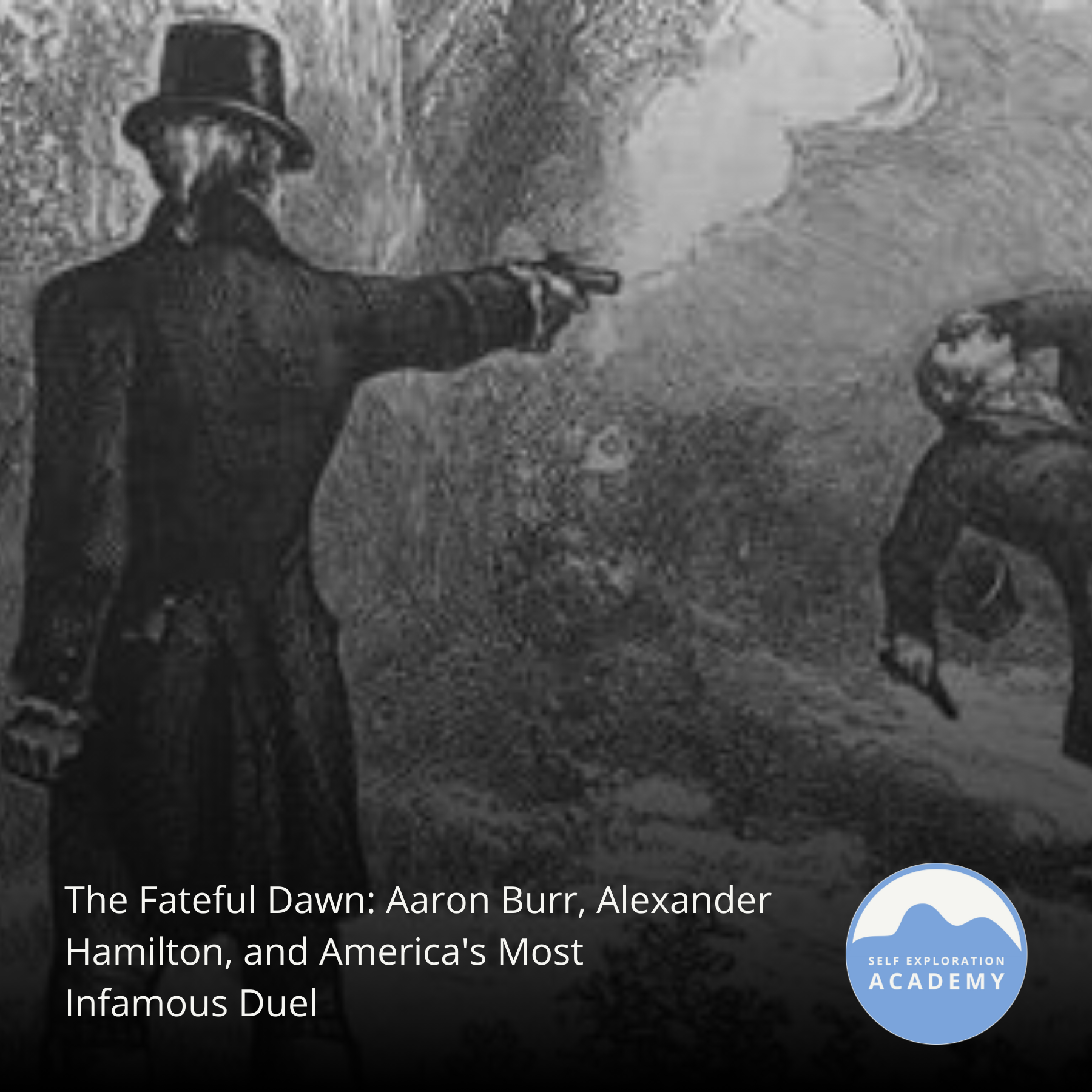
The Fateful Dawn: Aaron Burr, Alexander Hamilton, and America's Most Infamous Duel
Explore the dramatic 1804 Burr-Hamilton duel, its emotional aftermath, and how this historical confrontation offers timeless insights into responsible decision-making and social emotional learning today.
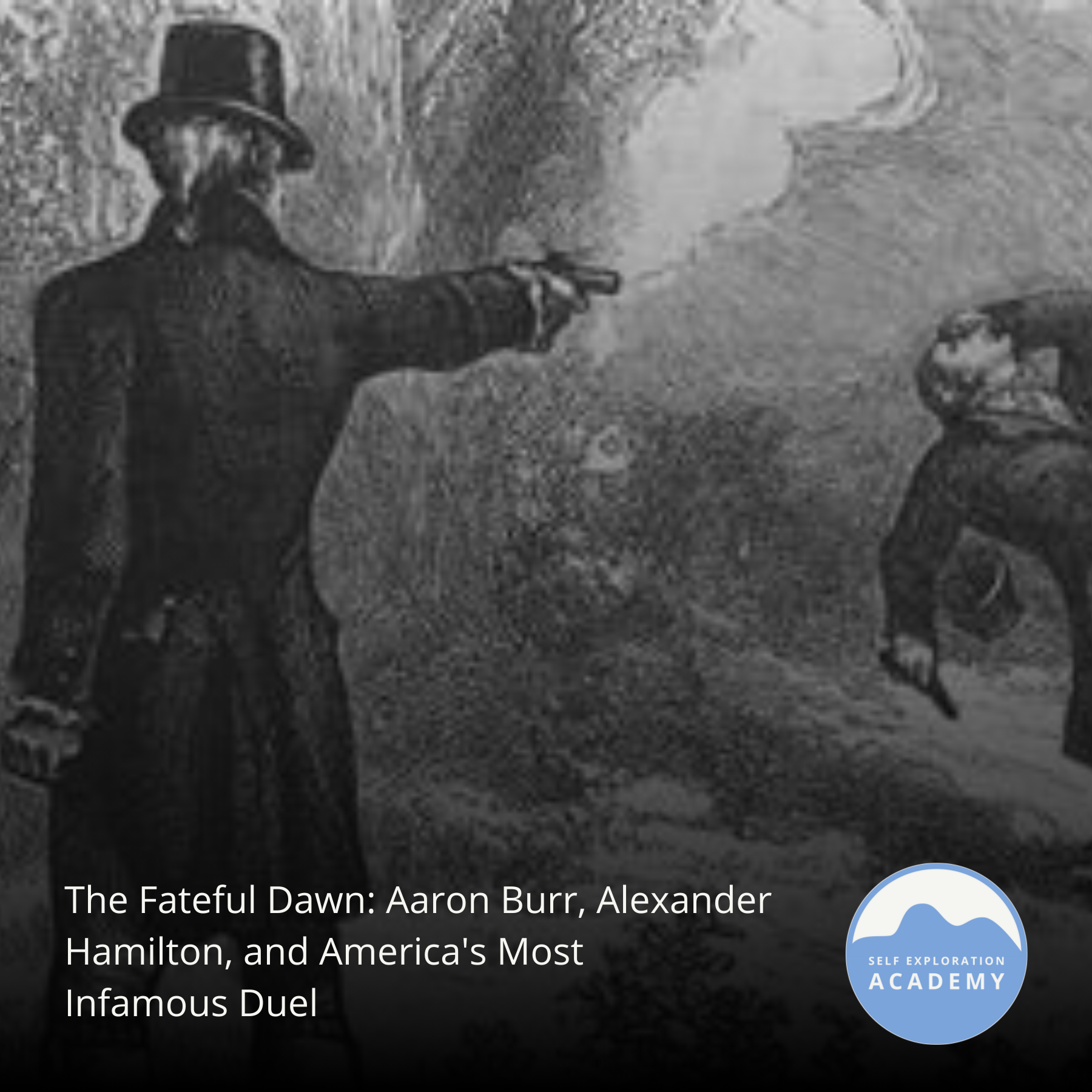
How a dawn encounter between Aaron Burr and Alexander Hamilton in 1804 offers profound insights into human nature and the power of responsible decision-making.
The Moment Itself
At dawn on July 11, 1804, a skiff carried two of America's most prominent founding figures across the Hudson River to a secluded ledge in Weehawken, New Jersey—a dueling ground favored for its inaccessibility and the protection it afforded from legal repercussions. Aaron Burr, the sitting Vice President, and Alexander Hamilton, a former Secretary of the Treasury and influential Federalist, stood facing each other, pistols in hand. This was no spur-of-the-moment confrontation but the culmination of years of intense political rivalry and escalating personal animosity, fueled by differing political philosophies, ambition, and a series of public and private insults. Hamilton had consistently undermined Burr's political aspirations, most recently by reportedly expressing a "despicable opinion" of Burr during the 1804 New York gubernatorial election, remarks that found their way into the press. For Burr, who had seen his political career falter despite his considerable talents, this perceived libel was the final straw—a direct assault on his honor that demanded satisfaction according to the era's code duello. For Hamilton, who outwardly condemned dueling yet felt compelled by societal expectations to accept the challenge, his reputation and even his life were on the line. At the agreed signal, shots rang out. Hamilton fired first, reportedly sending his bullet harmlessly into the air or a tree limb above Burr’s head. Burr's shot, however, struck Hamilton in the abdomen, inflicting a mortal wound.
The Emotional Landscape
The immediate aftermath was a complex tapestry of shock, grim resolve, and a profound shift in public sentiment. Burr, though outwardly composed, faced swift and widespread condemnation. His political career was irrevocably shattered, and he lived for decades with the stigma of having killed one of the nation's most admired figures. His emotional landscape must have been a desolate one, marked by the weight of societal ostracization and the knowledge of his fatal action, even if he believed it justified by the prevailing honor code. Hamilton, on the other hand, was carried away, suffering for thirty-one agonizing hours before succumbing to his wound. His letters penned before the duel reveal a man wrestling with his conscience, expressing his anti-dueling sentiments while also acknowledging the societal pressures that compelled him. There was a palpable sense of grief and outrage across the young nation, particularly in New York, where Hamilton was seen as a visionary architect of the republic. The public mourning was immense, and his funeral was a massive affair, cementing his legacy as a tragic hero and transforming Burr into a villain in the eyes of many.
A Lesson in Social Emotional Learning
The Burr-Hamilton duel serves as a stark, albeit tragic, case study in the perils of failing to exercise Responsible Decision-Making. Both men were individuals of extraordinary intellect and influence, yet they ultimately chose a path of irreversible conflict over potential avenues for de-escalation and rational resolution. Hamilton, despite his moral objections to dueling, made the decision to accept the challenge, prioritizing the prevailing code of honor and public perception over his own life and the well-being of his family. Burr, fueled by personal slight and a desperate need to reclaim his standing, chose to push the confrontation to its ultimate, fatal conclusion. Their combined failure to employ effective conflict resolution strategies, to engage in self-management of their pride and anger, or to consider the far-reaching consequences of their actions—both personally and for the nascent republic—led to a devastating outcome. The duel underscores how unchecked ego and a rigid adherence to outmoded social norms can override sound judgment. This historical moment powerfully illustrates that true strength and leadership often lie not in confrontation, but in the courage to seek peaceful solutions and to prioritize responsible choices, even when personal feelings are inflamed. It reminds us that the ability to make sound decisions, considering ethical implications and potential outcomes, remains a cornerstone of a functional society.
Latest Posts