
The Fateful Dawn: Aaron Burr, Alexander Hamilton, and America's Most Infamous Duel
How a dawn encounter between Aaron Burr and Alexander Hamilton in 1804 offers profound insights into human nature and the power of responsible decision-making.
The Moment Itself
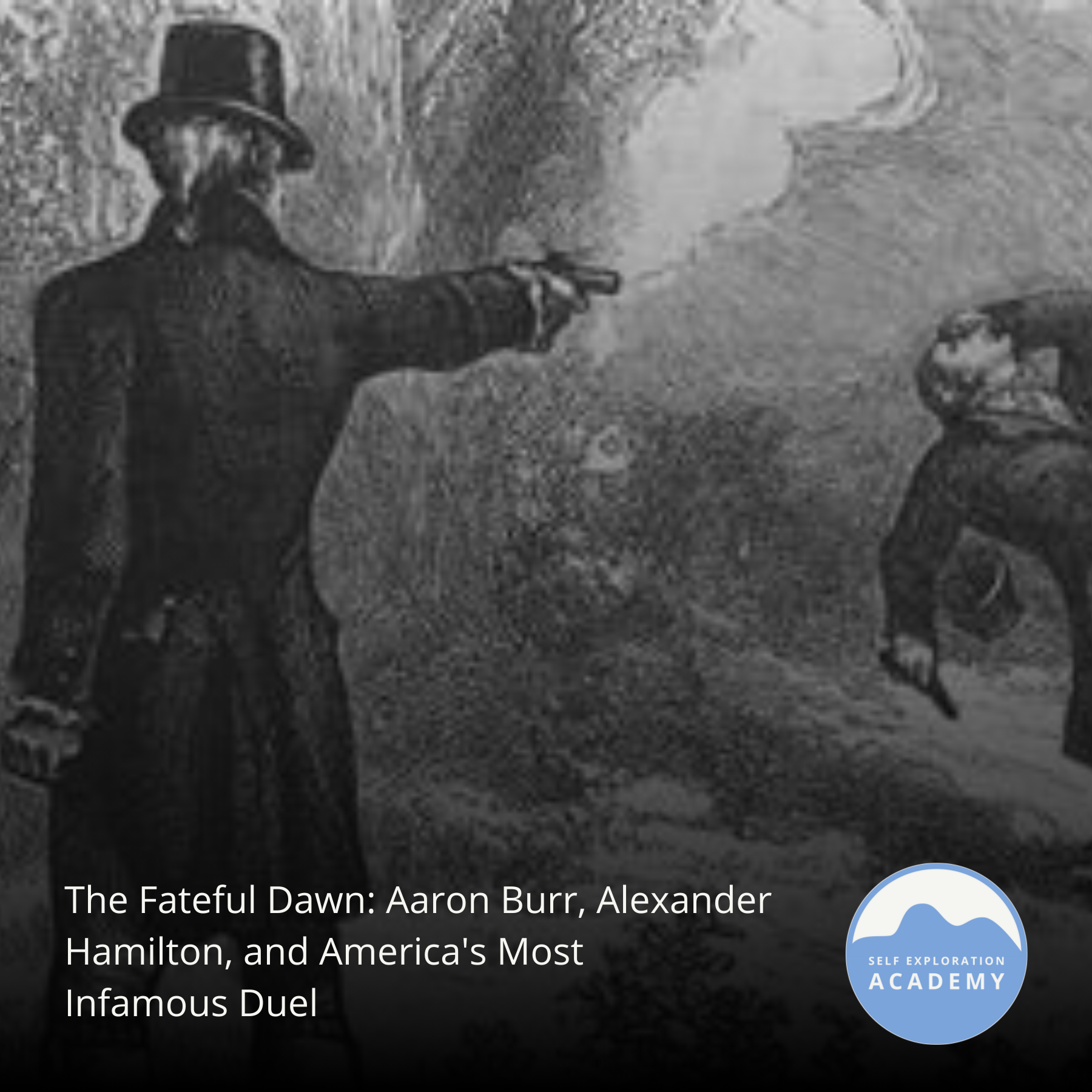
At dawn on July 11, 1804, a skiff carried two of America's most prominent founding figures across the Hudson River to a secluded ledge in Weehawken, New Jersey—a dueling ground favored for its inaccessibility and the protection it afforded from legal repercussions. Aaron Burr, the sitting Vice President, and Alexander Hamilton, a former Secretary of the Treasury and influential Federalist, stood facing each other, pistols in hand. This was no spur-of-the-moment confrontation but the culmination of years of intense political rivalry and escalating personal animosity, fueled by differing political philosophies, ambition, and a series of public and private insults. Hamilton had consistently undermined Burr's political aspirations, most recently by reportedly expressing a "despicable opinion" of Burr during the 1804 New York gubernatorial election, remarks that found their way into the press. For Burr, who had seen his political career falter despite his considerable talents, this perceived libel was the final straw—a direct assault on his honor that demanded satisfaction according to the era's code duello. For Hamilton, who outwardly condemned dueling yet felt compelled by societal expectations to accept the challenge, his reputation and even his life were on the line. At the agreed signal, shots rang out. Hamilton fired first, reportedly sending his bullet harmlessly into the air or a tree limb above Burr’s head. Burr's shot, however, struck Hamilton in the abdomen, inflicting a mortal wound.
The Emotional Landscape
The immediate aftermath was a complex tapestry of shock, grim resolve, and a profound shift in public sentiment. Burr, though outwardly composed, faced swift and widespread condemnation. His political career was irrevocably shattered, and he lived for decades with the stigma of having killed one of the nation's most admired figures. His emotional landscape must have been a desolate one, marked by the weight of societal ostracization and the knowledge of his fatal action, even if he believed it justified by the prevailing honor code. Hamilton, on the other hand, was carried away, suffering for thirty-one agonizing hours before succumbing to his wound. His letters penned before the duel reveal a man wrestling with his conscience, expressing his anti-dueling sentiments while also acknowledging the societal pressures that compelled him. There was a palpable sense of grief and outrage across the young nation, particularly in New York, where Hamilton was seen as a visionary architect of the republic. The public mourning was immense, and his funeral was a massive affair, cementing his legacy as a tragic hero and transforming Burr into a villain in the eyes of many.
A Lesson in Social Emotional Learning
The Burr-Hamilton duel serves as a stark, albeit tragic, case study in the perils of failing to exercise Responsible Decision-Making. Both men were individuals of extraordinary intellect and influence, yet they ultimately chose a path of irreversible conflict over potential avenues for de-escalation and rational resolution. Hamilton, despite his moral objections to dueling, made the decision to accept the challenge, prioritizing the prevailing code of honor and public perception over his own life and the well-being of his family. Burr, fueled by personal slight and a desperate need to reclaim his standing, chose to push the confrontation to its ultimate, fatal conclusion. Their combined failure to employ effective conflict resolution strategies, to engage in self-management of their pride and anger, or to consider the far-reaching consequences of their actions—both personally and for the nascent republic—led to a devastating outcome. The duel underscores how unchecked ego and a rigid adherence to outmoded social norms can override sound judgment. This historical moment powerfully illustrates that true strength and leadership often lie not in confrontation, but in the courage to seek peaceful solutions and to prioritize responsible choices, even when personal feelings are inflamed. It reminds us that the ability to make sound decisions, considering ethical implications and potential outcomes, remains a cornerstone of a functional society.
Latest Posts












Discover SEA’s 95 Universal Core Competencies—a research-informed, human-centered framework for building the life skills that actually matter. Organized in nine domains, this guide explores what it means to be truly capable.