

WELCOME TO
The Academic Blog

Henry Hudson's Arctic Obsession: A Voyage of Discovery, Mutiny, and Unforeseen Lessons
Explore Henry Hudson's 1610 voyage into Hudson Bay: an epic quest where obsession met mutiny. Uncover crucial SEL lessons on leadership, responsible decision-making, and human relationships from this historic moment.
Journey back to 1610 as explorer Henry Hudson's relentless pursuit of the Northwest Passage transforms into a gripping tale of survival, conflict, and profound insights into our emotional landscape.
The Moment Itself
On August 2, 1610, aboard the ship Discovery, English explorer Henry Hudson sailed into a vast, uncharted sea, convinced he had finally found the elusive Northwest Passage. His fourth voyage, funded by British merchants eager for a direct sea route to the lucrative markets of Asia, had pushed through the turbulent waters north of the Americas. What Hudson encountered was not the fabled passage to the Pacific, but an enormous inland sea, later to bear his name: Hudson Bay. For months, he meticulously charted its eastern coast, his obsession with finding the passage overriding all other concerns. The stakes were immense: untold riches for his sponsors, immortal fame for Hudson, and the collective survival of his crew in a remote, hostile environment as the arctic winter rapidly approached. His unyielding determination, born of years of failed attempts, now guided his every decision, driving Discovery deeper into the bay, unknowingly sealing his fate and that of many aboard.
The Emotional Landscape
The initial elation upon entering the vast waters of the bay must have been palpable—a mixture of hope, triumph, and perhaps a desperate relief that their arduous journey might finally yield success. Yet, as the weeks turned into months and the ice began to thicken, a profound shift occurred. Hope curdled into despair, elation into a gnawing fear. The crew, already exhausted and short on provisions, watched with growing alarm as Hudson pushed them further into the bay, disregarding their pleas to turn back. Fear of starvation, of being trapped in the unforgiving ice, and of a slow, agonizing death became their constant companion. This fear festered into deep-seated anger and frustration, directed squarely at Hudson's obstinate and increasingly irrational leadership. For Hudson, the emotional landscape was likely one of relentless pressure, a single-minded pursuit bordering on delusion, perhaps a desperate refusal to admit defeat even as the grim reality of their situation became undeniable. The chasm between the captain's vision and his crew's dire reality widened, creating an unbearable tension.

A Lesson in Social Emotional Learning
Henry Hudson's ill-fated voyage into Hudson Bay provides a stark, albeit tragic, lesson in Responsible Decision-Making and Relationship Skills. Hudson's relentless drive, while a hallmark of great explorers, became a profound failure in responsible decision-making. He exhibited a clear lack of foresight and adaptability, failing to adjust his strategy despite mounting evidence (the size of the bay, the encroaching winter) that his primary goal was unattainable. His obsession blinded him to the grave consequences for his crew and the mission's ultimate failure. He did not adequately weigh the risks against the diminishing returns.
Furthermore, the voyage highlights a catastrophic breakdown in Relationship Skills. Hudson's inability to effectively communicate with his crew, to acknowledge their valid fears, or to foster a collaborative environment proved fatal. His autocratic leadership style and perceived disregard for their well-being eroded trust and loyalty, leading directly to the desperate act of mutiny. The crew, in turn, also struggled with effective relationship skills, as their discontent escalated into rebellion rather than a negotiated resolution, albeit under extreme duress. The moment speaks to us today about the critical balance between ambition and pragmatism, the paramount importance of empathetic leadership, and the dire consequences that arise when communication fails and responsible decisions are abandoned in the face of obsessive pursuit.
Latest Posts













The Battle of Minden: Discipline, Miscommunication, and the Birth of a Victory
Discover how a shocking miscommunication during the 1759 Battle of Minden led to an unexpected victory and profound lessons in courage, discipline, and responsible decision-making.
How a misinterpretation on the battlefield led to an incredible act of bravery and revealed timeless insights into human behavior under pressure.
The Moment Itself
On August 1, 1759, amidst the sprawling European conflict known as the Seven Years' War, a pivotal engagement unfolded near Minden in present-day Germany. Allied Anglo-German forces, commanded by Prince Ferdinand of Brunswick, faced the French army under Marshal de Contades and Duc de Broglie. The morning fog, combined with miscommunication, set the stage for an extraordinary and perhaps unintended act of bravery. An order, intended to instruct the British infantry to advance "with cavalry" (or through a gap created by it), was somehow interpreted by six British infantry regiments and two Hanoverian battalions as an order to advance directly "through" the cavalry line, into the teeth of the massed French cavalry. What followed was an act of astonishing discipline and courage. With parade-ground precision, these infantry units marched directly across the battlefield, flags flying, drums beating, ignoring repeated orders to halt from their own cavalry commander, Lord George Sackville. They met the French cavalry charges head-on, firing disciplined volleys that shattered the elite French horsemen and then pressed forward into the main French lines, routing their infantry. This audacious, almost suicidal, advance utterly broke the French center, sealing a decisive Allied victory that ensured the safety of Hanover and shifted the strategic balance in the German theater.
The Emotional Landscape
The emotional texture of Minden was a complex tapestry woven from fear, confusion, unwavering courage, and ultimately, triumphant relief. For the British and Hanoverian soldiers making that seemingly inexplicable charge, the initial sensation must have been a chilling blend of duty and disbelief as they advanced unprotected towards formidable enemy cavalry. Yet, their discipline held, transforming potential panic into a grim resolve. Their unwavering advance, a testament to extensive drilling and unit cohesion, was a collective act of courage that overcame individual fear. On the French side, the sight of infantry calmly marching into cavalry charges, and not breaking, likely induced confusion that quickly gave way to alarm and then rout. The Allied camp, witnessing this unexpected success, would have experienced a surge of hope and elation as the battle turned decisively in their favor. The cost, however, was also clear: hundreds lay dead or wounded on both sides, and the triumph was tempered by the stark reality of war's human toll. The "Minden Roses" legend, where soldiers plucked flowers from the field to adorn their caps, speaks to the emotional high of victory, a small, vibrant gesture against the backdrop of grim combat.
A Lesson in Social Emotional Learning
The Battle of Minden offers a compelling, albeit complex, lesson in Responsible Decision-Making, particularly when viewed through the lens of individual and collective action under extreme pressure. The initial advance of the British infantry was born from a fundamental miscommunication – a failure in clear instruction that could have been disastrous. Yet, the soldiers, in their disciplined adherence to what they believed was the order, made a collective "decision" to press forward. This highlights how a sense of duty and the ability to self-manage fear (components of Self-Management) can lead to profoundly impactful actions, even when based on flawed information. Their disciplined march was a testament to training and collective trust, enabling them to make the "right" decision (to obey, to advance) in a volatile, ambiguous situation, despite the immense personal risk.
Conversely, the controversy surrounding Lord George Sackville's refusal to commit his cavalry for the pursuit after the French rout demonstrates the complexities of responsible decision-making at a strategic level. His caution, though perhaps defensively rationalized, was viewed as a failure to capitalize fully on a decisive victory, leading to his court-martial. This illustrates that "responsible" actions in high-stakes environments are not always clear-cut, can be deeply influenced by individual judgment and perceived risk, and may be heavily scrutinized in hindsight.
The Battle of Minden, therefore, speaks to us today about the critical importance of clear communication, the power of collective discipline in achieving extraordinary outcomes, and the enduring challenge of making "responsible" decisions when information is incomplete, stakes are high, and the path forward is fraught with risk. It reminds us that even when intentions are good, or discipline is strong, the human element—misinterpretation, caution, courage—shapes the course of history.
Latest Posts

Columbus's Trinidad: A Collision of Worlds in 1498
Step back to July 31, 1498, when Columbus encountered Trinidad. This post explores the emotional collision of worlds and uncovers crucial lessons in social awareness from a pivotal moment in history.
Exploring the emotional and cultural earthquake of July 31, 1498, and its enduring lessons in social awareness.
The Moment Itself
On July 31, 1498, Christopher Columbus, nearing the end of his third arduous transatlantic voyage, spotted three distinct peaks on the horizon, an answer to his prayer to the Holy Trinity. He had been sailing westward, driven by a belief that a vast, pearl-rich continent lay south of Hispaniola, and plagued by a severe ophthalmic condition that made every gaze a struggle. This land, which he christened Trinidad, lay at the mouth of the Orinoco River, a freshwater outflow so immense it suggested a continental landmass. Columbus, accompanied by his crew, navigated through challenging currents, eventually landing near the southern tip of the island. What was at stake was not merely the discovery of new territory for the Spanish Crown, but the continuation of European expansion into lands already inhabited by complex societies. The indigenous people, likely Arawakan-speaking groups such as the Warao or Lokono, initially approached with a mixture of curiosity and caution. Columbus, ever the explorer and driven by the Crown's mandate for gold and conversion, sought to establish a foothold and assess the potential for resources, particularly the pearls rumored to be abundant in the nearby Gulf of Paria. His landing marked a pivotal intrusion, shifting the course of history for the island's inhabitants from self-governance to an impending era of colonial subjugation.
The Emotional Landscape
The emotional texture of that moment was a stark contrast between two worlds colliding. For Columbus and his weary crew, the sighting of land after days of uncertainty brought immense relief, triumph, and perhaps a renewed sense of divine providence. They were adventurers, driven by ambition, greed, and a fervent belief in their imperial and religious mission. Their emotions likely swung from the anxiety of the open sea to the exhilaration of "discovery" and the anticipation of riches and glory. For the indigenous inhabitants, the arrival of these strange, pale-skinned men in their massive, sail-driven vessels must have evoked a complex spectrum of emotions. Initial curiosity might have given way to wonder, then apprehension, and soon, likely, profound fear and confusion as the intentions of the newcomers became clearer. Their world, stable for millennia, was suddenly, inexplicably, and irrevocably disrupted. The communal joy of their existing way of life was about to be replaced by the terror of enslavement, disease, and the systematic dismantling of their culture, a seismic shift that would cascade through generations.
A Lesson in Social Emotional Learning
The "discovery" of Trinidad by Columbus offers a poignant, albeit tragic, lesson in the competency of Social Awareness. From the European perspective, Columbus was a figure of bold ambition and perseverance. However, his actions, and those of his contemporaries, demonstrated a profound failure in social awareness regarding the indigenous populations. Social awareness involves understanding the perspectives of and empathizing with others, including those from diverse backgrounds and cultures. Columbus’s approach was rooted in an ethnocentric worldview that rendered the existing societies and rights of the indigenous people invisible. His immediate focus was on claiming land, assessing resources, and asserting dominance, without any genuine attempt to comprehend the established social structures, spiritual beliefs, or complex interrelationships of the people he encountered. This lack of social awareness led directly to responsible decision-making failures, as his choices prioritized colonial gain over the inherent human rights and well-being of the native inhabitants, resulting in immense suffering and the destruction of cultures. This historical moment serves as a powerful reminder that true progress and ethical engagement with diverse communities require deep empathy, respect for differing perspectives, and a commitment to understanding before acting, lessons that still resonate profoundly in our interconnected world today.
Latest Posts

Jamestown, 1619: The Day American Democracy Began to Breathe
Discover the dramatic 1619 founding of America's first legislature, Virginia's House of Burgesses. Unpack its emotional impact and surprising lessons in self-governance and social awareness.
Unpack the critical 1619 moment when colonists forged a new path for governance, exploring the emotions, conflicts, and enduring lessons from America's first legislature.
The Moment Itself
On a sweltering July 30, 1619, in the nascent settlement of Jamestown, Virginia, a pivotal assembly convened. Twenty-two burgesses, elected by the scattered and struggling plantations along the James River, gathered in the choir of the church, their mission to lay the groundwork for what would become the first representative legislative body in the Americas: the General Assembly of Virginia. Presiding was the newly appointed Governor Sir George Yeardley, alongside his six-member Council of State. The stakes were immense. After years of harsh martial law, disease, starvation, and precarious relations with the Powhatan Confederacy, the Virginia Company of London sought to stabilize its struggling venture, attract more settlers, and foster a sense of loyalty among the colonists. This assembly was a strategic concession, an attempt to grant the beleaguered colonists a voice in their own governance, believing that self-interest and participation would lead to greater industry and order. It was a cautious, yet revolutionary, experiment in distant rule, a nascent whisper of autonomy within the vast, imperial ambitions of the British Crown.
The Emotional Landscape
The emotional texture of this moment was undoubtedly a complex tapestry woven with hope, anxiety, and the raw weariness of survival. For the burgesses, men who had endured the brutal realities of the New World, there must have been a profound sense of novelty and responsibility. They carried the weight of their communities' grievances and aspirations, eager to shape laws that would address the immediate concerns of tobacco cultivation, native relations, and local justice. Hope surely mingled with trepidation; this was an untested path, and the authority of the Crown loomed large. Would this nascent self-governance truly empower them, or was it merely a facade? Beneath the formal proceedings, the collective emotions of the colonists ranged from cautious optimism about securing property rights and fairer laws to the quiet despair of those still grappling with high mortality rates and the ever-present threat of disease. For those entirely excluded – the indentured servants, enslaved Africans who had arrived just weeks prior, and the indigenous peoples whose lands were being encroached upon – the day likely unfolded with a chilling indifference to their plights, reinforcing a deeper, unacknowledged layer of societal anxiety and injustice.
A Lesson in Social Emotional Learning
The establishment of Virginia's House of Burgesses offers profound insight into Responsible Decision-Making. The Virginia Company's decision to permit this assembly, while ultimately self-serving in its aim to bolster the colony's viability, represents a significant shift from autocratic rule to a more inclusive (albeit limited) form of governance. It was a recognition that continuing solely with harsh, top-down control was unsustainable and counterproductive to long-term success. They made a responsible, albeit imperfect, decision to empower select colonists, calculating that shared responsibility and a sense of agency would yield better outcomes than coercion.
However, this moment also reveals a glaring contradiction in Social Awareness. While the assembly represented a step forward for some, it simultaneously codified the exclusion of vast segments of the population. The "self-government" initiated that day was solely for land-owning men, utterly disregarding the voices and inherent rights of women, indentured servants, and especially the enslaved Africans who would soon form the backbone of the colony's labor force. This historical snapshot serves as a stark reminder that responsible decision-making, while appearing progressive on one front, can simultaneously perpetuate deeply irresponsible social structures if not underpinned by comprehensive social awareness and empathy for all members of a society. The moment still speaks to us today, urging us to scrutinize whose voices are heard and whose remain silenced, reminding us that true progress demands inclusive representation and genuine social awareness.
Latest Posts

The Arc de Triomphe: A Monument Born of Conflict, Crowned by Compromise
Discover the complex story behind the Arc de Triomphe's 1836 inauguration. More than just an unveiling, it was a pivotal moment where a nation grappled with its imperial past and sought a unified future.
Explore the complex emotions and political maneuvers surrounding the 1836 unveiling of Paris's iconic monument.
The Moment Itself
On July 29, 1836, amidst the bustling avenues of Paris, a monumental structure finally stood complete and was officially inaugurated: the Arc de Triomphe. Conceived by Napoleon Bonaparte in 1806 after his stunning victory at Austerlitz, it was intended as a tribute to the invincible Grande Armée. Yet, the emperor who commissioned it never saw its completion, his empire crumbling long before the last stone was laid. Its construction spanned three distinct political regimes—the First Empire, the Bourbon Restoration, and finally, the July Monarchy under King Louis-Philippe. At stake was more than just a grand edifice; it was the symbolic reconciliation, or indeed, appropriation, of a nation's tumultuous past with its uncertain present. The inauguration represented a delicate political act, seeking to harness the potent legacy of Napoleonic glory for a new, more moderate France, without reigniting the imperial ambitions that had once plunged Europe into war.
The Emotional Landscape
The unveiling of the Arc de Triomphe would have evoked a profound and complex tapestry of emotions across French society. For the old guard, the veterans of Napoleon's campaigns, and fervent Bonapartists, it was a long-awaited vindication, a tangible reminder of past triumphs and a source of deep national pride. There would have been a palpable sense of awe at its sheer scale and solemnity in its purpose. Yet, for others—royalists, those weary of war, or families who bore the profound costs of the Napoleonic era—the monument might have stirred conflicting sentiments: lingering resentment, a painful memory of lives lost, or unease about the glorification of military power. The July Monarchy, itself a fragile compromise, sought to project an image of unity, but beneath the surface, the ideological fissures of revolution and empire still ran deep. The official celebration likely masked a complex interplay of genuine reverence, reluctant acceptance, and perhaps even quiet defiance, reflecting a nation still grappling with its identity.
A Lesson in Social Emotional Learning
The inauguration of the Arc de Triomphe offers a compelling lesson in Social Awareness. Louis-Philippe's decision to complete and inaugurate this distinctly Napoleonic monument, rather than abandon or diminish it, demonstrates a keen understanding of the collective psyche of the French people. Despite having overthrown the Bourbons and established a constitutional monarchy, his government recognized the profound and enduring reverence many French citizens held for Napoleon and the era of imperial glory. The Arc de Triomphe was not merely a building; it was a potent symbol embedded in the national consciousness, representing aspirations of power, destiny, and the memory of unparalleled military success. By completing it, Louis-Philippe’s regime sought to acknowledge and co-opt this powerful narrative, aiming to integrate it into the fabric of the new monarchy rather than creating further division by rejecting a significant portion of national memory. This act, whether successful in its unifying aim or merely a strategic political maneuver, highlights the critical importance of understanding diverse historical perspectives and collective emotions when navigating national identity and fostering cohesion.
The moment still speaks to us today, reminding us how historical monuments and symbols carry layers of meaning, often representing contradictions within a nation's story. It underscores the enduring challenge for societies to reconcile their past, however glorious or painful, with their present aspirations and future identity.
Latest Posts
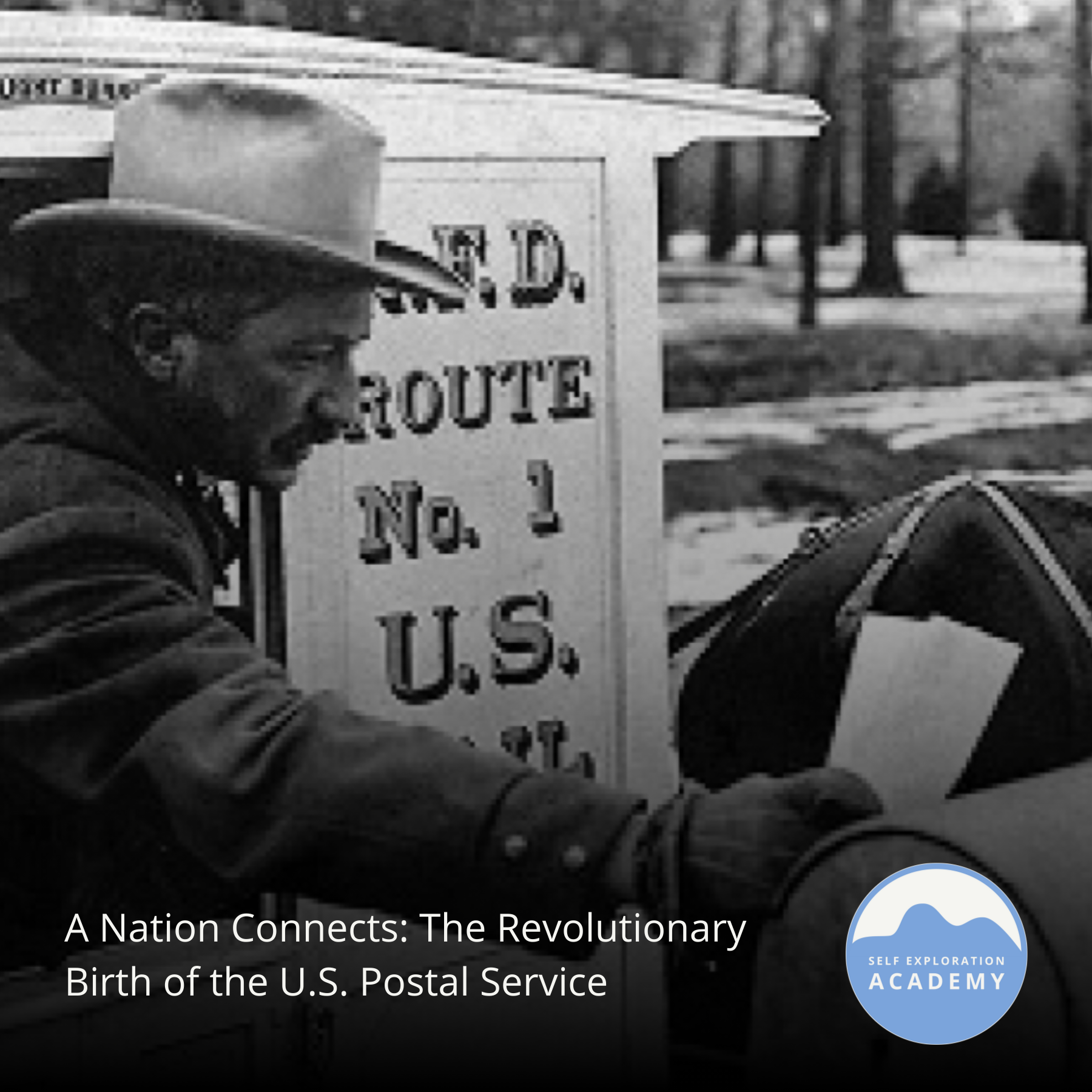
A Nation Connects: The Revolutionary Birth of the U.S. Postal Service
Discover how Benjamin Franklin’s strategic move to create the U.S. Postal Service in 1775 was crucial for American independence, connecting a nation in revolution.
Discover how Benjamin Franklin's strategic vision for communication became the backbone of America's fight for independence.
The Moment Itself
On July 26, 1775, amidst the burgeoning turmoil of the American Revolution, a seemingly administrative act unfolded that would prove pivotal to the nascent nation's survival: the Continental Congress, meeting in Philadelphia, established the U.S. Post Office Department and appointed Benjamin Franklin as its first Postmaster General. This was not a mere bureaucratic formality but a strategic maneuver born of urgent necessity. With British forces occupying Boston and the colonies teetering on the brink of full-scale war, a unified and reliable system of communication was paramount. The existing haphazard network, often reliant on private couriers or British postal routes, was inadequate and vulnerable to disruption. What was at stake was nothing less than the coherence of the revolutionary effort itself—the ability to coordinate military movements, disseminate crucial intelligence, and foster a shared sense of purpose among thirteen disparate colonies. Franklin, a man of profound intellect and extensive experience as a former colonial deputy postmaster general under British rule, possessed the unique understanding and respect necessary to forge this vital link. His appointment signaled the Congress’s intent to build independent institutions capable of sustaining a protracted struggle for freedom.
The Emotional Landscape
The emotional landscape of 1775 was a volatile mix of hope, desperation, and simmering anger. For patriots, the establishment of an American-controlled postal system would have been a beacon of hope, a tangible sign of self-governance taking root amidst chaos. The riders, often risking their lives traversing dangerous routes, became symbols of resilience, embodying the unwavering commitment to a cause larger than themselves. There would have been a collective sigh of relief among leaders receiving critical dispatches, a sense of unity forged through the exchange of letters, pamphlets, and news. Yet, beneath this nascent optimism lay the pervasive fear of discovery, betrayal, and the harsh realities of war. Every letter carried potential danger, every message a risk. The ability to communicate securely, to share both successes and sorrows, was a vital emotional lifeline for a people bound by a shared destiny yet physically separated by vast distances.
A Lesson in Social Emotional Learning
The founding of the U.S. Postal Service provides a profound lesson in Responsible Decision-Making. Faced with existential threats and an urgent need for cohesion, the Continental Congress did not merely react; it deliberately assessed the critical requirement for communication infrastructure and took decisive action to create it. This was a collective exercise in responsible decision-making, where leaders recognized a fundamental need, weighed the strategic implications of unreliable communication, and proactively designed a solution. They chose Franklin, not merely for his administrative acumen, but for his deep understanding of the colonies’ needs and his proven track record. The decision reflected a clear-eyed evaluation of resources, risks, and desired outcomes, demonstrating how foresight and proactive planning, even under immense pressure, can lay the foundation for enduring success. This moment speaks to us today about the enduring power of effective communication and the vital role of sound, collective decision-making in navigating crises and building resilient societies.
Latest Posts

Constantine's Ascent: A Turning Point in Roman and Christian History
Step back to 306 CE when Constantine's legions made a bold move, proclaiming him Emperor and challenging Rome's established order. Discover the drama and decisions that shaped an empire.
Explore the pivotal moment in 306 CE when Constantine's legions defied tradition, forever altering the destiny of the Roman Empire and setting the stage for a new era of power and faith.
The Moment Itself
On July 25, 306 CE, in the Roman military camp of Eboracum (modern-day York, England), a monumental declaration irrevocably altered the course of Roman and, eventually, Christian history. Following the unexpected death of Emperor Constantius Chlorus, his son, Constantine, was proclaimed Augustus by his loyal legions. This was not a preordained succession; rather, it was a brazen challenge to the established Tetrarchy, a system meticulously designed by Diocletian to prevent such unilateral power grabs. The Tetrarchy divided the vast Roman Empire into East and West, each ruled by a senior Augustus and a junior Caesar, with a clear line of succession intended to ensure stability. Constantius, as Western Augustus, had died before his designated successor could be elevated. Constantine, a charismatic military commander who had served with distinction under his father, seized the moment. His soldiers, bypassing the intricate political mechanisms of the Tetrarchy and fueled by devotion to their popular general, elevated him directly to the highest imperial rank. At stake was not just Constantine’s personal ambition, but the very viability of Diocletian’s carefully constructed framework for imperial governance and the peace it had largely maintained for two decades. The senior Augustus, Galerius, then residing in the East, now faced a direct usurpation, forcing a dangerous political chessboard into motion.
The Emotional Landscape
The emotional texture of this moment was a volatile mix of fervent loyalty, audacious ambition, and palpable apprehension. For Constantine’s troops, their acclamation was an outpouring of devotion and perhaps a pragmatic move to secure their own future under a strong leader. Their jubilation and defiant unity stood in stark contrast to the likely shock and anger reverberating through the imperial courts, particularly that of Galerius. For the general populace, word of such a sudden and irregular imperial ascension would have triggered a familiar unease—the specter of civil war, a recurring nightmare throughout Roman history. Hope for stability would have mingled with fear of renewed conflict. Constantine himself, while undoubtedly exhilarated by the proclamation, would have felt the immense weight of his precarious position. He had the legions' backing but lacked legitimate recognition from the senior emperor, a challenge requiring both courage and shrewd self-management to navigate the treacherous political waters ahead.
A Lesson in Social Emotional Learning
Constantine’s ascension, viewed through the lens of Social Emotional Learning, offers a profound insight into Responsible Decision-Making. Faced with an unexpected opportunity born of his father's death and his legions' loyalty, Constantine made the immediate decision to accept the imperial title. This was not a rash choice but a calculated gamble. He understood the immediate context (his legions' support, the power vacuum) and the potential consequences (war with Galerius). Instead of a full confrontation, he demonstrated remarkable strategic thinking by immediately dispatching a letter to Galerius, presenting his acclamation as a regrettable but unavoidable act forced by his troops, offering to accept the lesser title of Caesar. This nuanced appeal acknowledged the existing power structure while asserting his own burgeoning authority. His decision to temporize rather than provoke an immediate full-scale conflict, exhibiting both self-awareness of his position and social awareness of the broader imperial politics, ultimately allowed him to consolidate power and survive. This pivotal moment showcases how a complex decision, though self-serving, can be executed with a degree of responsibility, balancing ambition with strategic prudence to shape history. The moment still speaks to us today, highlighting the intricate dance between seizing opportunity and navigating power dynamics with foresight and a measure of caution.
Latest Posts

Egypt's Silent Coup: The Revolution that Ended a Monarchy
Explore the captivating story of Machu Picchu's 1911 "rediscovery." Uncover the historical context, the emotions of the time, and profound lessons in social awareness from this iconic event.

From monarchy to republic: Delving into the human realities and monumental decisions that shaped Egypt's pivotal 1952 uprising.
The Moment Itself
In the predawn hours of July 23, 1952, a seismic shift began to ripple through Egypt. A clandestine group of young military officers, weary of a deeply entrenched, corrupt monarchy and the lingering shadow of British influence, made their decisive move. The nation, simmering with resentment after the humiliating defeat in the 1948 Arab-Israeli War—a loss widely blamed on the ineptitude and venality of King Farouk's regime—was ripe for change. The "Free Officers," a secret society within the army spearheaded by figures like Gamal Abdel Nasser and Muhammad Naguib, had meticulously planned their intervention for months. On that fateful night, they swiftly seized control of key governmental buildings, military headquarters, and strategic locations across Cairo. King Farouk, notorious for his lavish lifestyle and detachment from the struggles of his people, was caught off guard at his summer palace in Alexandria. The coup was remarkably swift and almost bloodless, a testament both to its detailed organization and the profound public disdain for the existing order. Farouk was compelled to abdicate a few days later, sailing into exile from his ancestral homeland. This abrupt end to a 150-year-old monarchy ushered in a new, republican era for Egypt, promising an end to foreign domination, an assertion of national pride, and a more equitable society.
The Emotional Landscape
The overthrow of King Farouk ignited a complex tapestry of emotions across Egyptian society. For many, particularly the working classes and nationalist segments, a palpable sense of relief and exhilaration swept through the streets. There was a cautious yet fervent optimism that genuine independence and social justice were finally within reach after decades of foreign manipulation and internal mismanagement. The air crackled with nationalistic fervor and a renewed sense of dignity. For the King and his loyalists, the sudden collapse of their world brought shock, betrayal, and despair, an almost unbelievable end to their inherited power and privilege. The Free Officers themselves, having executed their high-stakes gamble, likely felt an intense cocktail of determination, the immense tension of their conspiracy finally released, and the profound weight of responsibility that came with seizing the reins of a nation. While public celebrations were visible expressions of hope and renewed pride, a current of uncertainty undoubtedly ran beneath, particularly concerning what the new, unproven leadership would bring.
A Lesson in Social Emotional Learning
The 1952 Egyptian Revolution offers a powerful lens through which to examine Responsible Decision-Making. The Free Officers' choice to undertake a military coup was an act of audacious conviction, laden with existential risk. Their process involved a collective identification of a multifaceted problem: a morally bankrupt monarchy, pervasive foreign control, widespread social injustice, and a humiliating military defeat that underscored systemic failures. They analyzed their options, recognizing that revolution, while perilous, was perhaps the only path to fundamental change given the entrenched nature of the regime. Crucially, they considered the profound consequences: failure meant certain execution or imprisonment, while success meant inheriting the immense and complex challenges of governing a deeply troubled nation. Their planning and disciplined execution, which largely avoided widespread bloodshed, demonstrated a commitment to a vision of national salvation born out of a shared social awareness of Egypt's plight. This moment highlights how collective responsible decision-making, even in challenging established power structures, can shape a nation's destiny, carrying with it both the promise of a better future and the burden of its long-term implications. The revolution’s echoes still speak to us today, reminding us of the human capacity for collective action in the face of perceived injustice and the enduring quest for self-determination.
Latest Posts

Wiley Post's Epic Solo Flight: A Triumph of Human and Machine
In 1933, Wiley Post achieved the impossible: the first solo flight around the world. Discover the courage, technology, and sheer human will behind this extraordinary 7-day journey.
Explore the gripping story of Wiley Post's unprecedented solo journey, the technologies that made it possible, and the indomitable spirit of a true pioneer.
Wiley Post’s Solo Flight: A Triumph of Endurance
On July 22, 1933, the skies over Floyd Bennett Field in New York City thrummed with the sound of a single-engine plane, the Winnie Mae, as it descended from the clouds. Inside, Oklahoma aviator Wiley Post, wearing his signature eyepatch, completed what was then considered an impossible feat: the first solo circumnavigation of the globe. Having already set a record for a two-man global flight with navigator Harold Gatty in 1931, Post embarked on this second, even more audacious journey alone. His aircraft was equipped with groundbreaking new technologies for the time, including an automatic pilot, which he largely helped design, and a radio direction finder. The stakes were immense: his personal survival, the prestige of American aviation, and the validation of emerging navigational and flight control systems that would shape the future of air travel. In an era still captivated by Lindbergh’s solo Atlantic crossing just six years prior, Post’s ambition was to push the boundaries of human and technological endurance, proving that a single pilot could conquer the vastness of the world’s skies. He landed after an astonishing 7 days, 18 hours, and 49 minutes, having covered 15,596 miles.
The Moment Itself
The Winnie Mae touched down to a thunderous roar from an estimated 50,000 people who had gathered to witness history. Post, gaunt and visibly exhausted but triumphant, emerged from the cockpit, a living testament to human will and technological innovation. His flight path traced across continents and oceans, enduring mechanical issues, treacherous weather, and the relentless battle against sleep deprivation. Each successful leg, from Berlin to Irkutsk to Fairbanks, was relayed via radio, fueling public anticipation and awe. His decisions, often made in isolation high above the Earth, were critical: when to push on through storms, how to conserve fuel, and how to troubleshoot the nascent autopilot system that was as much a partner as it was an experimental feature. His arrival was not just the end of a flight but the culmination of meticulous planning, relentless courage, and a profound belief in the future of aviation.
The Emotional Landscape
The world watched Post’s progress with a cocktail of anxiety and exhilaration. During the flight, every radio silence prompted widespread concern; every successful landing, a collective sigh of relief and celebration. For Post himself, the journey was an intensely solitary emotional crucible. Imagine the profound loneliness of being airborne for days, the crushing fatigue, the constant thrum of the engine, the endless horizon, and the knowledge that one miscalculation could mean disaster. Yet, interwoven with fear must have been an immense sense of purpose, a fierce determination to succeed, and the quiet satisfaction of overcoming each challenge. His homecoming evoked a powerful mix of relief, national pride, and an almost childlike wonder at the shrinking world. He became a symbol of American grit and ingenuity during the bleak years of the Great Depression, offering a potent dose of hope and distraction.
A Lesson in Social Emotional Learning
Wiley Post’s solo global flight offers a compelling illustration of Self-Management and Responsible Decision-Making. His ability to endure extreme physical and mental duress for over seven days, managing severe sleep deprivation, navigational errors, and the inherent dangers of early aviation, speaks volumes about his emotional regulation and resilience. He had to continually assess risks, make split-second choices about weather and navigation, and troubleshoot mechanical issues all while battling profound fatigue and isolation. This required an unwavering commitment to his goal and an extraordinary capacity to maintain composure under immense pressure—hallmarks of strong self-management. Furthermore, his meticulous planning and careful use of emerging technologies demonstrate responsible decision-making, where every choice, from pre-flight preparations to in-air adjustments, directly impacted his survival and the success of the mission. Post’s journey reminds us that true achievement often demands not just skill and ambition, but an iron will to manage oneself and make sound judgments in the face of daunting challenges, a lesson that still resonates deeply in our complex world today.
Latest Posts

A Revolutionary Gathering: The Story of Seneca Falls, 1848
Step back to 1848 and the Seneca Falls Convention, the pivotal moment that launched the women's rights movement. Discover the passion, challenges, and enduring SEL lessons from this historic gathering.
Discover how a groundbreaking convention in 1848 challenged societal norms and laid the foundation for gender equality, offering insights into historical courage and collective action.
The Moment Itself
On July 19, 1848, a quiet town in upstate New York became the unlikely crucible for a monumental shift in American social consciousness. The Seneca Falls Convention, organized primarily by Elizabeth Cady Stanton and Lucretia Mott, was not born in a vacuum but from years of simmering frustration among women, many of whom were active in the abolitionist movement yet found themselves sidelined and silenced even within progressive circles. Stanton and Mott, having been denied seating at the World Anti-Slavery Convention in London eight years prior solely due to their gender, resolved to hold a convention to discuss women's rights. What transpired over two days at the Wesleyan Chapel was revolutionary. Attendees, numbering around 300—including prominent figures like Frederick Douglass—gathered to deliberate over the "Declaration of Sentiments," a document penned largely by Stanton and modeled on the Declaration of Independence. It boldly asserted that "all men and women are created equal" and enumerated a series of grievances and resolutions concerning women's lack of suffrage, property rights, access to education, and professional opportunities. At stake was not merely a list of demands, but the fundamental redefinition of womanhood and citizenship in a nation built on principles of liberty.
The Emotional Landscape
The emotional texture of the Seneca Falls Convention was a complex tapestry woven with hope, indignation, and a palpable sense of audacious courage. For the women present, many of whom had been denied basic dignities and subjected to legal and social subjugation their entire lives, the convention was a cathartic release—a collective acknowledgment of shared grievances that had long been suffered in isolation. There was a profound sense of unity and determination as they debated and ultimately adopted the radical notion of women's suffrage, a demand so controversial that even some supporters initially hesitated. The atmosphere was charged with a mix of trepidation about the inevitable public backlash and exhilaration at the prospect of challenging deeply entrenched norms. Outside the chapel walls, the initial response from the wider society was often one of ridicule, scorn, and outright hostility. Newspapers derided the attendees, and many religious leaders condemned their actions, reflecting the fear and discomfort felt by those whose positions of power and traditional social order were threatened. Yet, for many others across the nation, Seneca Falls resonated as a powerful call to action, igniting a slow but undeniable fire of reform.
A Lesson in Social Emotional Learning
The Seneca Falls Convention offers a compelling case study in Social Awareness and Responsible Decision-Making. The conveners and participants demonstrated acute social awareness by deeply understanding the prevailing societal norms and power imbalances that systematically oppressed women. They didn't just feel personal frustration; they collectively articulated a comprehensive critique of institutionalized inequality, recognizing that the struggle for women's rights was a systemic issue requiring a broad societal shift. This awareness allowed them to empathize with the silent struggles of countless women and to craft a document that spoke to universal principles of justice. Their responsible decision-making was evident in their deliberate choice to organize the convention, frame their demands within the revered language of the Declaration of Independence, and, most notably, to include the resolution for women’s right to vote. This was a courageous and highly strategic decision, made with full awareness of the potential for public ridicule and ostracization, yet deemed essential for genuine equality. Their actions reflected a commitment to ethical standards and a long-term vision for societal good, despite immediate personal and social costs. The echoes of Seneca Falls still resonate today, reminding us of the enduring power of collective action and the critical importance of challenging injustices with both social acumen and unwavering resolve.
Latest Posts

The Quiet End of a Revolutionary Storm: John Paul Jones's Final Days in Paris
Discover the poignant story of Revolutionary War hero John Paul Jones's final days in 1792 Paris. His quiet passing offers powerful lessons on self-awareness and finding purpose beyond the battlefield.
Explore the emotional and historical currents surrounding the forgotten passing of America's audacious naval legend.
On July 18, 1792, amidst the volatile currents of pre-Revolutionary Paris, a celebrated figure from across the Atlantic drew his last breath. John Paul Jones, the Scottish-born naval hero who famously declared, "I have not yet begun to fight!" during the American Revolutionary War, passed away at the age of 45. His death, in a rented room on the Rue de Tournon, was a quiet end to a life marked by thunderous battles and relentless ambition, a stark contrast to the revolutionary fervor gripping the city outside his window.
The Moment Itself
John Paul Jones's name had once resonated across two continents. His audacious raids on British coastal towns and his triumph over HMS Serapis aboard the USS Bonhomme Richard cemented his legend as a fearless, almost reckless, naval commander. He was celebrated in America and admired even by some of his adversaries. Yet, the peace that followed American independence proved more challenging than war. He found himself adrift, struggling to secure a fitting command or proper recognition from the nascent U.S. government. In 1788, he sought purpose elsewhere, accepting an offer to serve Catherine the Great of Russia, where he briefly commanded a fleet against the Ottoman Turks in the Black Sea. Despite further military successes, political intrigue and ill health forced his return to Paris in 1790. By 1792, his health was in severe decline, marked by dropsy and jaundice. He died largely alone, attended by only a few friends, including Gouverneur Morris, the American minister to France. No public mourning marked the passing of this once-glorious warrior; Paris was consumed by its own unfolding drama, and America was too distant, too nascent, to fully register the quiet departure of its audacious naval son.
The Emotional Landscape
The emotional landscape surrounding Jones’s final days was likely one of profound isolation for the hero himself. For a man whose life was defined by command, action, and public acclaim, succumbing to illness in a foreign city, far from the adulation of the nascent nation he had so valiantly served, must have been a bitter pill. His weariness was not just physical; it was the fatigue of a spirit unable to find a new, defining purpose in peacetime. There was likely an undercurrent of unfulfilled ambition, a sense of being an anachronism in a world that no longer demanded his particular brand of daring. For those few who witnessed his final moments, there might have been a quiet reverence for a life of extraordinary courage, tempered by the melancholy realization of how transient fame could be and how quietly even the greatest figures could fade. The world moved on, indifferent to the private anguish of a hero.
A Lesson in Social Emotional Learning
John Paul Jones's death offers a poignant lesson in Self-Awareness. Throughout his active career, Jones exhibited an almost unparalleled understanding of his capabilities as a naval tactician and a leader in battle. His famous declaration, "I have not yet begun to fight," epitomized an acute self-awareness of his own indomitable will and strategic prowess even in dire circumstances. However, his struggles in peacetime—his inability to secure a lasting, impactful role, his foray into Russian service, and his ultimate decline in Paris—suggest a more complex, perhaps less developed, self-awareness regarding his identity and purpose beyond the context of war. He seemed to embody his fighting spirit so completely that when the fighting ceased, he grappled with who he was and how to manage a life not defined by conflict. The moment speaks to the universal human challenge of adapting one's core identity and self-perception when the defining circumstances of one's life dramatically shift. How do we redefine ourselves when our primary stage is dismantled? Jones's quiet passing reminds us that truly knowing oneself involves understanding not just what we are capable of, but also who we are when those capabilities are no longer in demand, and how to find meaning in new, uncharted waters.
Latest Posts

The Unraveling of Spain: July 1936 and the Dawn of Civil War
Explore the dramatic 1936 start of the Spanish Civil War. Uncover the emotional chaos, political stakes, and crucial lessons in responsible decision-making that still resonate today.
Beyond the initial spark: Unpacking the human realities, societal divisions, and the profound SEL insights from the fateful decisions of July 1936.
The quiet summer air of July 17, 1936, in Spanish Morocco was shattered not by a singular, explosive event, but by the orchestrated movement of military units. This was the opening act of a meticulously planned coup d'état, initiated by conservative generals, most notably General Francisco Franco, against the democratically elected Popular Front government of the Second Spanish Republic. Spain had been a cauldron of political and social unrest for years, deeply divided between a progressive, secular Republic attempting land reform and social change, and powerful traditional forces—the military, the Catholic Church, wealthy landowners, and monarchists—who viewed these reforms as an existential threat to their established order. The generals, fearing a slide into communism and perceiving the Republic as weak and chaotic, believed a swift military intervention would restore order and traditional values.
The Moment Itself
The rebellion began with a pronunciamiento—a military declaration against the government—first in Melilla and swiftly spreading across Spanish protectorates in North Africa. The conspirators, including Generals Emilio Mola and José Sanjurjo (who died shortly after), had meticulously planned the coordinated uprisings across garrisons on the mainland. Their aim was a quick overthrow, a surgical strike to dismantle the republican government and replace it with a conservative, authoritarian regime. What they did not anticipate was the widespread popular resistance. As news of the military uprising reached cities like Madrid, Barcelona, and Valencia, ordinary citizens, loyal elements of the military and police, and organized labor groups—anarchists, socialists, communists—rose up to defend the Republic. The streets became battlegrounds, with poorly armed workers confronting professional soldiers. The stakes were immense: the preservation of Spain’s nascent democracy versus the imposition of a right-wing dictatorship, a future of social change against a return to traditional hierarchy. This failure of the swift coup transformed a military mutiny into a brutal civil war.
The Emotional Landscape
The immediate aftermath was a maelstrom of conflicting emotions. For those who supported the rising generals—Nationalists—there was a sense of relief, a belief that order was being restored and traditional values protected from perceived anarchy. For Republicans, the overwhelming emotions were shock, betrayal, and a fierce, desperate anger. Fear gripped many as the initial skirmishes erupted into widespread violence, turning neighbors against neighbors. Yet, alongside fear, immense courage emerged. Factory workers, students, and farmers, many with no military training, armed themselves with whatever they could find—old rifles, shotguns, even tools—to defend their cities and ideals. Hope mingled with despair; hope that the Republic would prevail, despair at the sudden disintegration of peace. The collective emotional fabric was torn, revealing deep ideological fissures, hardening hearts against compromise, and unleashing a torrent of human suffering.
A Lesson in Social Emotional Learning
The genesis of the Spanish Civil War offers a stark lesson in Responsible Decision-Making, particularly in its profound failure at a societal level. The military leadership’s decision to initiate a coup, rather than seek political solutions or engage in democratic processes, was an utterly irresponsible act. Their judgment was clouded by a narrow worldview, an inability to tolerate dissent, and an underestimation of the popular will. They prioritized their ideological vision of a "correct" Spain over the immense human cost of civil conflict, demonstrating a complete disregard for the well-being of the nation. Similarly, while understandable given the context, the fragmented and often ideologically rigid decision-making within the Republican ranks—where internal purges and lack of unified command hampered the war effort—also contributed to the tragic prolongation and outcome of the conflict. The war’s very existence stemmed from a collective societal failure to make responsible decisions about conflict resolution, leading to a catastrophe that claimed hundreds of thousands of lives.
This moment serves as a powerful reminder of the fragility of peace and the devastating consequences when leaders and factions fail to engage in responsible decision-making, preferring violent imposition over dialogue and compromise. It speaks to us today about the dangers of extreme polarization and the critical importance of fostering social awareness and relationship skills to navigate societal differences peacefully.
Latest Posts

The Trinity Test: When the World Changed Forever
Step back to July 16, 1945. The Trinity nuclear test wasn't just a flash in the desert; it was a moment of intense triumph, dread, and a profound shift in human history. Explore its emotional and ethical landscape.
A deep dive into the moments before, during, and after the Trinity test, and its lasting impact on humanity's understanding of power and responsibility.
The Moment Itself
In the pre-dawn darkness of July 16, 1945, at the remote Jornada del Muerto desert in New Mexico, a momentous and terrifying event was about to unfold. Code-named "Trinity," this was the culmination of the Manhattan Project, a top-secret endeavor born out of the urgent need for the United States to develop an atomic weapon before Nazi Germany. The world was embroiled in the final throes of World War II, and the stakes were impossibly high: an invention that could either swiftly end the deadliest conflict in human history or unleash an unimaginable new era of destruction. At the epicenter stood J. Robert Oppenheimer, the scientific director, a man burdened by the weight of the theoretical becoming terrifyingly real. Along with General Leslie Groves, the project's military head, and a cadre of the world's most brilliant scientists, they watched from bunkers miles away. At 5:29:45 AM Mountain War Time, the device, nicknamed "The Gadget," detonated. A blinding flash, brighter than a thousand suns, instantly lit up the desert, followed by an immense roar and a shockwave that reverberated for miles. Then, the signature mushroom cloud ascended, a terrifying harbinger of a new age, reaching over 38,000 feet into the sky. The success of the test confirmed humanity's mastery over atomic energy, transforming the nature of warfare and global power forever.
The Emotional Landscape
The emotional landscape surrounding the Trinity test was a tempest of contrasting and often contradictory human feelings. For many of the scientists involved, the initial moments after the detonation were marked by a profound sense of awe and triumph – the successful culmination of years of relentless, clandestine work. Yet, this exhilaration was quickly tempered by a chilling dread. Oppenheimer famously recalled the Bhagavad Gita: "Now I am become Death, the destroyer of worlds," encapsulating the profound moral reckoning that struck many as the true destructive potential became clear. There was relief among military leaders, seeing a swift end to the war and a means to potentially save countless American lives in a planned invasion of Japan. But for those who understood the implications beyond the immediate conflict, fear and uncertainty loomed large. The raw, unbridled power witnessed that morning ignited a silent, collective anxiety about humanity’s future. It was a victory shadowed by an existential threat, a moment of scientific marvel that simultaneously opened the door to unprecedented global vulnerability and an uneasy peace maintained by the threat of mutual assured destruction.
A Lesson in Social Emotional Learning
The Trinity test offers a stark lesson in Responsible Decision-Making. The decision to pursue and then detonate an atomic weapon was arguably the most significant and consequential technical-political choice of the 20th century. In the immediate context of World War II, the decision was framed by the perceived necessity of ending the war quickly and saving Allied lives. However, this moment dramatically illustrates how decisions, even those made with seemingly clear, immediate objectives, can have unforeseen, monumental, and often catastrophic long-term consequences. The scientists, military, and political leaders involved were making choices based on the information and ethical frameworks available to them at the time, under immense pressure. Yet, the subsequent arms race, the Cold War, and the enduring threat of nuclear annihilation reveal a profound lack of foresight regarding the broader implications for global stability and human survival. The Trinity moment underscores the critical need for comprehensive scenario planning, deep ethical reflection, and a robust understanding of potential systemic impacts when making high-stakes decisions, particularly in areas of scientific advancement with global reach. It reminds us that powerful choices carry responsibilities that extend far beyond the immediate horizon, speaking to us today about our collective obligation to wield our advancements with wisdom and profound caution.
Latest Posts

Echoes of the Marne: A Story of Desperation and Resolve
Relive the Second Battle of the Marne, WWI's intense turning point. Discover the desperate strategies, raw emotions, and crucial lessons in responsible decision-making from this pivotal historical moment.
How Germany's final offensive in 1918 became a testament to both leadership failure and strategic brilliance, offering insights into human decision-making under duress.
The Moment Itself
By the summer of 1918, the Western Front was a crucible of attrition, and Germany, despite significant gains from its Spring Offensive, was acutely aware that time was not on its side. The arrival of fresh, eager American troops was tilting the balance of manpower and morale decisively towards the Allies. General Erich Ludendorff, the effective commander of the German war effort, knew he needed one final, decisive blow before the American strength became overwhelming. He planned a grand offensive, Operation Marneschutz-Reims, aimed at splitting the French armies, securing a crucial railway hub, and ultimately enveloping Paris. On July 15, 1918, under the cover of dense fog and a thunderous artillery barrage, German stormtroopers launched their attack across a broad front near the Marne River, a haunting echo of the first battle that had halted their advance in 1914. This time, however, the Allies were prepared. French General Ferdinand Foch, the Allied supreme commander, had anticipated the attack due to intelligence gathered from captured German prisoners and reconnaissance. Instead of a rigid defense, Foch ordered a flexible, elastic defense, allowing German forces to advance into pre-prepared killing zones before unleashing devastating counter-fire. Crucially, French, British, and American divisions, including the seasoned U.S. 3rd Division, held their ground with resolute tenacity, particularly along the Marne itself. The gamble was on; the fate of the Western Front hung in the balance.
The Emotional Landscape
The emotional texture of that July morning was a volatile mix of hope, exhaustion, and desperate resolve. For the German soldiers, it was perhaps a final, desperate surge of belief that this push would finally break the stalemate and bring them home. Yet, beneath that manufactured optimism lay the profound weariness of four years of brutal trench warfare, starvation, and endless sacrifice. Many must have felt a chilling dread, knowing the odds against success were growing steeper. On the Allied side, the initial shock of the barrage quickly morphed into a fierce determination. For the French, defending their homeland was a visceral imperative. For the arriving Americans, it was their true baptism of fire, a chance to prove their mettle and contribute decisively. There was collective fear, certainly, as shells exploded and comrades fell, but also a raw courage born of necessity and a shared desire for the conflict to end. As the German advance faltered and then stalled, a palpable sense of hope began to replace despair, solidifying into steely resolve for the imminent counter-offensive.
A Lesson in Social Emotional Learning
The Second Battle of the Marne offers a powerful, albeit grim, lesson in Responsible Decision-Making. Ludendorff's decision to launch this final, exhaustive offensive was a catastrophic failure of this competency. Despite dwindling resources, exhausted troops, and clear intelligence suggesting the Allies were anticipating the attack, he pressed forward, driven by a desperate gamble rather than a sober assessment of reality. This highlights the dangers of decisions made under extreme pressure without sufficient Self-Awareness of one's own limitations or Social Awareness of the opponent's capabilities and morale. Conversely, General Foch's leadership demonstrates successful Responsible Decision-Making. His decision to adopt an elastic defense, based on accurate intelligence and a deep understanding of battlefield dynamics, allowed his forces to absorb the German blow effectively and conserve strength for a devastating counter-attack. He exhibited strong Social Awareness, correctly gauging the German's desperate intent, and Self-Management, avoiding the impulse to meet the attack head-on with a rigid defense.
Today, this moment still speaks to us about the critical importance of measured judgment, especially in high-stakes situations, and the profound consequences when desperate hope overrides rational assessment.
Latest Posts
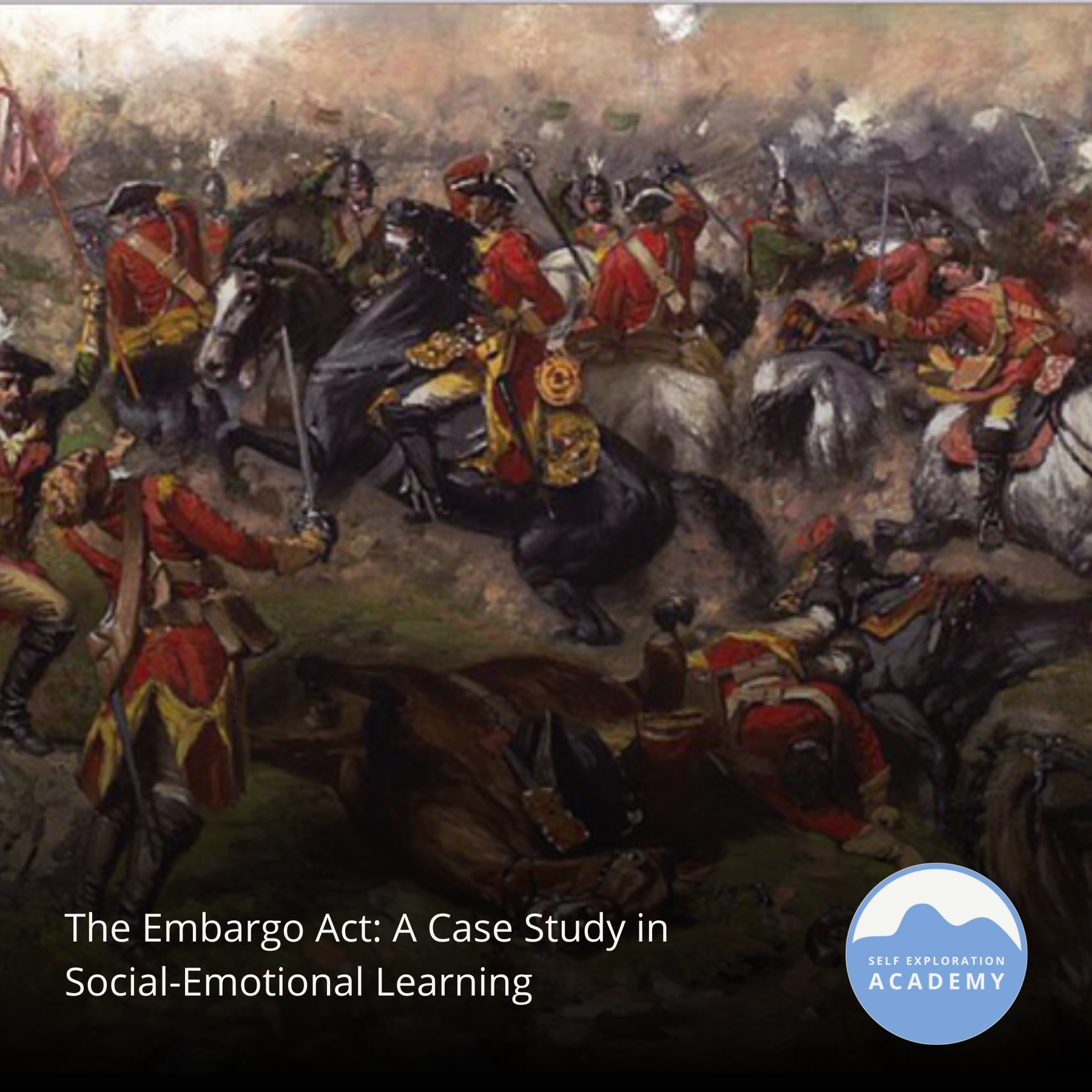
Aughrim, 1691: The Battle That Shaped Ireland's Fate
Explore the Battle of Aughrim (1691), a pivotal moment that cemented English rule in Ireland. Discover its emotional landscape and the profound lessons it offers in responsible decision-making and collective identity.
Exploring the pivotal 1691 battle that cemented English rule and its lasting impact on Irish identity and resilience.
The Battle of Aughrim, fought on July 12, 1691, was not merely a clash of armies but a pivotal moment that irrevocably shaped the future of Ireland. Occurring during the Williamite-Jacobite War, this conflict saw the Protestant Williamite forces, largely composed of English, Dutch, Danish, and Huguenot troops under the command of Godert de Ginkel, face off against the predominantly Catholic Jacobite army, fighting for the deposed Catholic King James II and led by the French general Charles Chalmot, Marquis de Saint-Ruth. At stake was nothing less than sovereignty, religious dominance, and the very identity of the Irish nation. A Jacobite victory might have preserved Catholic land ownership and political power; a Williamite triumph would solidify Protestant ascendancy and English control for centuries.
The Moment Itself
The battlefield was a boggy, challenging terrain near Aughrim in County Galway, favoring the Jacobite defensive position. Saint-Ruth, confident in his strong lines, underestimated Ginkel's determination and tactical adaptability. The battle commenced with fierce Williamite assaults on the Jacobite flanks, bogged down by the difficult ground. The turning point arrived when Saint-Ruth, believing his lines impenetrable, committed a critical error by descending from his vantage point to direct a counter-attack. A sudden cannonball struck and killed him, plunging the Jacobite command into disarray. Without their charismatic leader and a clear chain of command, their resistance faltered. Despite pockets of heroic, desperate fighting, the Jacobite army eventually broke and fled, suffering catastrophic losses. The sheer scale of the Jacobite defeat, with thousands dead and many more captured or dispersed, effectively ended their organized resistance in Ireland.
The Emotional Landscape
The aftermath of Aughrim was steeped in a complex array of emotions. For the victorious Williamites, there was relief, triumph, and a sense of divine vindication, though tempered by the brutal cost of the battle. For the Jacobites and the Catholic populace of Ireland, the defeat unleashed a torrent of despair, grief for lost loved ones, and profound bitterness. Hope, which had flickered following earlier engagements, was extinguished, replaced by a bleak acceptance of their subjugated future. There was undoubtedly immense fear among the defeated, knowing the repercussions of defying English authority. Yet, intertwined with this sorrow was a hardened resolve and a nascent sense of collective identity forged in shared suffering. The event solidified centuries of resentment, embedding itself deeply into the cultural memory as a symbol of injustice and the loss of autonomy, perpetuating a cycle of grievance and quiet resilience.
A Lesson in Social Emotional Learning
The Battle of Aughrim provides a poignant, albeit tragic, illustration of Responsible Decision-Making and its profound consequences. Saint-Ruth's fatal decision to leave his strategic overview to personally lead a charge, and the Jacobite command’s lack of a clear succession plan, proved disastrous. His decision, perhaps driven by a blend of overconfidence (a lack of self-awareness regarding his own tactical blind spots) and a desire for personal glory, ultimately undermined the entire Jacobite effort. Had he remained at his post, maintaining a broader tactical perspective, or had a robust contingency plan been in place for command succession, the outcome, while not guaranteed to be different, would certainly not have been so decisively one-sided. This moment highlights how individual decisions, particularly those made under immense pressure and with high stakes, can have far-reaching and irreversible impacts on collective destinies. The echoes of Aughrim still resonate, a stark reminder of the long shadow cast by critical choices in times of conflict.
Latest Posts
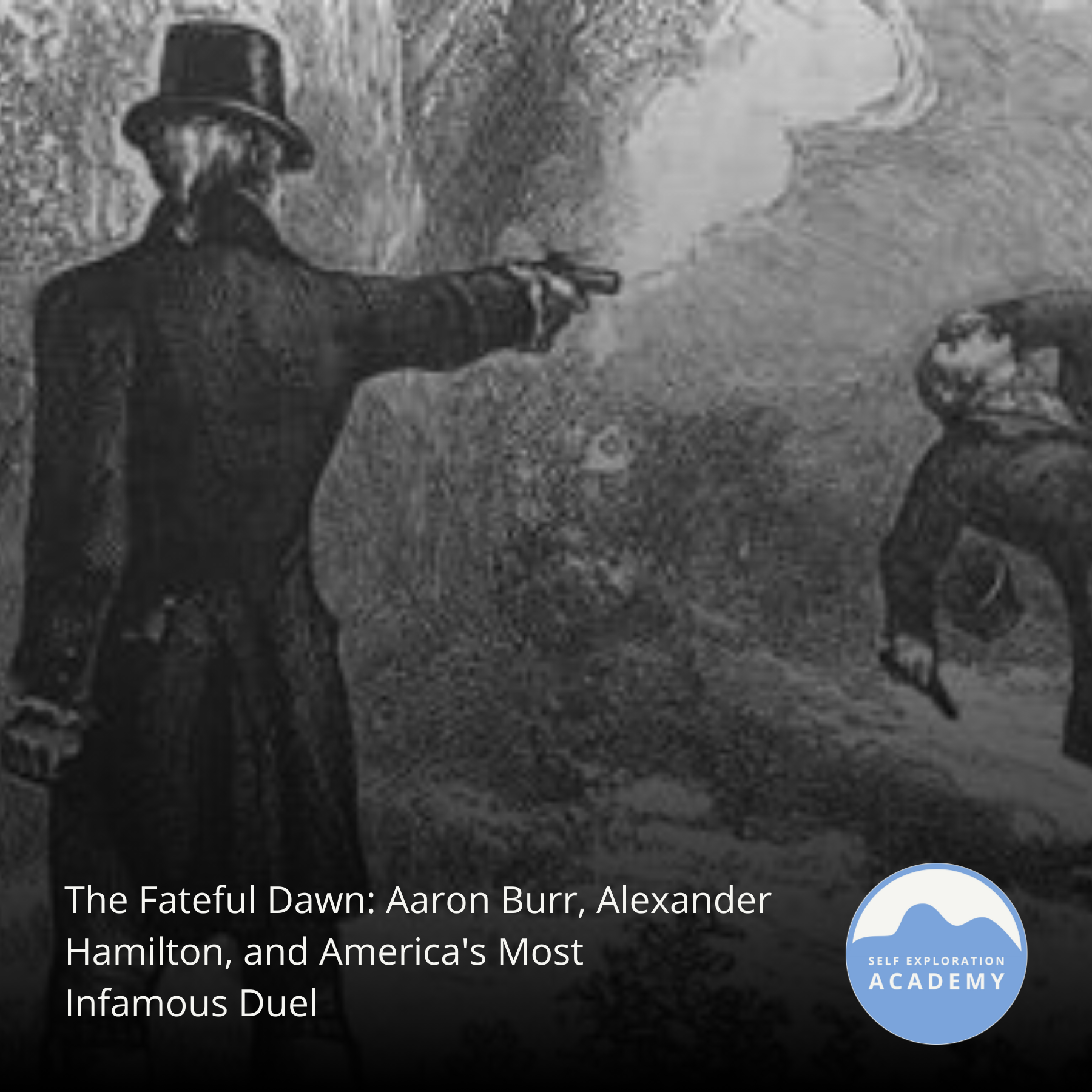
The Fateful Dawn: Aaron Burr, Alexander Hamilton, and America's Most Infamous Duel
Explore the dramatic 1804 Burr-Hamilton duel, its emotional aftermath, and how this historical confrontation offers timeless insights into responsible decision-making and social emotional learning today.
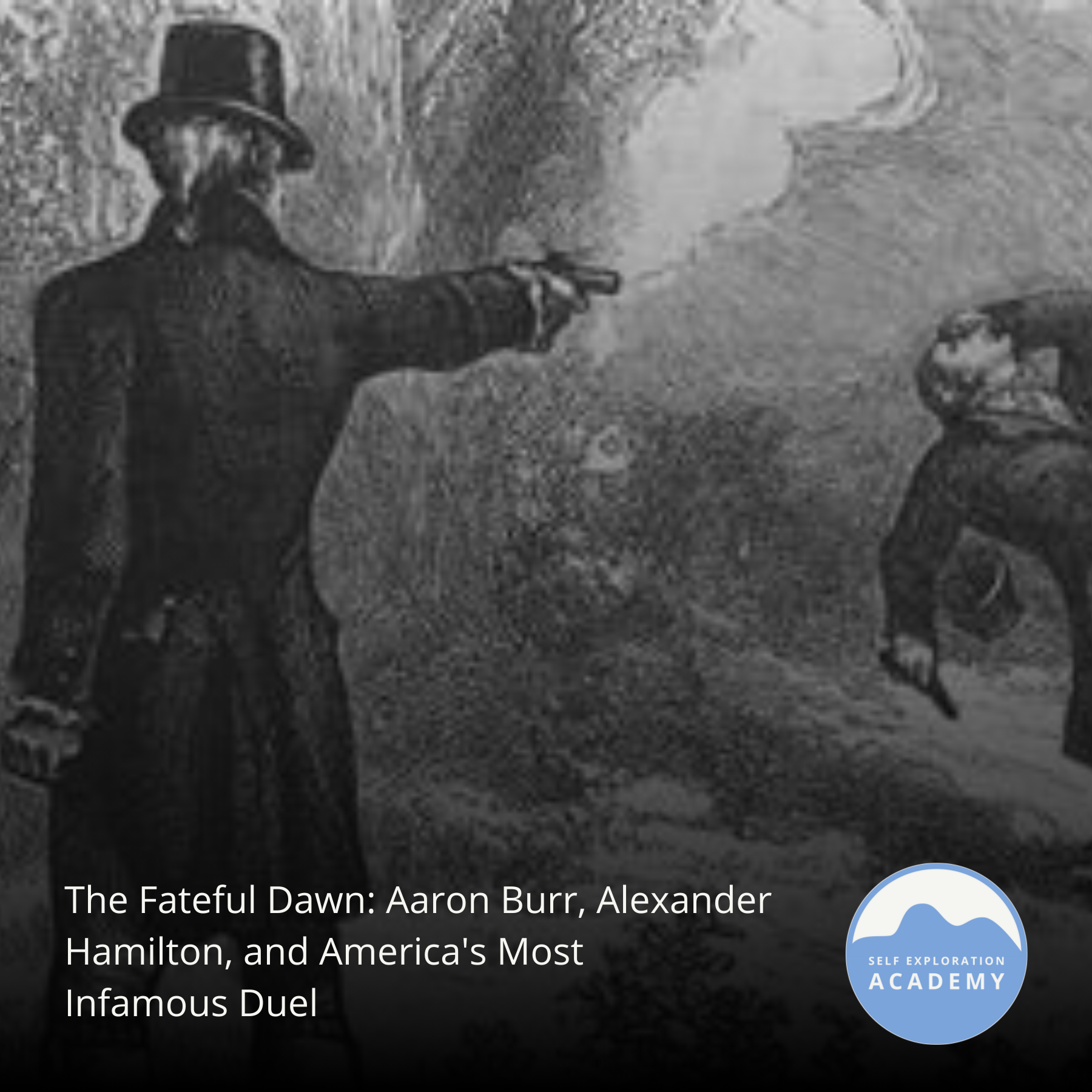
How a dawn encounter between Aaron Burr and Alexander Hamilton in 1804 offers profound insights into human nature and the power of responsible decision-making.
The Moment Itself
At dawn on July 11, 1804, a skiff carried two of America's most prominent founding figures across the Hudson River to a secluded ledge in Weehawken, New Jersey—a dueling ground favored for its inaccessibility and the protection it afforded from legal repercussions. Aaron Burr, the sitting Vice President, and Alexander Hamilton, a former Secretary of the Treasury and influential Federalist, stood facing each other, pistols in hand. This was no spur-of-the-moment confrontation but the culmination of years of intense political rivalry and escalating personal animosity, fueled by differing political philosophies, ambition, and a series of public and private insults. Hamilton had consistently undermined Burr's political aspirations, most recently by reportedly expressing a "despicable opinion" of Burr during the 1804 New York gubernatorial election, remarks that found their way into the press. For Burr, who had seen his political career falter despite his considerable talents, this perceived libel was the final straw—a direct assault on his honor that demanded satisfaction according to the era's code duello. For Hamilton, who outwardly condemned dueling yet felt compelled by societal expectations to accept the challenge, his reputation and even his life were on the line. At the agreed signal, shots rang out. Hamilton fired first, reportedly sending his bullet harmlessly into the air or a tree limb above Burr’s head. Burr's shot, however, struck Hamilton in the abdomen, inflicting a mortal wound.
The Emotional Landscape
The immediate aftermath was a complex tapestry of shock, grim resolve, and a profound shift in public sentiment. Burr, though outwardly composed, faced swift and widespread condemnation. His political career was irrevocably shattered, and he lived for decades with the stigma of having killed one of the nation's most admired figures. His emotional landscape must have been a desolate one, marked by the weight of societal ostracization and the knowledge of his fatal action, even if he believed it justified by the prevailing honor code. Hamilton, on the other hand, was carried away, suffering for thirty-one agonizing hours before succumbing to his wound. His letters penned before the duel reveal a man wrestling with his conscience, expressing his anti-dueling sentiments while also acknowledging the societal pressures that compelled him. There was a palpable sense of grief and outrage across the young nation, particularly in New York, where Hamilton was seen as a visionary architect of the republic. The public mourning was immense, and his funeral was a massive affair, cementing his legacy as a tragic hero and transforming Burr into a villain in the eyes of many.
A Lesson in Social Emotional Learning
The Burr-Hamilton duel serves as a stark, albeit tragic, case study in the perils of failing to exercise Responsible Decision-Making. Both men were individuals of extraordinary intellect and influence, yet they ultimately chose a path of irreversible conflict over potential avenues for de-escalation and rational resolution. Hamilton, despite his moral objections to dueling, made the decision to accept the challenge, prioritizing the prevailing code of honor and public perception over his own life and the well-being of his family. Burr, fueled by personal slight and a desperate need to reclaim his standing, chose to push the confrontation to its ultimate, fatal conclusion. Their combined failure to employ effective conflict resolution strategies, to engage in self-management of their pride and anger, or to consider the far-reaching consequences of their actions—both personally and for the nascent republic—led to a devastating outcome. The duel underscores how unchecked ego and a rigid adherence to outmoded social norms can override sound judgment. This historical moment powerfully illustrates that true strength and leadership often lie not in confrontation, but in the courage to seek peaceful solutions and to prioritize responsible choices, even when personal feelings are inflamed. It reminds us that the ability to make sound decisions, considering ethical implications and potential outcomes, remains a cornerstone of a functional society.
Latest Posts
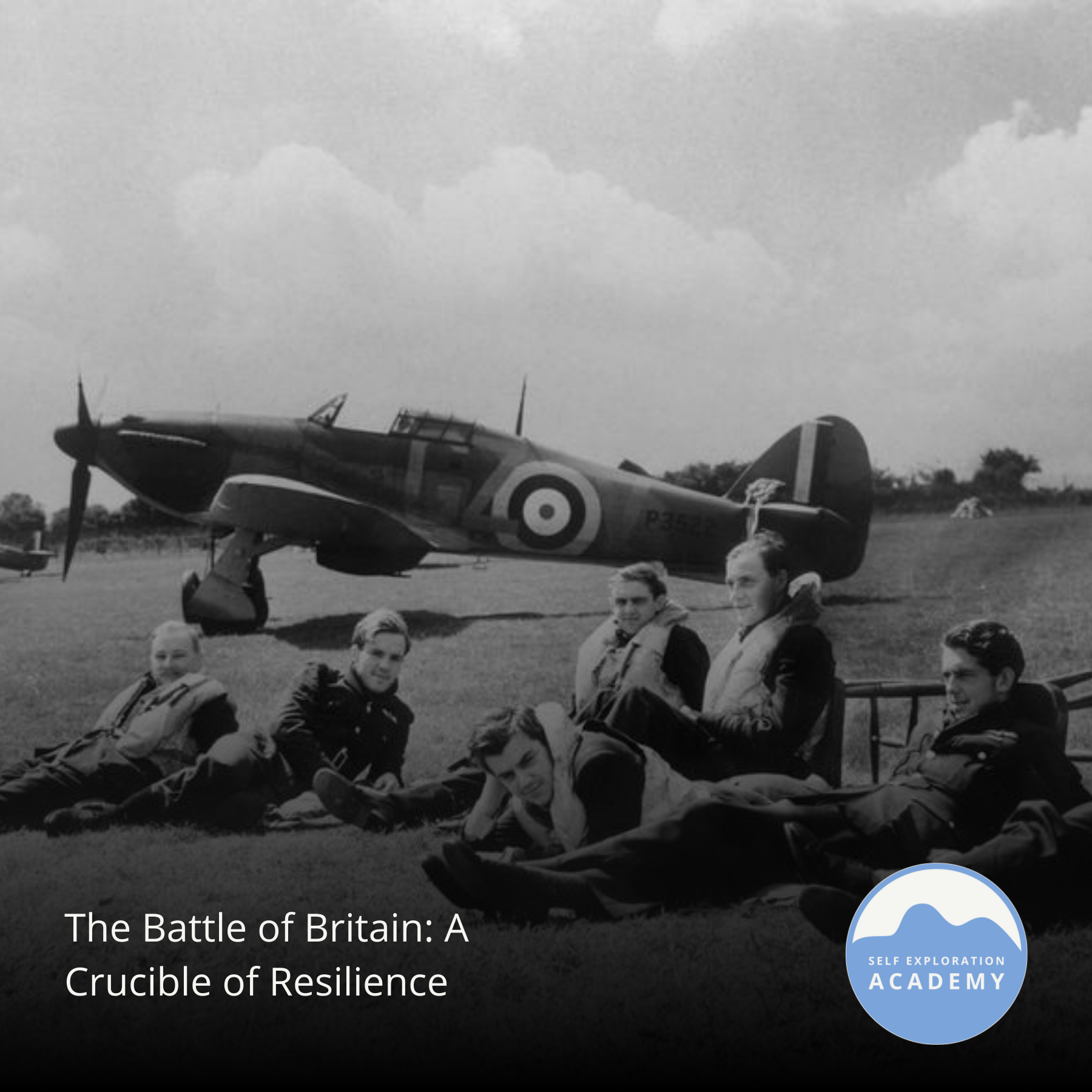
The Battle of Britain: A Crucible of Resilience
Discover the gripping story of the Battle of Britain, launched July 10, 1940. Explore the fear, defiance, and resilience that defined a nation's stand, and uncover its powerful lessons in self-management for today.
Exploring the fear, courage, and unwavering spirit that defined Britain's stand against Nazi Germany in the pivotal air campaign of 1940.
The Moment Itself
On July 10, 1940, the skies over the English Channel became the opening stage for what would be one of World War II's most critical aerial campaigns: the Battle of Britain. Following the fall of France and the evacuation at Dunkirk, Britain stood alone against Nazi Germany, which now controlled most of Western Europe. Adolf Hitler's next objective was Operation Sea Lion, the planned invasion of Britain, but first, the Luftwaffe had to achieve air superiority over the Royal Air Force (RAF). This initial phase, known as "Kanalkampf" (Channel Battle), saw the Luftwaffe begin targeting British shipping in the Channel and coastal convoys.
At stake was nothing less than the survival of democratic Britain and the potential for a German victory that could reshape the global order. Key figures included Air Chief Marshal Hugh Dowding, head of RAF Fighter Command, whose strategic brilliance in conserving his limited fighter force and implementing the integrated air defense system (combining radar, ground observers, and command centers) proved pivotal. On the German side, Hermann Göring, commander-in-chief of the Luftwaffe, underestimated British resolve and the effectiveness of their defenses. The battle was a test of technology, strategy, and sheer human courage, with Britain's Spitfire and Hurricane fighters facing off against German Messerschmitts, Dorniers, and Heinkels. The initial days established the brutal rhythm of aerial combat, where every sortie was a desperate gamble.
The Emotional Landscape
The emotional landscape of Britain during the Battle of Britain was a complex tapestry of fear, defiance, and an almost stoic resolve. For the civilian population, particularly those in southern England and London, the daily drone of approaching bombers and the wail of air raid sirens became a terrifying soundtrack to life. Nights were spent in shelters, praying for dawn. Yet, fear was often overshadowed by a fierce determination not to yield. The collective memory of Dunkirk had forged a powerful sense of unity and shared purpose.
For the RAF pilots, many of them barely out of their teens, the emotions were more visceral: a potent mix of exhilaration in combat, profound grief for fallen comrades, and an exhausting, perpetual readiness for the next scramble. They returned from sorties often covered in sweat and grime, adrenaline coursing through them, only to witness the empty chairs of friends who wouldn't return. Despite the immense pressure and the grim odds, there was also a deep sense of camaraderie and an unshakeable belief in their mission. The famous phrase "never was owed by so many to so few" perfectly captured the public's profound gratitude and the pilots' immense burden.
A Lesson in Social Emotional Learning
The Battle of Britain offers a profound lesson in Self-Management, specifically the competency of resilience. The RAF, outnumbered and constantly under pressure, displayed extraordinary collective resilience. Their ability to persist in the face of overwhelming adversity, to recover from losses, and to maintain morale despite constant threat, was foundational to their success. Dowding's strategic decision-making, which prioritized the preservation of fighter aircraft and pilots, demonstrated a form of organizational self-management, understanding limitations while maximizing strengths.
On an individual level, the pilots exhibited immense emotional regulation and perseverance. They processed fear and grief, yet continued to fly, driven by duty and an understanding of the stakes. This wasn't merely about physical courage but about the mental fortitude to repeatedly face mortal danger. The British public, too, showcased resilience in their daily lives, adapting to bombings, rationing, and uncertainty, yet refusing to succumb to panic or despair. This historical moment speaks to us today by reminding us that true strength often lies not in avoiding challenges, but in the unwavering commitment to endure, adapt, and ultimately, overcome them.
Latest Posts

The Day Catherine the Great Took Power: A Story of Ambition and Strategy
Discover the thrilling story of Catherine the Great's audacious 1762 coup. Explore the high-stakes drama, the emotional landscape, and the strategic brilliance that saw her seize the Russian throne and begin a transformative reign.
Exploring the dramatic events of July 9, 1762, and the strategic brilliance that propelled Catherine to the Russian throne.
The Moment Itself
On July 9, 1762 (Old Style), the Russian Empire awoke to a seismic shift. Emperor Peter III, a Prussian sympathizer whose erratic and impetuous rule had alienated both the powerful Guards regiments and much of the nobility, was at his summer palace in Oranienbaum. His wife, the German-born Empress Catherine, had long been cultivating a network of loyalists, sensing an opportune moment to secure her own destiny. Peter’s recent decree secularizing church lands, his disdain for Russian traditions, and his disastrous foreign policy choices – particularly withdrawing from the Seven Years' War to ally with Prussia against Denmark – had sealed his unpopularity.
The previous night, a key co-conspirator, Captain Passek, had been arrested. This triggered Catherine’s hand. In the pre-dawn hours, accompanied by Alexei Orlov, she was spirited away from Peterhof, where she had been staying. They rode swiftly to the Izmailovsky Regiment in St. Petersburg. There, in a moment charged with destiny, Catherine declared herself Empress, appealing to the soldiers' loyalty to Russia and their discontent with Peter. The regiment, swiftly followed by the Semenovsky and Preobrazhensky Guards, swore allegiance. Dressed in a Guards uniform, riding astride a horse, Catherine led a triumphant procession back towards Peterhof, supported by thousands of cheering soldiers. Peter, hearing of his wife’s bold move, panicked. Isolated and indecisive, he quickly signed an act of abdication, effectively ceding the throne without a significant fight. What was at stake was not just the crown, but the direction of Russia itself, poised between continued instability and a formidable new era.
The Emotional Landscape
The emotional texture of that moment was a complex tapestry of desperation, resolve, relief, and apprehension. For Catherine, it was a culmination of years of suppressed ambition, cunning preparation, and profound personal risk. Her ride to the Guards was a terrifying gamble; failure meant imprisonment, or worse. Yet, she exhibited an icy resolve, her actions driven by a potent mix of perceived duty to Russia and a fierce will to survive and reign. The Guards, disillusioned by Peter’s erratic leadership and genuinely fearful for the future of their country, felt a surge of defiant courage, channeling their discontent into a collective act of rebellion. Their cheers were not just for Catherine, but for the restoration of a perceived order, a release from the anxiety of Peter’s unpredictable reign. For Peter, the emotional landscape was one of abject terror and bewildered defeat, culminating in a meek surrender that underscored his unsuitability to rule. The broader population, while not directly involved in the coup, likely experienced a mix of relief at Peter’s swift removal and a cautious hope for the future under the new Empress, tempered by the inherent uncertainty of political upheaval.
A Lesson in Social Emotional Learning
Catherine’s ascent to power offers a compelling, albeit stark, illustration of Responsible Decision-Making and Self-Management. For years, she carefully observed Peter’s unraveling reign, understanding the growing discontent without acting impulsively. This demonstrates exceptional self-management – the ability to control impulses, manage stress, and maintain discipline towards a long-term objective. She did not rush into a coup, but patiently built her network and waited for the opportune moment when Peter’s blunders created an undeniable vacuum of authority.
Her decision to ride to the Guards on that fateful morning was a high-stakes, responsible decision. It required a clear understanding of the consequences of inaction versus action, a shrewd assessment of the risks involved, and an ethical (or pragmatic) calculation that her rule would serve the state better than Peter’s. She weighed the monumental stakes – life, liberty, and the future of Russia – and executed a plan that, while morally ambiguous to some, proved strategically sound. The coup was not an emotional outburst but a meticulously planned, responsibly executed maneuver driven by a deep understanding of political dynamics and a controlled, strategic temperament. This historical moment speaks to us today about the critical importance of strategic thinking, emotional regulation, and decisive action when faced with pivotal choices, whether in personal life or on a grander, historical scale.
Latest Posts

1497: The Voyage That Changed the World
Dive into the dramatic 1497 voyage of Vasco da Gama, the epic journey that opened the sea route to India. Explore the courage, fear, and profound impact of this pivotal moment in global history.
How one audacious expedition in 1497 reshaped trade, power, and human understanding.
On July 8, 1497, from the bustling port of Lisbon, four small ships—the São Gabriel, São Rafael, Berrio, and a crucial supply vessel—set sail into the vast unknown. Their commander, Vasco da Gama, led an expedition of approximately 170 men, entrusted by King Manuel I of Portugal with a mission that would irrevocably alter the course of global history: to find a direct sea route to India. For decades, European powers, particularly Portugal, had yearned for access to the lucrative spice markets of the East, then monopolized by Venetian and Arab intermediaries. Bartolomeu Dias had tantalizingly rounded the Cape of Good Hope a decade prior, proving such a passage was possible. What was at stake was not merely trade, but geopolitical dominance, immense wealth, and the very structure of the nascent global economy. This departure marked a daring blend of scientific navigation, raw ambition, and deeply embedded religious fervor, aimed at outflanking existing powers and extending Portuguese influence across oceans.
The Moment Itself
The scene at Belém was a mixture of solemn ritual and vibrant spectacle. The sailors, hardened by years at sea, knelt for a final blessing, their faces etched with a blend of determination and apprehension. They were embarking on a voyage of unprecedented length and danger, charting waters no European vessel had traversed. Da Gama, a man chosen for his resolve and leadership, faced the daunting task of maintaining discipline, morale, and course over thousands of miles of uncharted ocean. The ships themselves were small, vulnerable to the violent storms of the South Atlantic and Indian Ocean. Their provisions were limited, and the knowledge of the lands beyond the Cape was based on fragmented reports and conjecture. This was not merely an exploratory journey; it was a calculated gamble by a small nation on the Atlantic rim to seize a commanding position in the world's most valuable trade. The prize was spices—pepper, cinnamon, cloves—which were literally worth their weight in gold in Europe. The conflict was with nature, with the limitations of 15th-century technology, and ultimately, with the established power structures of Eastern trade.
The Emotional Landscape
The emotional landscape of this enterprise was a tapestry woven with threads of profound fear, unyielding courage, and tenacious hope. For the sailors, the fear of the unknown was palpable: the terrifying storms, the ever-present threat of scurvy and other diseases that decimated crews, and the very real possibility of never seeing home again. Letters written before departure spoke of last wills and testaments, a stark recognition of the perilous journey ahead. Yet, alongside this dread existed an extraordinary courage—the willingness to step into the void, driven by promises of wealth, glory, and the profound loyalty to king and country. There was also the shared hope: the vision of spices piled high in Lisbon's warehouses, of royal coffers overflowing, and of Portugal becoming the unrivaled maritime power. Months of isolation, navigational errors, and sickness tested their resilience to its breaking point. Interactions with indigenous populations, from the relatively peaceful encounters in some African bays to the often-violent clashes that marked their arrival in India, were shaped by mutual suspicion, a lack of shared understanding, and a fundamental imbalance of power.
A Lesson in Social Emotional Learning
The voyage of Vasco da Gama offers a powerful, albeit complex, lesson in Responsible Decision-Making and Social Awareness. On one hand, King Manuel I's decision to fund such a high-risk, high-reward expedition exemplifies audacious responsible decision-making at a state level. Da Gama’s own leadership in consistently making critical navigational and disciplinary decisions under extreme duress highlights personal self-management and responsible action crucial for survival and mission success. However, the expedition also starkly illustrates the profound consequences of a deficit in Social Awareness. Upon arrival in India, the Portuguese often exhibited a severe lack of cultural understanding and respect. Their aggressive demands, ethnocentric views, and readiness to resort to violence when trade negotiations failed, particularly in Calicut, led to immediate hostility and laid the groundwork for centuries of colonial conflict. This failure to understand and adapt to the existing complex social, economic, and political structures of the Indian Ocean trade network, driven by a blend of religious zeal and commercial greed, profoundly contradicted any notion of respectful engagement. The moment speaks to us today as a powerful reminder of humanity's unyielding drive for exploration and gain, but also as a cautionary tale of how unchecked ambition, coupled with a lack of empathy and social awareness, can lead to devastating and long-lasting negative consequences for all involved.
Latest Posts

The Olive Branch Petition: America's Last Plea for Peace
Discover the Olive Branch Petition: America's last desperate plea for peace in 1775. Uncover the emotional drama and the King's pivotal rejection that propelled the colonies toward independence.
Explore the pivotal moment when American colonists sought reconciliation, only to be met with royal rejection, solidifying the path to independence.
The Moment Itself
On July 5, 1775, amidst the escalating fervor of rebellion and the fresh wounds of Lexington and Concord, the Second Continental Congress in Philadelphia made a final, desperate plea for peace. This was the Olive Branch Petition, a document drafted primarily by John Dickinson of Pennsylvania, a man who, despite his staunch defense of colonial rights, harbored a deep reluctance to break entirely with Great Britain. The colonies, though already engaged in armed conflict, were far from unified on the path to independence. Many delegates still clung to the hope of reconciliation with King George III. What was at stake was monumental: the very future of the American colonies, caught between the promise of self-governance and the loyalty to a crown they believed had betrayed them. The petition itself was a deferential address to the King, professing loyalty and imploring him to intercede on behalf of his American subjects, to redress their grievances, and to halt the hostile actions of Parliament. It was a paradoxical move, simultaneously sending an appeal for peace while, days earlier, appointing George Washington commander-in-chief of the newly formed Continental Army.
The Emotional Landscape
The emotional landscape surrounding the Olive Branch Petition was a tumultuous blend of fear, hope, and burgeoning resentment. For Dickinson and his supporters, there was the profound fear of civil war, a conflict that would pit brother against brother and devastate their nascent society. Their hope lay in the King's supposed benevolent nature, believing he was misguided by corrupt ministers rather than inherently tyrannical. They hoped this earnest appeal would bypass Parliament and restore harmony. Conversely, figures like John Adams, already convinced of the futility of reconciliation, viewed the petition with exasperation, seeing it as a dangerous delay tactics. Their emotions were dominated by a growing anger at perceived British tyranny and a grim determination to fight for liberty. The colonists at large felt a mixture of anxiety about the unknown future and a hardening resolve against what they saw as oppressive policies. When King George III, upon receiving the petition, refused to even read it and declared the colonies in open rebellion, it was a profound blow to those clinging to hope, solidifying the despair and driving many towards the irreversible path of independence.
A Lesson in Social Emotional Learning
The Olive Branch Petition offers a poignant lesson in Responsible Decision-Making and the breakdown of Relationship Skills. The delegates, despite their internal divisions, collectively chose to pursue every avenue for peace before fully committing to war. This demonstrated an attempt at responsible decision-making, weighing the devastating consequences of armed conflict against the slim possibility of a peaceful resolution. Their decision reflected a desire to exhaust all diplomatic options, showcasing a deliberate, albeit ultimately unsuccessful, effort to act prudently in the face of immense pressure. However, the King's outright rejection highlighted a severe breakdown in relationship skills. His refusal to engage with the petition, viewing it as an act of treason rather than a genuine plea, revealed an inability to empathize, listen, or negotiate. This lack of reciprocal engagement from the Crown ultimately severed the already strained relationship beyond repair. The moment speaks to us today about the critical importance of open communication and genuine willingness to engage in dialogue, even when grievances are deep. It illustrates that when one party completely shuts down communication and refuses to acknowledge the other's perspective, the path to resolution becomes impossible, and conflict often becomes the only remaining option.
Latest Posts