

WELCOME TO
The Academic Blog

Manassas, 1862: Lee's Triumph and Pope's Folly
Relive the Second Battle of Bull Run (Manassas), a pivotal Civil War clash. Explore the strategic blunders, emotional toll, and critical leadership lessons from this decisive Confederate victory. A deep dive into history.
How one of the Civil War's most significant battles shaped human emotions and revealed vital truths about decision-making under pressure.
The Second Battle of Bull Run (Manassas), culminating on August 30, 1862, stands as a stark testament to the brutal realities and strategic complexities of the American Civil War. Following the Union’s failed Peninsula Campaign, General John Pope’s newly formed Army of Virginia was tasked with protecting Washington D.C. and engaging Confederate forces in northern Virginia. Opposing him was General Robert E. Lee, whose Army of Northern Virginia, though often outnumbered, was led by brilliant and audacious commanders like Stonewall Jackson and James Longstreet. What was at stake was not just a battle, but the strategic initiative in the Eastern Theater, the morale of both sides, and potentially the very course of the war.
The Moment Itself
Lee, recognizing Pope’s aggressive but often impetuous nature, conceived a daring plan to divide his forces. On August 25, Stonewall Jackson embarked on a lightning flank march, circling Pope’s right wing to destroy the massive Union supply depot at Manassas Junction, deep behind enemy lines. This audacious move threw the Union command into disarray. For two days, Pope, convinced he had trapped Jackson, launched piecemeal attacks against Jackson’s entrenched positions along an unfinished railroad grade. He failed to grasp the full Confederate strategy, particularly the rapid approach of Longstreet’s wing, which was marching to reinforce Jackson. On August 30, as Pope pressed his attacks against Jackson, Longstreet unleashed a devastating counterattack on the exposed Union left flank. Thousands of Union soldiers were swept from the field in a chaotic retreat, suffering heavy casualties and abandoning their positions. The battlefield, once again, belonged to the Confederates.

The Emotional Landscape
The emotional landscape after Second Bull Run was sharply divided. For the Union, it was a profound blow, a second major defeat on the same ground that had witnessed their first great humiliation. Soldiers and civilians alike grappled with demoralization, frustration, and a deep sense of betrayal by their leadership. The sight of wounded men pouring back into Washington D.C. and the realization that the Confederate army was once again on the offensive fueled fear and anger. Hope, which had flickered after early Union successes in the West, was now dimming. On the Confederate side, the mood was one of exhilaration and renewed confidence. Lee’s audacious strategy had paid off, and his generals were lauded as invincible. Despite the exhaustion and the grim toll of battle, a palpable sense of pride and invincibility permeated their ranks, reinforcing their belief in their cause and their ability to defeat a numerically superior foe.
A Lesson in Social Emotional Learning
The Second Battle of Bull Run offers a critical lesson in Responsible Decision-Making. General Pope’s command was plagued by a series of poor decisions rooted in misjudgment and a lack of accurate social awareness regarding his opponent's capabilities and intentions. His failure to adequately scout and confirm the presence of Longstreet's corps, his persistent belief that he had isolated Jackson, and his piecemeal commitment of troops against a well-entrenched enemy all demonstrate a critical breakdown in responsible decision-making under pressure. In contrast, Lee’s decisions, though risky, were calculated and based on a keen understanding of Pope’s psychology and the terrain. The outcome underscores how critical it is for leaders, in any context, to gather comprehensive information, accurately assess situations, and make choices that are not only bold but also grounded in reality. The battle serves as a stark reminder that even in moments of intense pressure, sound judgment and a clear understanding of the broader context are paramount for success, and their absence can lead to devastating consequences.
Latest Posts













Shattered Monopoly: The Day the Soviet Union Tested Its First Atomic Bomb
The 1949 Soviet atomic bomb shattered global power dynamics, ending the US nuclear monopoly and igniting the Cold War arms race. Explore the historical moment, emotional impact, and lessons in responsible decision-making.
Explore the fear, triumph, and profound shifts in global power that followed the Soviet Union's first atomic bomb detonation in 1949, and discover its enduring lessons in responsible decision-making.
The Moment Itself
On August 29, 1949, at 7:00 AM local time, the desolate steppe of the Semipalatinsk Test Site in the Kazakh Soviet Socialist Republic became the stage for a seismic shift in global power. Codenamed "First Lightning" by the Soviets and later dubbed "Joe-1" by the Americans, the successful detonation of the RDS-1 atomic bomb shattered the United States' four-year nuclear monopoly. This event, meticulously planned and executed under the scientific leadership of Igor Kurchatov and the ruthless political oversight of Lavrentiy Beria, was a direct response to the American atomic bombings of Hiroshima and Nagasaki and the burgeoning Cold War. For Moscow, it was a matter of existential security and a powerful assertion of its technological prowess. For Washington, it was the abrupt end of a strategic advantage, igniting an arms race that would define the latter half of the 20th century. The stakes were nothing less than the future of global peace, the balance of power, and the very survival of humanity under the shadow of mutually assured destruction.
The Emotional Landscape
The news of the Soviet bomb, publicly announced by President Truman on September 23, 1949, sent shockwaves across the United States and its allies. An initial sense of invincibility, born from America's sole possession of the atomic weapon, evaporated overnight, replaced by a profound vulnerability. Fear became a palpable force, manifesting in public service announcements about fallout shelters, school drills, and a pervasive anxiety about a potential nuclear holocaust. In the Soviet Union, the mood was one of triumph and immense relief; the successful test validated years of intense, often brutal, effort and sacrifice, confirming their status as a global superpower. Internationally, the detonation ushered in an era of heightened tension, suspicion, and an unprecedented arms buildup. The emotional landscape was one of collective dread, a world teetering on the brink, where the very air seemed to hum with the unspoken threat of unimaginable destruction.
A Lesson in Social Emotional Learning
The detonation of the RDS-1 offers a stark, albeit challenging, lesson in Responsible Decision-Making and Social Awareness. The decision by both the United States and the Soviet Union to pursue and then escalate nuclear weapons development was driven by a perceived need for security and strategic advantage. However, this pursuit, while perhaps understandable in the context of post-war mistrust, demonstrated a collective failure in long-term responsible decision-making. The immediate goal of deterrence overshadowed the catastrophic potential and the inevitable arms race it would unleash, leading to a global standoff rather than a path toward de-escalation. Furthermore, the event underscored a profound lack of Social Awareness between the two ideological blocs. Deep-seated mistrust and an inability to genuinely understand or empathize with the other's security concerns fueled a cycle of escalation. Neither side fully appreciated the other's internal pressures or anxieties, leading to policies based on fear and suspicion rather than dialogue and mutual understanding. This historical moment serves as a powerful reminder of how unchecked fear and a deficit in social awareness can lead nations down a perilous path, emphasizing the enduring importance of diplomacy, empathy, and responsible global stewardship in navigating complex international relations today.
Latest Posts

From Pain to Purpose: Unpacking the Emotional Landscape of King's "I Have a Dream"
Go beyond the famous speech. We explore the emotional landscape—the fear, courage, and intense Social Awareness—that made the 1963 March on Washington a profound success.
How the historic March on Washington, led by Martin Luther King Jr., provides a timeless masterclass in the core competency of Social Awareness.
The Moment Itself
August 28, 1963, dawned hot and humid over Washington D.C., but the air was electric with a sense of historic inevitability. On that day, over 250,000 Americans—Black and white, young and old, laborers and students—converged on the National Mall for the March on Washington for Jobs and Freedom. The objective was clear and profoundly complex: to pressure Congress and the Kennedy administration into passing meaningful civil rights legislation and to highlight the economic disparity faced by African Americans. Key leaders, including A. Philip Randolph, Bayard Rustin, and the heads of the "Big Six" civil rights organizations, orchestrated an event of unprecedented scale and discipline. The stakes could not have been higher. For civil rights activists, it was a demand for the full and immediate realization of the 14th and 15th Amendments; for segregationists, it was seen as an existential threat to the Southern way of life; and for the federal government, it was a crisis point on the national stage.
The culminating moment arrived when Dr. Martin Luther King Jr., the 34-year-old president of the Southern Christian Leadership Conference (SCLC), stepped to the podium at the foot of the Lincoln Memorial. What was planned as a standard, five-minute speech about the civil rights bill transformed mid-delivery. Influenced by the soaring spirit of the crowd and prompted by Mahalia Jackson's shout, "Tell them about the dream, Martin!", King pushed his prepared text aside. He launched into an extemporaneous sermon that elevated the political demands of the March into a timeless, moral aspiration. He spoke not merely of legislation, but of America failing to honor a "promissory note" to its citizens of color. His words, especially the repeated refrain, "I have a dream," articulated a vision of a nation where justice was colorblind, where his children would be judged not by the color of their skin but by the content of their character. This single speech did more than any other event that day to solidify the movement's moral high ground and turn a political demonstration into a transcendent moment of American reckoning.
The Emotional Landscape
The emotional texture of the March was a complex tapestry woven from decades of suppressed pain and a sudden, shared surge of exhilaration. For the demonstrators, the dominant feeling was hope, mixed with a deep, resolute courage. Many had traveled great distances, facing threats and logistical nightmares, yet the sheer mass of the crowd created a protective, validating bubble of community. There was an overwhelming sense of shared purpose and collective identity that temporarily eclipsed the daily indignities of segregation. King's speech tapped into the profound grief and anger over historical injustice by channeling it into an uplifting and unifying vision, not one of bitterness.
Contrast this with the emotions of political leaders and observers. In the halls of Congress and the White House, there was anxiety and apprehension, fueled by the fear that the massive gathering could devolve into violence, which would have irrevocably damaged the movement’s credibility. For those opposed to integration, the event elicited feelings of palpable fear and indignation—a belief that their traditions were under siege. Ultimately, the meticulous planning, discipline, and non-violent conduct of the March proved to be the most powerful emotional statement: a collective demonstration of disciplined restraint and fervent longing.
A Lesson in Social Emotional Learning
The March on Washington and Dr. King’s speech provide a powerful, living demonstration of the Social Emotional Learning competency of Social Awareness. This competency involves understanding the perspectives of others, empathizing with individuals and groups from diverse backgrounds, and recognizing social and ethical norms of behavior.
The organizers of the March exhibited profound Social Awareness by strategically choosing the venue (the Lincoln Memorial, a symbol of freedom), the date (the 100th anniversary of the Emancipation Proclamation), and the tone (non-violent and disciplined). They understood the deeply ingrained social norms of 1963 America—the racial bias, the political climate, and the media's hunger for violence—and leveraged that understanding. By maintaining strict discipline and centering the message on fundamental American values of justice and equality, they effectively managed the nation's perception of the movement, forcing the majority to confront the contradiction between their stated ideals and their systemic reality. King's “dream” was not a personal fantasy but an act of social empathy: he articulated a future not just for African Americans, but for the soul of the entire nation, appealing to the shared values buried beneath racial animosity.
The March on Washington still speaks to us today as a model of how collective Social Awareness can be used as a political and moral tool. It reminds us that meaningful change begins when a marginalized group can effectively communicate the reality of their experience in a way that resonates with the conscience and values of the dominant culture, compelling a necessary and responsible decision-making process.
Latest Posts

John Brown's Raid: The Spark That Ignited a Nation
Explore John Brown's audacious 1859 raid on Harpers Ferry, a pivotal event that escalated tensions before the Civil War. Uncover the emotional landscape of the era and its enduring lessons in responsible decision-making.
A deeper look into John Brown's pivotal assault on Harpers Ferry, revealing the human drama, national divisions, and complex moral questions that shaped a defining moment in American history.
The Moment Itself
On the night of October 16, 1859, a radical abolitionist named John Brown, along with a small band of 18 followers—including five Black men and three of his sons—launched a daring and desperate assault on the federal arsenal at Harpers Ferry, Virginia (now West Virginia). Brown's audacious plan was to seize the armory's weapons, incite a massive slave rebellion across the South, and establish a stronghold for liberated people in the Appalachian Mountains. The stakes were immense: the lives of his men, the future of the abolitionist movement, and potentially the very fabric of a nation already teetering on the brink of civil war.
Brown and his raiders quickly secured the arsenal and several key points, taking hostages, including Colonel Lewis Washington, a distant relative of George Washington. However, the anticipated uprising of enslaved people did not materialize as quickly or broadly as Brown had hoped. Local militia and armed citizens soon surrounded the arsenal, pinning down Brown's force. Within 36 hours, U.S. Marines, under the command of Colonel Robert E. Lee and Lieutenant J.E.B. Stuart, stormed the engine house where Brown and his remaining men had barricaded themselves. The raid was swiftly crushed, resulting in the deaths of ten of Brown's men (including two of his sons), four local citizens, and one Marine. Brown himself was wounded, captured, and subsequently tried for treason, murder, and inciting slave insurrection.
The Emotional Landscape
The emotional landscape surrounding the Harpers Ferry raid was a volatile mix of terror, outrage, and defiant resolve. In the South, the raid ignited widespread panic and fury. White Southerners saw it as a direct act of Northern aggression, confirming their deepest fears of abolitionist plots to incite slave insurrections. The specter of armed Black rebellion, coupled with what they perceived as Northern complicity, solidified a sense of betrayal and pushed many toward secessionist sentiments. Fear of slave revolts, always simmering beneath the surface, now boiled over into widespread paranoia and increased vigilance.
In the North, reactions were deeply divided. While many condemned Brown's violent methods, a significant number of abolitionists, particularly radical ones like Frederick Douglass, initially expressed admiration for his courage and moral conviction, even if they disagreed with his strategy. Brown's trial and subsequent execution transformed him into a martyr for the anti-slavery cause in the eyes of many Northerners, deepening the moral chasm between the sections. Grief for the lives lost mingled with a hardening of resolve on both sides, making compromise seem increasingly impossible.
A Lesson in Social Emotional Learning
John Brown's raid offers a stark, albeit complex, lesson in Responsible Decision-Making. Brown's actions were driven by an unwavering moral conviction that slavery was a profound evil requiring immediate, decisive action. His decision to resort to armed insurrection, however, demonstrates the perilous tightrope walk between deeply held beliefs and the practical consequences of one's choices. While his intent was to liberate, his methods were inherently violent, leading to loss of life and, in the immediate term, failing to achieve his primary objective of a widespread uprising.
The raid highlights how even decisions rooted in a strong moral compass can have unintended and far-reaching societal repercussions, particularly when they involve extreme measures. Brown's decision, while a tactical failure, undeniably ignited a fuse, forcing the nation to confront the irreconcilable differences over slavery with unprecedented urgency. It underscores the critical need to weigh not only the desired outcome but also the feasibility, the potential for unintended harm, and the broader societal impact when making decisions, especially those with such profound moral and political implications. The moment still speaks to us today about the enduring power of conviction, the complexities of justice, and the often-unforeseen consequences of radical action in the face of deep-seated injustice.
Latest Posts

The Day Women Won the Vote: A Century After Suffrage
Discover the untold emotional journey behind the 19th Amendment's certification. From fierce battles to a mother's letter, explore the pivotal moment women secured the right to vote in America.
A look back at the dramatic final days of the suffrage movement, the courageous decisions, and the enduring legacy of the 19th Amendment.
On August 26, 1920, a seemingly bureaucratic act in Washington, D.C., marked the culmination of a seventy-two-year struggle, forever altering the landscape of American democracy. Secretary of State Bainbridge Colby, without ceremony, signed the proclamation certifying the 19th Amendment to the U.S. Constitution, formally granting women the right to vote. This quiet moment belied the ferocious, decades-long battle that preceded it, a fight waged by generations of women and their allies against entrenched societal norms, political opposition, and often violent resistance. The stakes were nothing less than the full citizenship of half the nation's population, challenging fundamental ideas about gender roles, power, and who truly belonged in the public sphere.
The Moment Itself
The amendment's journey to certification hinged on ratification by 36 states. By the summer of 1920, 35 had approved, leaving Tennessee as the final, crucial battleground. Nashville became a vortex of intense lobbying, with "Suffs" (suffragists) in their yellow roses and "Antis" (anti-suffragists) in their red roses clashing openly. The fate of the amendment rested on a single vote in the Tennessee House of Representatives. On August 18, 1920, the vote was deadlocked. Then, a young legislator named Harry Burn, at 24 the youngest member of the House, received a letter from his mother, Phoebe Ensminger Burn. "Dear Son," she wrote, "Hurrah and vote for suffrage and don't forget to be a good boy." Despite wearing a red rose, signifying his anti-suffrage stance, and facing immense pressure from his party, Burn changed his vote from "no" to "aye," breaking the tie and securing ratification by a single vote. His courageous decision, influenced by his mother's plea, sent shockwaves through the chamber and across the nation, paving the way for Colby's signature eight days later.
The Emotional Landscape
The emotional landscape surrounding the 19th Amendment's certification was a tempest of hope, despair, and ultimately, exultation. For suffragists like Carrie Chapman Catt and Alice Paul, the decades had been marked by relentless activism, public ridicule, arrests, hunger strikes, and the heartbreak of repeated legislative defeats. Their hope was a fragile, yet unyielding flame, fueled by a deep conviction in justice. The final days in Tennessee were fraught with anxiety, a culmination of years of sacrifice hanging by a thread. When Harry Burn cast his decisive vote, the immediate reaction was a mixture of stunned silence, then shouts, tears, and spontaneous celebrations among the suffragists. For the "Antis," the emotion was one of profound anger and betrayal, a sense of a world irrevocably altered and, in their view, diminished. This moment encapsulated the raw human experience of a societal paradigm shift: the joy of hard-won victory for some, and the bitter resentment of perceived loss for others.
A Lesson in Social Emotional Learning
The struggle for the 19th Amendment offers profound insights into Social Awareness and Responsible Decision-Making. The suffragists demonstrated extraordinary social awareness by recognizing and articulating the systemic injustice of women's disenfranchisement. They understood the broader societal implications of denying half the population a voice, empathizing with the collective struggle for equality. Their persistent advocacy was rooted in this deep understanding of societal structures and the need for change. Harry Burn's pivotal vote exemplifies responsible decision-making. Faced with intense political pressure and the expectation to vote a certain way, he chose to listen to his conscience and his mother's moral guidance, prioritizing a principle he believed was right over political expediency. His decision, while personally challenging, ultimately served a greater good. The moment still speaks to us today, reminding us that progress often requires individuals to cultivate a deep social awareness of inequities and to make courageous, responsible decisions that challenge the status quo, even when it's unpopular.
Latest Posts
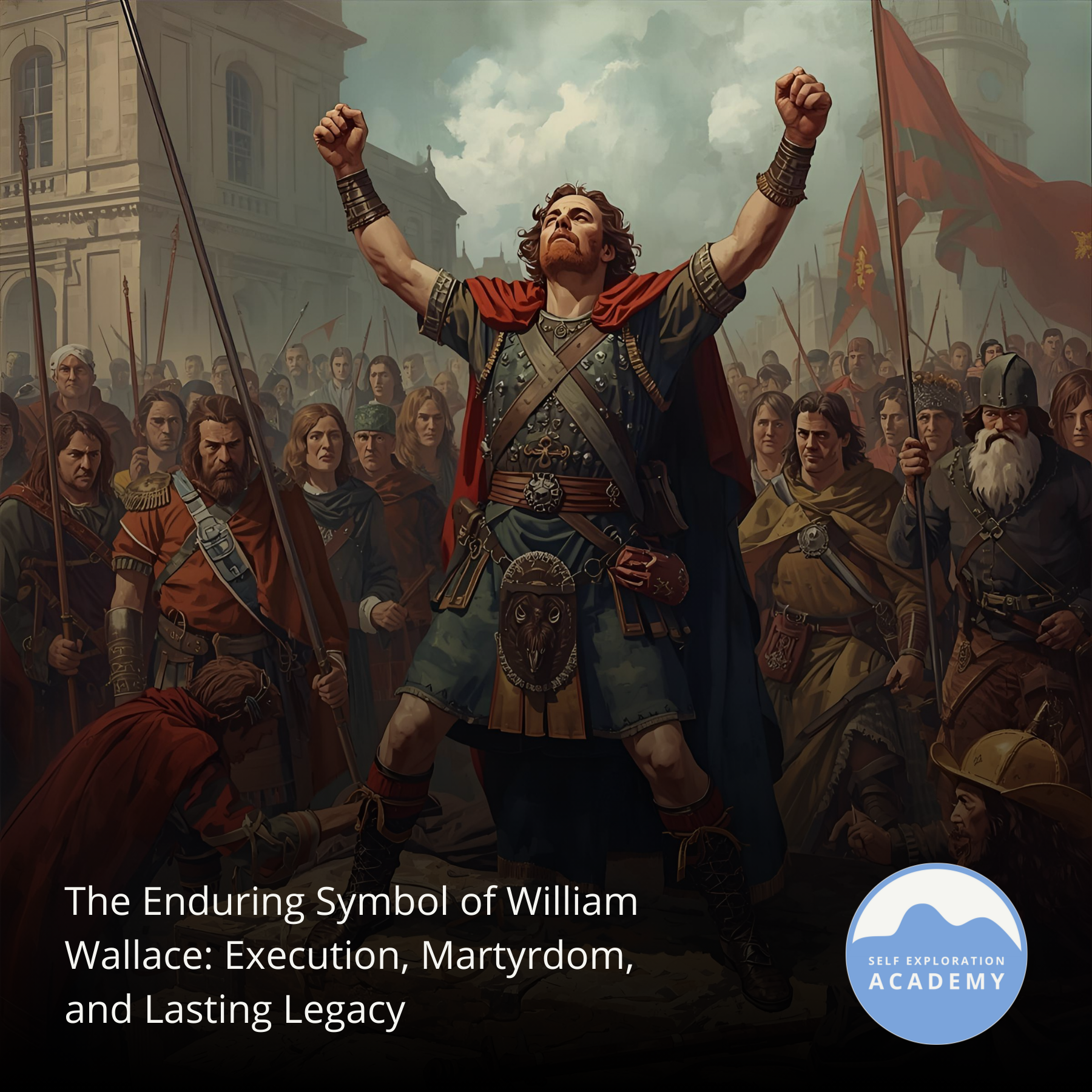
The Enduring Symbol of William Wallace: Execution, Martyrdom, and Lasting Legacy
On August 23, 1305, William Wallace's execution ignited a legend. Explore the emotional landscape of this pivotal moment in Scottish history and its profound lessons in self-awareness and responsible decision-making.
Delve into the pivotal moment of August 23, 1305, uncovering the raw human realities and the timeless insights from William Wallace's ultimate sacrifice.
On August 23, 1305, a pivotal moment in Scottish history unfolded in London, marking the brutal end of one man's life and the fiery birth of an enduring legend.
The Moment Itself
The air in Smithfield, London, was thick with anticipation and malice. William Wallace, the Scottish knight who had defied King Edward I of England, stood condemned. His capture, after years as a fugitive following his defeat at the Battle of Falkirk in 1298, was a monumental triumph for the English crown. Wallace, once the Guardian of Scotland, had rallied his countrymen to a stunning victory at Stirling Bridge in 1297, briefly liberating much of his homeland from English occupation. Now, accused of treason against a king he never recognized as his own, Wallace faced the full, gruesome spectacle of medieval justice: he was hanged, drawn, and quartered. His intestines were burned before his eyes, his head severed and impaled on London Bridge, and his limbs dispatched to four corners of Scotland—Newcastle, Berwick, Perth, and Aberdeen—as a stark warning. For Edward I, this was the definitive crushing of Scottish rebellion; for Scotland, it was a profound act of martyrdom.
The Emotional Landscape
The execution of William Wallace elicited a kaleidoscope of raw human emotions. Among the English, there was a palpable sense of triumph and relief, a belief that justice had been served against a dangerous rebel who threatened the stability of the realm. The public display of his dismembered body was intended to instill fear and deter further defiance. Yet, for the Scots, the reaction was far more complex and deeply visceral. Initial shock and despair likely gave way to profound grief and seething anger. The barbarity of Wallace's end, rather than extinguishing the flame of resistance, ignited it further. He transformed from a military leader into an immortal symbol of Scottish nationhood, a martyr whose sacrifice fueled an unyielding resolve for independence. His death was not an end but a catalyst, hardening the hearts of a people determined to throw off the English yoke.
A Lesson in Social Emotional Learning
William Wallace's final stand offers a compelling insight into Self-Awareness and Responsible Decision-Making. His unwavering refusal to plead guilty to treason, asserting that he could not betray a king to whom he owed no allegiance, demonstrates an profound self-awareness of his identity and his core values. He understood his purpose as a champion of Scottish freedom, and this conviction remained unshaken even in the face of excruciating death. His decision, and by extension, the Scottish people's subsequent decision to continue their fight for independence, embodies a form of responsible decision-making rooted in collective identity and a deep-seated commitment to sovereignty. While the immediate outcome was tragic, the long-term impact of his martyrdom galvanized a nation, proving that some decisions, though seemingly futile in the moment, can forge an unbreakable spirit of resistance. Wallace's story continues to resonate today as a powerful testament to the human spirit's capacity for defiance and the enduring power of a cause greater than oneself.
Latest Posts

Bosworth Field, 1485: The End of an Era, The Dawn of Another
Unpack the dramatic Battle of Bosworth Field (1485), where Richard III met his end and the Tudor dynasty began. Discover historical context, emotional landscapes, and powerful lessons in responsible decision-making.
Beyond the battlefield: Delving into the human emotions, strategic decisions, and lasting lessons from the turning point of the Wars of the Roses.
The Moment Itself
On August 22, 1485, a muddy Leicestershire field became the crucible where the fate of England was forged, bringing to a bloody close the decades-long Wars of the Roses. This protracted dynastic struggle had pitted the Houses of Lancaster and York against each other in a brutal contest for the English throne, leaving a trail of shattered families, shifting allegiances, and a war-weary populace. At one end stood Richard III, the reigning Plantagenet king, a monarch whose claim was shadowed by accusations of usurping the throne and the mysterious disappearance of his young nephews, the "Princes in the Tower." Despite commanding a larger initial force, Richard faced a crucial vulnerability: the wavering loyalty of key figures, most notably the powerful Stanley brothers, Lord Thomas Stanley and Sir William Stanley. Lord Stanley, in a complex twist of fate, was Richard’s stepfather, yet his stepson, Henry Tudor, was the Lancastrian claimant poised to challenge the king. Henry, having spent years in exile, returned to England with a modest force, banking on the discontent with Richard’s rule and the promise of a new, stable order. The battle itself was a tense affair, with the Stanleys holding their substantial forces in reserve, observing the unfolding chaos. Richard, recognizing the critical moment, launched a desperate, audacious charge directly at Henry Tudor, aiming to end the conflict with a single, decisive blow. It was at this precise juncture that the Stanleys committed their forces, not to Richard, but to Henry, enveloping the king's charge and sealing his fate. Richard III, fighting valiantly, was cut down, the last English king to die in battle, his crown famously found in a hawthorn bush. His defeat marked the end of the Plantagenet dynasty and ushered in the Tudor era, fundamentally reshaping English history.
The Emotional Landscape
The emotional texture of Bosworth Field was a complex tapestry woven from fear, ambition, and the profound exhaustion of a nation. For the soldiers on both sides, fear was a constant companion—fear of death, fear of choosing the losing side and facing brutal retribution, and the deep-seated dread of perpetual civil strife. Yet, amidst this, there was also a desperate hope: for Richard's loyalists, the hope of preserving the established order and their king's reign; for Henry's followers, the fervent hope for a new beginning, an end to the bloodshed, and the promise of stability under a new dynasty. The uncertainty, particularly surrounding the Stanleys' allegiance, must have gnawed at the hearts of many, creating a palpable tension that transcended the battlefield. Richard’s final, desperate charge was an act born of immense pressure and perhaps a touch of fatalism—a king choosing to risk all rather than surrender. For the common people, the news of the battle's outcome would have brought a mix of relief and trepidation; relief that the long war was finally over, but trepidation about what the new reign would bring. Grief, too, was an unspoken undercurrent, for the countless lives lost and the families torn apart by decades of internecine conflict.
A Lesson in Social Emotional Learning
The Battle of Bosworth Field offers a stark lesson in Responsible Decision-Making, particularly under extreme pressure and with high stakes. Richard III's final, courageous charge, while demonstrating immense self-management in the face of imminent defeat, was ultimately a catastrophic failure of responsible decision-making. His gamble to personally eliminate Henry Tudor, rather than adapt his strategy or consolidate his wavering forces, proved fatal. It was a decision driven by desperation and perhaps a rigid adherence to a chivalric ideal, but it ignored the evolving tactical realities and the precariousness of his alliances. Conversely, the Stanley brothers’ calculated delay and eventual intervention exemplify a different, more pragmatic form of responsible decision-making. Their choice was not one of loyalty to a king or a cause, but a cold, rational assessment of which side offered the best prospects for their own survival, power, and the future of their house. They weighed the risks and rewards, observing the shifting tides of battle before committing, ensuring their own strategic advantage. This highlights how "responsible" decisions can be driven by vastly different motivations—from personal courage and desperation to shrewd, self-interested calculation. The moment still speaks to us today, reminding us that the choices we make, particularly when the stakes are highest, can irrevocably alter the course of our lives and, indeed, history itself.
Latest Posts

The Great Scourge of 1793: Philadelphia's Yellow Fever Epidemic and Its Enduring Lessons
Step back to 1793 Philadelphia, where a yellow fever epidemic tested a young nation. Discover the fear, heroism, and surprising social-emotional lessons from this pivotal moment in public health history.
Delving into the 1793 Philadelphia yellow fever outbreak to uncover its emotional impact and its enduring lessons for social awareness and community action.
The Moment Itself
On August 21, 1793, in the bustling capital of the young United States, Philadelphia, Dr. Benjamin Rush, a prominent physician and signer of the Declaration of Independence, issued a dire warning. Yellow fever, a terrifying and often fatal disease, was sweeping through the city. What began as isolated cases quickly escalated into a full-blown epidemic, claiming lives with alarming speed. Philadelphia, then the nation's largest city and political heart, was ill-prepared for a public health crisis of this magnitude. The disease, characterized by fever, chills, jaundice, and internal bleeding, was poorly understood. Theories ranged from miasmas rising from decaying matter to imported goods. Rush, despite his later controversial advocacy for aggressive purging and bleeding, was among the first to recognize the severity of the situation and push for official action, initiating a desperate scramble for survival and a nascent public health response in a nation still finding its footing.
The Emotional Landscape
The emotional landscape of Philadelphia during the epidemic was a tapestry of terror, abandonment, and unexpected heroism. Panic gripped the city as thousands fled, including President George Washington and many government officials. Streets once vibrant became eerily silent, save for the rumbling of carts carrying the dead. Fear of contagion led to widespread abandonment of the sick, even by family members. Yet, amidst the despair, extraordinary courage emerged. Dr. Rush himself, despite falling ill, continued to treat patients. Free African Americans, particularly members of the Free African Society led by Richard Allen and Absalom Jones, stepped forward to nurse the sick and bury the dead, often at great personal risk, driven by a profound sense of community duty. Grief was pervasive, as families lost multiple members, and the sheer scale of death overwhelmed traditional burial practices. Hope flickered with the onset of cooler weather, which eventually halted the mosquito-borne disease, but the scars of loss and trauma ran deep.
A Lesson in Social Emotional Learning
The Philadelphia yellow fever epidemic offers a stark lesson in Social Awareness and Responsible Decision-Making. The initial response, marked by widespread flight and fear, highlights a failure in collective social awareness—the inability to fully comprehend and empathize with the suffering of others, leading to societal breakdown. However, the actions of individuals like Dr. Rush and, more profoundly, the Free African Society, exemplify profound social awareness. They recognized the urgent needs of the community and acted with compassion and a sense of civic responsibility, despite personal danger and societal prejudice. Their decision to serve, when many others fled, was a powerful act of responsible decision-making rooted in empathy and a commitment to the greater good. The crisis forced a nascent nation to confront its vulnerabilities and the critical need for collective action and compassion in the face of adversity. This historical moment reminds us that true societal strength lies not just in governance, but in the willingness of its citizens to act with courage, empathy, and shared responsibility, even when fear dictates otherwise.
Latest Posts

The Battle of Fallen Timbers: A Turning Point in America's Frontier
Explore the 1794 Battle of Fallen Timbers: a swift, brutal clash that reshaped the American frontier. Understand the high stakes, emotional landscape, and critical lessons in responsible decision-making from this pivotal historical event.
Exploring the pivotal moment when US forces faced a Native American Confederacy, forever changing the landscape of the American West.
The Moment Itself
On August 20, 1794, the dense forest near present-day Maumee, Ohio, became the crucible for a decisive clash that would shape the future of the American frontier. This was the Battle of Fallen Timbers, the culmination of the Northwest Indian War. For over a decade, a confederacy of Native American tribes—primarily the Miami, Shawnee, Delaware, and Wyandot, led by formidable figures like Little Turtle and Blue Jacket—had fiercely resisted American expansion into the fertile Ohio Valley. Their resolve was hardened by two prior, devastating defeats inflicted upon U.S. forces in 1790 and 1791, which had claimed hundreds of American lives. The stakes were nothing less than sovereignty over ancestral lands for the tribes and the secure westward expansion for the nascent United States. General Anthony Wayne, known as "Mad Anthony" for his aggressive tactics, commanded the newly formed Legion of the United States. His mission was clear: break the confederacy's power. The battle itself was swift and brutal. Wayne's troops exploited a natural obstacle—a swathe of tornado-felled trees that had forced the Native American lines to spread thinly—and launched a bayonet charge. The element of surprise, combined with the disciplined training of Wayne's Legion, shattered the confederacy's resistance in under an hour. The British, who had covertly supported the tribes from nearby Fort Miami, famously kept their gates shut, refusing refuge to their retreating allies.
The Emotional Landscape
The emotional landscape surrounding Fallen Timbers was a tapestry woven with desperation, defiance, and ultimately, profound grief and disillusionment. For the Native American warriors, the fight was an existential one, fueled by a deep-seated anger at the relentless encroachment on their homelands and a desperate hope to preserve their way of life. Their courage was immense, born of a sacred duty to protect their families and heritage. The defeat, however, brought a crushing wave of despair, compounded by the bitter realization of British betrayal. The sight of their villages and crops subsequently destroyed by Wayne’s forces cemented a sense of irreversible loss. On the American side, the prevailing emotions were a mix of grim determination and underlying fear, given the previous U.S. failures. Wayne's Legion carried the burden of restoring national pride and securing the frontier. Their victory brought immense relief, a surge of triumph, and a renewed sense of manifest destiny, albeit one built on conquest and displacement.
A Lesson in Social Emotional Learning
The Battle of Fallen Timbers offers a stark lesson in Responsible Decision-Making, particularly when considering the long-term consequences of choices made under pressure and competing interests. For the United States, the decision to pursue military conquest, despite the human cost of previous defeats, was driven by a national imperative for expansion and control of resources. While achieving its immediate objective, this decision set a precedent for future conflicts and the systematic displacement of indigenous peoples, leading to centuries of unresolved grievances. For the Native American Confederacy, the decision to resist, while courageous and morally justifiable from their perspective, ultimately led to devastating losses and the forced cession of vast territories through the Treaty of Greenville. The British decision to abandon their allies at the critical moment also highlights a failure of responsible decision-making, prioritizing their own geopolitical interests over the lives and sovereignty of the tribes they had encouraged to fight. This moment underscores how decisions, especially those involving power dynamics and land, have profound and lasting impacts on all involved, shaping historical trajectories and leaving complex legacies that echo into the present day. It reminds us of the critical need to consider broader ethical implications and long-term societal impacts when making choices, particularly those affecting vulnerable populations.
Latest Posts
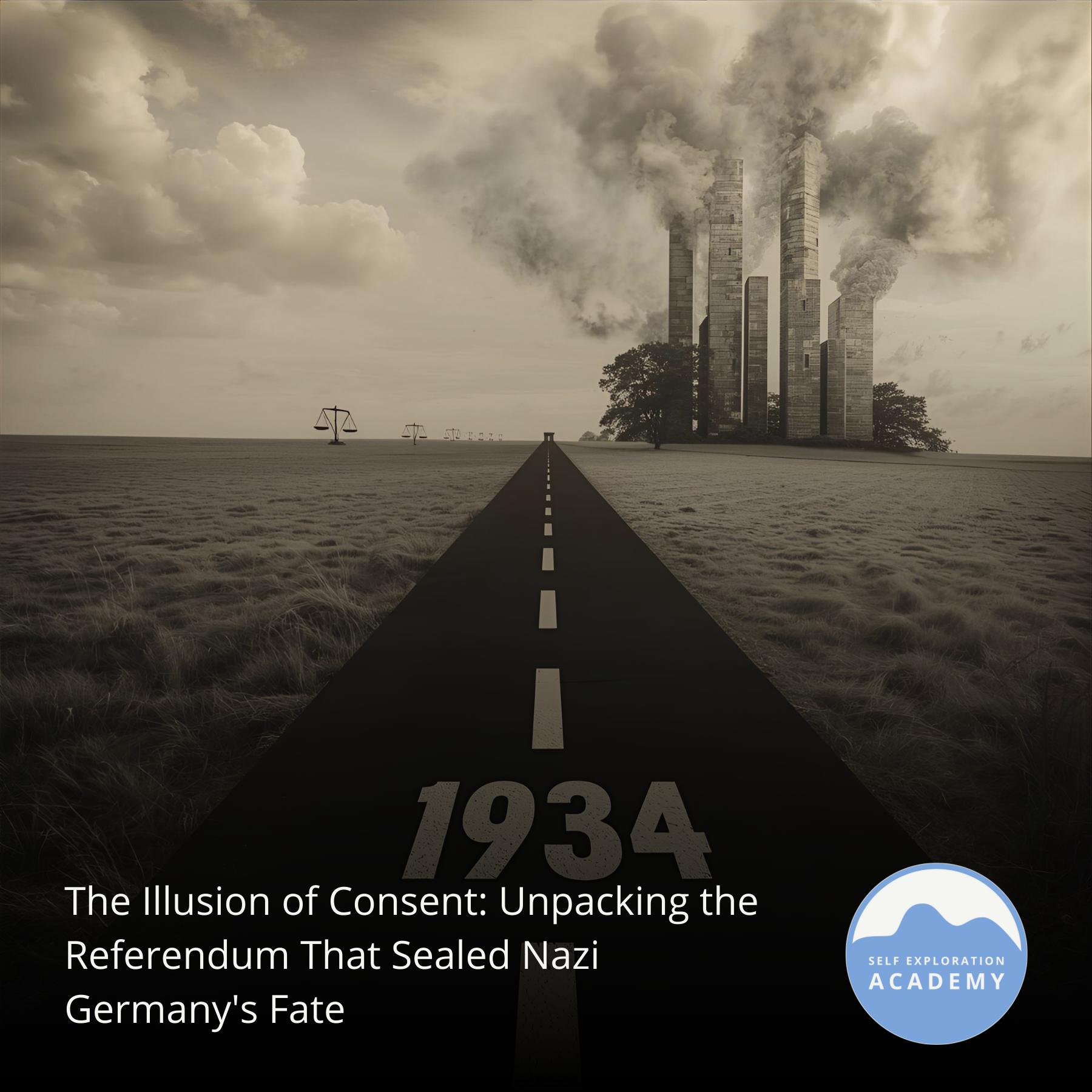
The Illusion of Consent: Unpacking the Referendum That Sealed Nazi Germany's Fate
Explore the 1934 German referendum where Hitler solidified power. This deep dive uncovers the emotional landscape of the time and offers a crucial lesson in responsible decision-making, reflecting on history's enduring impact.
Exploring the pivotal moment when a nation's fate was sealed through a coerced referendum, examining the emotional realities and enduring lessons in social emotional learning.
The Moment Itself
On August 19, 1934, the German populace was called to the polls for a referendum that, on the surface, sought approval for a seemingly administrative change: the merger of the offices of Reich President and Chancellor. Beneath this veneer, however, lay the final, decisive step in Adolf Hitler’s consolidation of absolute power. Just seventeen days prior, on August 2, the revered President Paul von Hindenburg had died. Within hours of his passing, Hitler, already Chancellor since January 1933 and armed with the Enabling Act that had effectively nullified parliamentary opposition, unilaterally declared the two offices combined, assuming the title of "Führer and Reich Chancellor." The referendum was not a democratic exercise but a post-facto legitimization, orchestrated to provide a veneer of popular consent for a dictatorship already firmly in place. What was at stake was the last formal vestige of the Weimar Republic's democratic framework and, with it, the future of Germany and Europe. The "choice" presented to the German people was less about political preference and more about public compliance in an environment where dissent was met with brutal efficiency, exemplified by the recent "Night of the Long Knives" that purged Hitler's internal rivals.
The Emotional Landscape
The emotional landscape surrounding the referendum was a complex tapestry woven from fear, manufactured enthusiasm, and suppressed despair. For many, the pervasive presence of the SA and SS, the omnipresent propaganda, and the chilling knowledge of concentration camps and secret police (Gestapo) instilled a profound sense of terror. Voting "no" or abstaining was an act of immense courage, or perceived foolishness, with potentially dire consequences. Public polling places and the social pressure to conform meant that even private dissent was dangerous. Yet, for others, there was a genuine, if misguided, hope. Years of economic depression, political instability, and national humiliation had left many Germans yearning for order and strength. Hitler’s promises of national revival resonated with these desires, and for some, the referendum represented a definitive step towards stability and a return to perceived greatness. This manufactured enthusiasm, amplified by rallies and media control, created a powerful illusion of national unity, drowning out the quiet dread and resignation of those who understood the true implications of absolute power.
A Lesson in Social Emotional Learning
The August 1934 referendum offers a stark, albeit tragic, lesson in Responsible Decision-Making, particularly when external pressures distort the capacity for ethical choice. At the individual level, citizens faced a profound dilemma: to vote "yes" out of fear, genuine belief, or a desire for self-preservation, or to resist at immense personal risk. The outcome reflects a collective failure to make responsible decisions based on critical thinking and long-term societal well-being, largely due to the systematic suppression of information, the manipulation of fear, and the erosion of civic courage. On a broader societal scale, the event underscores how a nation's leadership, through a series of irresponsible decisions (such as the Enabling Act and the subsequent elimination of democratic checks and balances), can dismantle the very mechanisms that enable responsible governance. The referendum was not a decision made by the people, but rather a decision imposed upon them, highlighting the catastrophic consequences when a society loses its ability to critically assess information, resist coercion, and collectively uphold democratic principles. It serves as a powerful reminder of the enduring importance of cultivating critical thinking, empathy, and civic courage to safeguard against the erosion of freedom and the rise of authoritarianism.
Latest Posts

Beyond the Finish Line: Usain Bolt's Historic 100m World Record in 2009
Relive the electrifying moment Usain Bolt ran 9.58s at the 2009 Berlin World Championships. This post unpacks the historical context, emotional landscape, and powerful lessons in self-management from his record-breaking sprint.
A deep dive into the emotional, physical, and mental mastery behind Usain Bolt's record-breaking 100m sprint at the 2009 World Championships.
On August 16, 2009, in Berlin’s Olympic Stadium, the world watched as Usain Bolt, a figure already etched into sporting legend, prepared to redefine the limits of human speed. The setting was the World Athletics Championships, a stage where legacies are forged and broken. Bolt, then just 22, had arrived in Berlin not merely as a defending Olympic champion, but as a phenomenon who had shattered the 100m and 200m world records in Beijing the previous year, seemingly with effortless grace. His main challenger was Tyson Gay, the reigning world champion from 2007, who had run a blistering 9.71s earlier that year, signaling he was in peak form and ready to challenge Bolt’s supremacy. The air was thick with anticipation: could Bolt lower his own seemingly impossible 9.69s record, or would Gay reclaim his throne? What was at stake was not just a gold medal, but the very notion of what was physically achievable, and the undisputed title of the fastest man on Earth.
The Moment Itself
As the athletes settled into their blocks, a hush fell over the packed stadium, punctuated only by the rhythmic thumping of thousands of hearts. Bolt, in Lane 4, maintained his characteristic pre-race composure, a playful smile momentarily flashing before his face hardened into focus. The gun fired, and the collective roar erupted. Bolt’s start, historically his weakest point, was sharp, immediately putting him ahead of the field. By 40 meters, he was already clear, his long, powerful strides devouring the track. The gap widened with every pump of his arms, every extension of his legs. As he approached the finish line, instead of straining, he glanced to his right, a subtle, almost dismissive look, before crossing the line with a final, explosive surge. The clock flashed 9.58s. A collective gasp, then an explosion of sound, reverberated through the stadium. The impossible had been made reality.
The Emotional Landscape
The emotional landscape surrounding this event was one of intense, almost unbearable, anticipation, followed by pure, unadulterated euphoria. Before the race, there was a palpable tension—a mixture of hope that history would be made and a quiet anxiety that the pressure might prove too much, even for Bolt. Spectators held their breath, leaning forward, their bodies mirroring the coiled energy of the sprinters. When Bolt crossed the line and the time flashed, disbelief warred with elation. People screamed, hugged, and jumped. There was an overwhelming sense of witnessing something truly extraordinary, a moment that transcended sport. Bolt’s reaction, a mix of triumph and almost casual confidence, ignited the crowd further. His signature "lightning bolt" pose was not just a celebration; it was a shared moment of joy and awe, a release of collective emotional energy. Even Tyson Gay, who ran a personal best of 9.71s and still finished second, displayed a graciousness born of witnessing greatness, acknowledging the sheer dominance of his competitor.
A Lesson in Social Emotional Learning
Usain Bolt’s performance in Berlin offers a profound lesson in Self-Management. This core competency of Social Emotional Learning involves the ability to regulate one's emotions, thoughts, and behaviors effectively in different situations, and to work toward achieving goals and aspirations. Bolt’s display was not merely about raw physical talent; it was a masterclass in mental fortitude. Despite the immense global spotlight, the weight of expectation, and the direct challenge from a formidable rival like Tyson Gay, Bolt maintained remarkable composure. His pre-race antics, often seen as playful, were also a form of self-regulation, a way to channel nervous energy into confident expression. During the race, his ability to execute his strategy—a strong start, powerful acceleration, and sustained top-end speed—without succumbing to panic or overexertion, speaks volumes about his controlled focus. He managed the pressure, not by suppressing it, but by transforming it into fuel for an unprecedented performance.
This moment still speaks to us today as a testament to human potential and the power of self-belief. It reminds us that true greatness often emerges not just from physical prowess, but from the disciplined management of one's inner world, allowing talent to flourish under the most intense scrutiny.
Latest Posts

1947: India's Independence, Partition's Pain, and the Price of Decisions
Explore India's 1947 independence: the jubilation of freedom juxtaposed with the tragedy of Partition. Discover the profound emotional landscape and key lessons in responsible decision-making.
Exploring the jubilation of freedom, the tragedy of division, and the enduring insights into responsible decision-making that shaped a subcontinent.
The Moment Itself
On August 15, 1947, at the stroke of midnight, India awoke to freedom after nearly two centuries of British colonial rule. The air in Delhi crackled with anticipation and jubilation as Jawaharlal Nehru, India's first Prime Minister, delivered his iconic "Tryst with Destiny" speech. This moment marked a monumental milestone in the global decolonization movement, signaling the end of an empire and the birth of two new nations: India and Pakistan. The path to this freedom was paved by decades of relentless struggle, led by figures like Mahatma Gandhi, whose philosophy of non-violent civil disobedience captivated the world. However, the joy of independence was inextricably linked to a profound and tragic decision: the Partition of British India. Driven by the demands of the Muslim League, led by Muhammad Ali Jinnah, for a separate Muslim-majority state, and the British desire for a swift exit, the hastily drawn Radcliffe Line cleaved the subcontinent along religious lines. What was at stake was not just political sovereignty, but the very fabric of society, as millions found their homes, livelihoods, and identities suddenly on the wrong side of a new, arbitrary border.
The Emotional Landscape
The emotional landscape of August 1947 was a jarring tapestry of contrasting extremes. For many, particularly in the major cities, independence brought an explosion of euphoria, a collective sigh of relief and pride after generations of subjugation. Flags waved, celebrations erupted, and a sense of boundless hope for a self-determined future permeated the air. Yet, this elation was brutally juxtaposed with an escalating tide of fear, grief, and unbridled anger in the regions directly affected by Partition. Millions of Hindus, Sikhs, and Muslims were forced to abandon ancestral homes, embarking on perilous journeys across the newly drawn borders. Trains arrived filled with corpses, and communal violence erupted on an unprecedented scale, turning neighbors into enemies. The sheer scale of displacement – estimated at 15 million people – and the accompanying bloodshed created an immediate humanitarian crisis. While public celebrations continued, a deep, collective trauma began to embed itself in the psyche of a generation, a silent sorrow that often overshadowed the declared triumph of freedom.
A Lesson in Social Emotional Learning
The events surrounding India's independence offer a poignant, albeit painful, lesson in Responsible Decision-Making. The decision to partition, while a political compromise aimed at resolving deep communal divisions, was executed with a staggering lack of foresight regarding its human consequences. Key figures, including Lord Mountbatten, the last Viceroy, pushed for an accelerated timetable, seemingly underestimating the logistical nightmare and the human cost of redrawing ancient boundaries overnight. There was a failure to adequately consider the diverse perspectives of all communities, the potential for mass displacement, and the inevitable eruption of violence that would follow. The ethical implications of prioritizing a swift political exit over the safety and well-being of millions were profound. This historical moment underscores that responsible decision-making, especially in leadership, demands not only strategic thinking but also profound empathy, a thorough assessment of potential risks, and a commitment to mitigating harm, even when faced with immense pressure and complex challenges. The echoes of Partition continue to resonate, reminding us of the enduring impact when such crucial decisions are made without full consideration of their human toll.
Latest Posts

August 14, 1945: When WWII Ended and Joy Erupted
On August 14, 1945, the world erupted as Japan surrendered, ending WWII. Explore the profound emotions and critical decisions that defined V-J Day, a moment of global relief and reflection.
Dive into the raw emotions and critical decisions that defined August 14, 1945, marking the end of the deadliest war in history.
On August 14, 1945, the world held its breath, then collectively exhaled in a wave of unparalleled relief and jubilation. After nearly six years of unimaginable global conflict, the news broke: Japan had surrendered, bringing World War II to an emphatic, if somber, close. This wasn't merely an announcement; it was the culmination of a brutal war that had claimed tens of millions of lives, reshaped continents, and pushed humanity to its darkest limits.
The Moment Itself
The preceding days had been a terrifying crescendo. On August 6, the United States dropped an atomic bomb on Hiroshima, followed by another on Nagasaki on August 9. Simultaneously, the Soviet Union launched a swift invasion of Japanese-occupied Manchuria. Japan, already reeling from relentless conventional bombing and a suffocating naval blockade, faced utter annihilation if it continued to resist. Emperor Hirohito, a figure of divine authority, made the unprecedented decision to address his nation via radio, announcing Japan's acceptance of the Potsdam Declaration's terms, effectively ending the war. His voice, rarely heard by the common people, delivered the shocking news of surrender, urging his subjects to "endure the unendurable." For the Allied nations, President Harry S. Truman's announcement confirmed what they had desperately awaited. What was at stake was nothing less than the future of civilization, the lives of millions of soldiers poised for a costly invasion of mainland Japan, and the very fabric of human existence in the shadow of atomic power.
The Emotional Landscape
The immediate aftermath was a kaleidoscope of raw human emotion. In Allied cities worldwide, spontaneous celebrations erupted. Strangers embraced, danced in the streets, and wept openly. Iconic images, like the sailor kissing a nurse in Times Square, captured the sheer, unbridled euphoria. It was a release of years of pent-up fear, anxiety, and grief. Families envisioned loved ones returning home; rationing and wartime austerity seemed destined for the past. Yet, beneath the surface of joy, a profound sorrow lingered. The celebrations were tinged with the memory of the fallen, the wounded, and the irreparable damage wrought by the war. For the Japanese, the emotions were far more complex: a mix of profound shame at defeat, relief that the Emperor and the nation had been spared total destruction, and a daunting uncertainty about their future under occupation. The collective exhaustion was palpable, a deep weariness after years of relentless struggle.
A Lesson in Social Emotional Learning
V-J Day offers a stark lesson in Responsible Decision-Making and Social Awareness. The decisions leading to the war's end were fraught with immense ethical and practical dilemmas. President Truman's choice to deploy atomic weapons, while controversial, was presented as a means to prevent a far bloodier invasion, demonstrating a leader's agonizing responsibility to weigh catastrophic options for the perceived greater good. Similarly, Emperor Hirohito's decision to surrender, defying elements of his own military, was a responsible act aimed at preserving his nation from further devastation, prioritizing the survival of his people over a futile, prideful continuation of conflict.
The global outpouring of celebration also highlighted a profound Social Awareness. Despite national differences and wartime animosities, the universal human desire for peace and an end to suffering transcended borders. The collective sigh of relief demonstrated a shared understanding of the common burden that had been lifted, fostering a temporary, albeit fragile, sense of global unity in the face of shared trauma.
This pivotal moment still speaks to us today, reminding us of the immense human cost of conflict, the profound weight of leadership decisions in times of crisis, and the enduring human capacity for both immense destruction and profound, collective relief. It underscores the ongoing need for responsible global leadership and a deep social awareness of our interconnectedness in preventing future catastrophes.
Latest Posts

1521: The End of the Aztec Empire and the Birth of a New World
Explore the dramatic 1521 fall of Tenochtitlan, the Aztec capital. This post delves into the intense siege, cultural clashes, and profound human experiences that shaped a pivotal moment in history.
Journey into the final days of the Aztec capital, exploring the emotions, conflicts, and pivotal decisions that shaped the conquest of Mexico.
The Moment Itself
The sun beat down relentlessly on August 13, 1521, as the last vestiges of the once-mighty Aztec Empire crumbled. For 93 days, the magnificent island city of Tenochtitlan, jewel of Mesoamerica, had endured a brutal siege. Hernán Cortés, a Spanish conquistador driven by insatiable ambition and a fervent belief in his divine right, had returned after being driven out during the "Noche Triste" a year prior. This time, he brought not only his hardened Spanish forces but also tens of thousands of indigenous allies, primarily Tlaxcalans, who saw the Spanish as a means to break free from generations of Aztec dominance and tribute.
The stakes were immeasurable. For the Mexica people, led by their young and defiant emperor Cuauhtémoc, it was the fight for their very existence, their culture, and their sacred city. For Cortés, it was the culmination of a daring gamble, a chance to secure unimaginable wealth and glory for the Spanish crown. The conflict was a clash of worlds: European steel, gunpowder, and horses against obsidian-edged macuahuitl, disciplined warriors, and a deep spiritual connection to their land. But the most devastating weapon in the Spanish arsenal was unseen: smallpox, which had ravaged Tenochtitlan, decimating its population and weakening its defenders long before the final assault. Starvation, thirst, and constant bombardment from brigantines built by the Spanish on Lake Texcoco sealed the city's fate. On that fateful day, Cuauhtémoc was captured while attempting to escape, signaling the definitive end of the Aztec Empire and the dawn of Spanish colonial rule in Mexico.
The Emotional Landscape
The emotional texture of Tenochtitlan in its final days was a tapestry woven from desperation, defiance, and profound grief. For the Mexica, there was the raw terror of a prolonged siege, the gnawing hunger, the agony of watching loved ones succumb to disease, and the horror of their sacred temples being defiled. Yet, amidst this despair, there was also an astonishing display of courage and resilience. Warriors fought to the last breath, women and children endured unimaginable suffering, and the entire populace clung to hope against overwhelming odds. Their anger at the invading forces, and perhaps at the allied indigenous groups, must have been immense.
On the Spanish side, fear was a constant companion, especially after their previous defeat, yet it was tempered by a ruthless determination fueled by greed for gold and a zealous conviction in their Christian mission. Their indigenous allies, the Tlaxcalans, likely felt a complex mix of triumph and apprehension—triumph at the downfall of their ancient oppressors, but perhaps a dawning realization of the true nature of their new, formidable partners. The air must have been thick with the stench of death, the cries of battle, and the silent, pervasive sorrow of a civilization collapsing.
A Lesson in Social Emotional Learning
The fall of Tenochtitlan offers a stark, poignant lesson in Social Awareness and Responsible Decision-Making. The initial interactions between Moctezuma and Cortés highlight a profound failure in social awareness on both sides. Moctezuma, bound by his own cultural and religious frameworks, struggled to comprehend the existential threat posed by the Spanish, often interpreting their actions through a lens of prophecy and diplomacy rather than outright conquest. His early decisions, such as allowing Cortés into the city, were rooted in a misjudgment of Spanish intentions and power dynamics.
Similarly, Cortés, while strategically brilliant, operated with a complete lack of social awareness regarding the nuanced political landscape of Mesoamerica. He exploited existing rivalries without truly understanding the complex social structures, viewing indigenous peoples largely as tools or obstacles to his ultimate goal. This mutual lack of genuine understanding of the "other's" worldview, motivations, and cultural norms led to a series of catastrophic decisions that culminated in the destruction of an empire. The Tlaxcalans, in their responsible decision to ally with the Spanish, sought to improve their own lot, yet their choice ultimately contributed to a colonial system that would subjugate all indigenous peoples.
This historical moment speaks to us today about the enduring consequences of cultural misunderstanding and the critical importance of empathetic social awareness in a globalized world. It underscores how decisions made without a deep appreciation for diverse perspectives can lead to devastating and irreversible outcomes, leaving a legacy that echoes through centuries.
Latest Posts

The Abbey Road Crossing: An Iconic Moment, Unpacked
Go beyond the famous crosswalk! Unpack the history, emotional truth, and social awareness lessons behind The Beatles' iconic Abbey Road photo. A fascinating look at a legendary moment.
Explore the historical context, emotional landscape, and powerful lessons in social awareness behind one of music's most unforgettable images.
The Moment Itself
On a sweltering Friday morning, August 8, 1969, a small team gathered outside EMI Studios on Abbey Road in London. The Beatles—John Lennon, Paul McCartney, George Harrison, and Ringo Starr—were nearing the completion of their penultimate album, which would ultimately be named after the very street they were on. The idea for the cover was simple yet audacious: a photograph of the four band members walking across the zebra crossing directly outside the studio. Photographer Iain MacMillan, perched precariously on a stepladder in the middle of the road, had a mere ten minutes to capture the shot. A single policeman briefly halted the sparse traffic, allowing the band to cross back and forth a few times. In just six frames, MacMillan immortalized one of the most recognizable images in music history. What was at stake was not just an album cover, but a visual representation of a band at a crossroads, subtly signaling their collective journey and impending dissolution, even if unintentionally. The image became a cultural touchstone, a silent farewell from the world’s biggest band.
The Emotional Landscape
The emotional landscape surrounding the Abbey Road shoot was a complex tapestry of creative exhaustion, simmering tensions, and a desperate, fleeting hope for unity. While the public saw a cohesive quartet, behind the scenes, the band was fraying. John Lennon had already privately expressed his desire to leave, and the collaborative spirit that once defined them was largely gone, replaced by individual projects and growing resentments. Yet, on that sunny morning, for those few minutes, they performed their roles as "The Beatles" one last time for the camera, a practiced familiarity masking the internal turmoil. For fans, the album and its iconic cover would evoke a mix of nostalgia for their unparalleled run and a bittersweet awareness that an era was drawing to a close. The image, devoid of text, spoke volumes: four individuals, once inseparable, now walking in a line, each seemingly absorbed in their own path, yet forever linked by the shared journey that had defined a generation.
A Lesson in Social Emotional Learning
The Abbey Road moment offers a profound lesson in Social Awareness, particularly in understanding group dynamics and unspoken cues. Despite the internal strife, The Beatles managed to present a unified front for the camera, demonstrating an acute, albeit perhaps unconscious, awareness of their public image and the expectations of their audience. They understood the cultural weight they carried and, for that brief instance, put aside personal discord to deliver an iconic visual. This wasn't necessarily a display of strong Relationship Skills in their personal interactions, but rather a collective Social Awareness of their brand and legacy. The image itself, chosen by Paul McCartney, captures a fleeting moment of synchronized movement, a visual metaphor for a harmony that was increasingly elusive off-camera. It highlights how, even when internal relationships are strained, a shared purpose or external pressure can momentarily align individuals, revealing the delicate balance between personal feelings and collective presentation. The moment still speaks to us today about the power of iconic imagery to both reflect and shape perception, and how even in moments of profound change, a collective identity can persist, if only in a photograph.
Latest Posts

The Quit India Movement: India's Defining Demand for Freedom
Unpack the Quit India Movement: discover the raw emotions, strategic decisions, and profound self-management that powered India's pivotal demand for independence in 1942.
From Gandhi's "Do or Die" call to a nation's unified stand, discover the emotional and strategic dynamics of the Quit India Movement and its timeless insights into collective action.
The Moment Itself
On August 9, 1942, a pivotal moment in India's struggle for independence unfolded as the Indian National Congress, under the leadership of Mahatma Gandhi, launched the "Quit India" Movement. This was not a sudden outburst but the culmination of growing frustration with British colonial rule, exacerbated by World War II. Britain had unilaterally declared India a belligerent in the war without consulting Indian leaders, and the subsequent Cripps Mission, offering dominion status after the war, was deemed insufficient and too late by the Congress.
Gandhi, addressing the All-India Congress Committee in Bombay just before the movement's launch, delivered his electrifying "Do or Die" speech, urging Indians to act as if they were free and to resist British authority non-violently. The stakes were immense: the immediate end of British rule versus the continuation of colonial subjugation, especially during a global conflict. Key figures like Jawaharlal Nehru, Sardar Patel, and Abul Kalam Azad stood alongside Gandhi, endorsing the resolution for immediate independence. The British response was swift and brutal; within hours, Gandhi and almost the entire Congress leadership were arrested, and the Congress Party was banned. This pre-emptive strike, however, backfired, transforming a planned civil disobedience campaign into a spontaneous, leaderless mass uprising across the subcontinent.
The Emotional Landscape
The emotional landscape surrounding the Quit India Movement was a volatile mix of fervent hope, simmering anger, and profound fear, yet underpinned by an extraordinary resilience. For millions, Gandhi's "Do or Die" call ignited a powerful sense of courage and self-sacrifice. There was an overwhelming hope that this final push would dismantle the shackles of colonial rule. The widespread arrests and brutal suppression by the British, including lathi charges, firing on crowds, and mass detentions, fueled intense anger against the oppressors. People responded in real time with widespread strikes, hartals (cessation of work), demonstrations, and acts of sabotage against government property, railways, and communication lines, often despite the absence of central leadership.
Fear was palpable – fear of imprisonment, torture, and death. Yet, this fear was often overshadowed by a collective determination. The movement, though suppressed, revealed the deep-seated desire for self-determination and the emotional unity of a diverse populace against a common adversary. While some, like the Muslim League, remained aloof due to their own political aspirations, the dominant emotion among the participants was a fierce, unyielding commitment to freedom, demonstrating a collective emotional fortitude that transcended individual anxieties.
A Lesson in Social Emotional Learning
The Quit India Movement offers profound insights into Responsible Decision-Making and Self-Management. The Congress leadership's decision to launch the movement during wartime, knowing the immense risks of British retaliation and potential internal discord, exemplifies high-stakes responsible decision-making. They weighed the ethical imperative of self-governance against the immediate dangers, prioritizing the long-term well-being and dignity of the nation. This was a collective decision rooted in a deep assessment of the political climate and the moral obligation to act.
Furthermore, the widespread, often leaderless, participation in the movement showcased remarkable Self-Management on a national scale. Despite brutal repression and the absence of direct guidance from arrested leaders, millions of Indians regulated their impulses, persevered through hardship, and largely adhered to the spirit of non-violent resistance. This required immense emotional control and discipline in the face of provocation, demonstrating a collective capacity to channel anger into determined action rather than chaotic violence. The movement, though it did not immediately achieve independence, laid bare the unshakeable resolve of a people committed to their freedom, a lesson in collective courage and self-direction that continues to resonate today.
Latest Posts
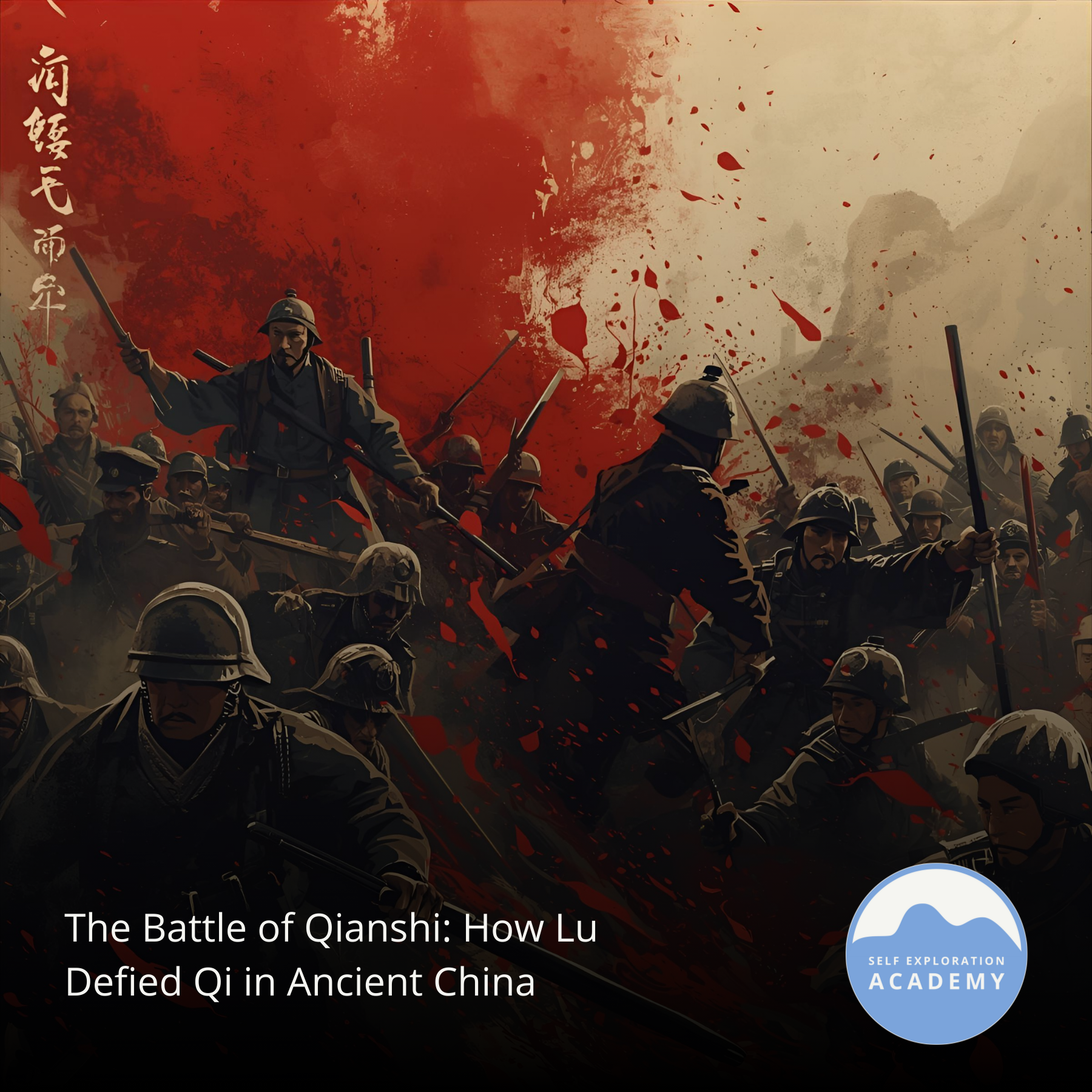
The Battle of Qianshi: How Lu Defied Qi in Ancient China
Uncover the dramatic Battle of Qianshi, where Duke Huan of Lu defied expectations and triumphed over the State of Qi in ancient China's tumultuous Spring and Autumn period.
Explore the gripping tale of Duke Huan of Lu's improbable victory at the Battle of Qianshi, a pivotal moment that challenged the might of Qi in the tumultuous Spring and Autumn period.
In the tumultuous Spring and Autumn period of ancient China, states constantly vied for supremacy, their borders fluid and their alliances shifting like desert sands. Among these, the powerful State of Qi often cast a long shadow over its neighbors, including the State of Lu, known more for its cultural heritage and the teachings of Confucius than for its military might. Yet, history records moments when the underdog rises, defying expectations and reshaping the political landscape. One such pivotal event, though less widely chronicled than some, was the Battle of Qianshi on what would correspond to August 8th, where Duke Huan of Lu achieved a remarkable victory against invading forces, momentarily securing dominance in the State of Qi. This was not merely a skirmish; it was a desperate defense against an aggressive power, with the very sovereignty and future of Lu hanging in the balance.
The Moment Itself
The context of the Battle of Qianshi was one of perennial tension. Qi, a larger and often more militarily formidable state, frequently sought to assert its influence over Lu, demanding tribute or territorial concessions. On this particular occasion, a significant Qi force had crossed Lu's borders, intent on subjugating or severely weakening its neighbor. Duke Huan of Lu, a ruler known for his sagacity and a keen understanding of both military strategy and the diplomatic chess game of the era, faced a critical juncture. His forces, though brave, were often outmatched in sheer numbers or equipment by Qi's well-drilled armies. The Battle of Qianshi, fought on a specific terrain chosen perhaps for its tactical advantages, saw Lu's forces, under Duke Huan's direct or delegated command, employ a strategy that exploited the invading army's weaknesses or the terrain itself. What exactly transpired on that field remains shrouded in the mists of time, but the outcome was undeniable: the Qi invaders were decisively defeated, their advance halted, and their forces routed. This unexpected triumph not only repelled the immediate threat but, for a time, shifted the regional balance, giving Lu a rare moment of ascendancy over its powerful neighbor.
The Emotional Landscape
Before the battle, the atmosphere in Lu would have been thick with apprehension. The specter of Qi's armies on their land, the thought of their cities besieged, and the potential loss of independence surely fueled widespread fear among the populace and a grim determination among the soldiers. For Duke Huan, the burden of leadership must have been immense, balancing the desire to protect his people with the daunting odds. Yet, the victory at Qianshi would have unleashed an outpouring of relief and exultation. The triumph of the underdog, the successful defense of their homeland, would have been met with widespread jubilation and a renewed sense of national pride. On the Qi side, the defeat would have brought humiliation and anger, a blow to their prestige and a stark reminder that even the mighty could be challenged. This emotional aftermath, a blend of elation and despair, underscored the high stakes of warfare in an age where a single battle could redefine a state's destiny.
A Lesson in Social Emotional Learning
The Battle of Qianshi offers a profound lesson in Responsible Decision-Making. Duke Huan of Lu, facing a superior invading force, had to make critical choices under immense pressure. His decision to engage, rather than capitulate, and the specific strategic choices made on the battlefield, demonstrate a leader's ability to assess complex situations, weigh potential outcomes, and commit to a course of action that, against all odds, yielded success. This wasn't merely about courage, but about the calculated risk and intelligent application of resources against a perceived stronger opponent. The victory at Qianshi illustrates that responsible decision-making, even in dire circumstances, can lead to improbable triumphs when combined with astute planning and the unwavering resolve to execute. This historical moment reminds us that the ability to make sound, strategic decisions, even when the path is uncertain and the stakes are high, remains a cornerstone of effective leadership and resilience in any era.
Latest Posts

Le Griffon's Maiden Voyage: Ambition, Mystery, and the Great Lakes
Discover the audacious 1679 maiden voyage of Le Griffon, the first ship on the upper Great Lakes. Explore La Salle's ambitious vision, the perils faced, and the enduring mystery of its disappearance in this historical deep dive.
Explore the audacious journey of the first sailing ship on the upper Great Lakes, La Salle's ambitious vision, and its enduring mystery.
On August 7, 1679, a new chapter in North American exploration unfurled on the vast, freshwater seas of the Great Lakes. The ship Le Griffon, a brigantine built by the ambitious French explorer René-Robert Cavelier, Sieur de La Salle, hoisted its sails near Niagara Falls and embarked on its maiden voyage. This was no mere journey; Le Griffon was the first full-sized sailing vessel to navigate the upper Great Lakes, a monumental feat of engineering and perseverance in a wilderness still largely unknown to Europeans. La Salle's grand vision was at stake: to establish a lucrative fur trade route, bypassing the treacherous portages that plagued canoe travel, and to potentially discover the elusive Northwest Passage to Asia. The ship, armed with seven cannons and carrying a crew of around 30, represented a bold assertion of French power and technological prowess, a floating fortress designed to dominate the lucrative fur trade and secure France's claims in the heart of the continent.
The Moment Itself
The construction of Le Griffon itself was an arduous undertaking, built far from established settlements, deep within the territory of indigenous nations. Its launch marked a pivotal moment, symbolizing European determination to conquer the vast interior. As the ship cut through the waters of Lake Erie, then Lake Huron, and finally Lake Michigan, it was a testament to La Salle's audacious spirit. He envisioned Le Griffon as the cornerstone of a vast commercial empire, a vessel that would ferry immense quantities of furs from the interior to his trading posts, securing his fortune and France's dominance. The journey was not without peril; storms, shallow waters, and the ever-present threat of competition from English traders and wary indigenous groups loomed. Upon reaching Green Bay, Wisconsin, the ship was loaded with a valuable cargo of furs, intended to repay La Salle's considerable debts and fund further exploration. However, on September 18, 1679, Le Griffon set sail on its return journey and vanished without a trace, its fate remaining one of North America's enduring maritime mysteries.
The Emotional Landscape
For La Salle, the launch of Le Griffon must have been a moment of profound hope mixed with the gnawing anxiety of immense financial risk. His ambition was boundless, yet his resources were always stretched thin, making the success of this venture paramount. The crew, a mix of seasoned sailors and frontiersmen, likely felt a potent cocktail of awe at the sheer scale of the lakes, trepidation at the unknown, and the thrill of being part of such a pioneering endeavor. Their lives depended on the ship's integrity and La Salle's leadership. For the indigenous nations, who had navigated these waters for millennia in their canoes, the sight of Le Griffon must have been both astonishing and deeply unsettling. This massive, foreign vessel, bristling with weaponry, represented a new, powerful intrusion into their ancestral lands and traditional trade networks, signaling a shift in the balance of power and an uncertain future.
A Lesson in Social Emotional Learning
The saga of Le Griffon offers a compelling lesson in Responsible Decision-Making. La Salle's decision to construct and launch such a vessel was an act of extraordinary ambition, requiring a complex assessment of logistical challenges, financial solvency, political backing, and the inherent dangers of the wilderness. While the ship's disappearance remains unsolved, the very act of its creation and voyage highlights the immense risks involved in pioneering ventures. It underscores that even the most meticulously planned and technologically advanced endeavors can be subject to unpredictable forces, whether natural or human. La Salle's pursuit of his vision, while demonstrating remarkable self-management and perseverance, also serves as a stark reminder of the potential consequences when grand decisions are made in high-stakes environments, where the line between audacious success and catastrophic failure is often razor-thin. The moment still speaks to us today, reminding us of the human drive to explore and conquer, and the enduring power of both ambition and the untamed forces of nature.
Latest Posts

Gertrude Ederle's Channel Triumph: A Story of Resilience
In 1926, Gertrude Ederle became the first woman to swim the English Channel. Discover her incredible journey of self-management and resilience, proving true strength goes beyond physical limits.
Explore the emotional journey and profound self-management that propelled the first woman to swim the English Channel.
The Moment Itself
On August 6, 1926, the world watched, some with skepticism, as a young American woman named Gertrude Ederle plunged into the frigid waters of the English Channel at Cap Gris-Nez, France. The Channel, a treacherous 21-mile stretch of water notorious for its strong currents, unpredictable weather, and chilling temperatures, had been conquered by only five men before her. No woman had ever succeeded. Ederle, a former Olympic gold medalist in swimming, was not merely attempting a physical feat; she was challenging deeply ingrained societal perceptions of female strength and endurance. Her first attempt the previous year had ended in failure, with her trainer, Jabez Wolffe, pulling her from the water against her will, citing concerns for her safety. This time, under the guidance of her new trainer, T.W. Burgess, Ederle was determined to prove her mettle. She wore a unique two-piece swimsuit and goggles, a departure from the heavy, restrictive attire typically worn by female swimmers, allowing for greater freedom of movement. The stakes were immense: her personal vindication, the shattering of a formidable athletic barrier, and a powerful statement about the capabilities of women in the burgeoning era of the "flapper."
The Emotional Landscape
The emotional texture of Ederle’s swim was a complex tapestry of individual grit and collective anticipation. For Ederle herself, the journey was an agonizing test of will against profound physical discomfort. Battling jellyfish stings, nausea from the choppy waves, and the relentless, numbing cold, her spirit must have wavered, yet she pushed through. Her support crew, navigating alongside her in a tugboat, offered encouragement, hot chocolate, and the occasional record played on a phonograph to keep her spirits up. On shore, the public oscillated between doubt and fervent hope. Many believed a woman simply lacked the stamina for such an ordeal. When news broke that she had not only completed the swim but had done so in an astonishing 14 hours and 34 minutes—beating the fastest men’s time by nearly two hours—a wave of euphoria swept across America. Her triumphant return to New York was met with a ticker-tape parade, a testament to the sheer awe and inspiration she had ignited. Her success was a moment of immense pride, particularly for women, who saw in her achievement a tangible symbol of breaking free from traditional constraints.
A Lesson in Social Emotional Learning
Gertrude Ederle's legendary swim offers profound insights into Self-Management and Self-Awareness. Her success was a masterclass in self-management, demonstrating an extraordinary capacity to regulate her emotions, thoughts, and behaviors under extreme duress. Despite the physical agony, the mental fatigue, and the immense pressure, she maintained her focus and discipline, refusing to yield to the Channel's relentless challenges. Her perseverance, the unwavering commitment to her goal even when her body screamed for surrender, epitomizes this competency. Furthermore, Ederle exhibited remarkable self-awareness. She understood her own formidable swimming strengths, but also the monumental nature of the challenge. Her meticulous preparation, including covering herself in lanolin for insulation and developing a powerful, efficient stroke, showcased her understanding of what was required to overcome such an obstacle. This blend of knowing her capabilities and managing her response to adversity allowed her to redefine what was possible. Today, Ederle’s swim continues to speak to us as a powerful reminder that true strength lies not just in physical prowess, but in the unwavering will to manage oneself through trials and to understand one's own potential.
Latest Posts

August 5, 1620: The Day the Mayflower Set Sail for a New World
Relive the Mayflower's challenging 1620 departure from Southampton. This post dives into the hopes, fears, and crucial decisions that shaped the Pilgrims' historic voyage to a new world.
Explore the hopes, fears, and critical choices that defined the Pilgrims' courageous journey to a new world, starting on August 5, 1620.
The Moment Itself
On August 5, 1620, a pivotal moment in transatlantic history unfolded in Southampton, England, as the Mayflower, accompanied by its smaller consort, the Speedwell, prepared to set sail for North America. This was not merely a journey for trade or exploration; it was an exodus driven by a profound desire for religious freedom and the hope of establishing a new society unburdened by the strictures of the Church of England. Aboard the two vessels were approximately 120 passengers, a mix of Separatists (known to history as Pilgrims) who had fled persecution in England for a temporary refuge in Leiden, Holland, and a contingent of "Strangers"—individuals seeking economic opportunity or simply a new life.
The stakes were immense. These were not seasoned explorers but families, farmers, and tradesmen venturing into an unknown wilderness, risking everything—their lives, their meager possessions, and the future of their children—on a perilous ocean voyage. Key figures like William Bradford, a leader among the Separatists, and Captain Christopher Jones of the Mayflower, bore the heavy burden of responsibility. Their initial departure was fraught with immediate challenges: the Speedwell proved unseaworthy, developing leaks that forced the ships to turn back twice. This unforeseen setback led to the critical decision to abandon the Speedwell entirely, consolidating all viable passengers and provisions onto the Mayflower alone, a choice that dramatically increased the density and discomfort for the remaining 102 souls.
The Emotional Landscape
The emotional texture of that August day must have been a complex tapestry of hope, fear, and profound uncertainty. For the Separatists, there was an undeniable sense of divine purpose, a courageous leap of faith toward a promised land where they could worship freely. Yet, beneath this spiritual resolve, lay the raw human fear of the vast, unforgiving ocean and the perils of an untamed continent. Families huddled together, perhaps shedding tears for the homes and loved ones they might never see again, grappling with the immense finality of their departure.
The repeated failures of the Speedwell undoubtedly amplified anxiety, testing their resolve and forcing a stark confrontation with the fragility of their endeavor. There must have been frustration and anger at the delays, but also a burgeoning sense of collective resilience as they faced adversity. The "Strangers," perhaps less ideologically driven, likely felt a more pragmatic blend of ambition and apprehension, their hopes for prosperity tempered by the sheer physical discomfort and danger of the crowded Mayflower. Despite their differing motivations, a shared vulnerability would have forged a nascent sense of community, born out of the common ordeal and the desperate need for mutual support.
A Lesson in Social Emotional Learning
The Mayflower's departure, particularly the events surrounding the Speedwell's failure, offers a powerful lesson in Responsible Decision-Making. The initial decision to embark on such a monumental journey, driven by deep conviction, was itself a profound act of responsible decision-making, weighing the known risks of persecution against the unknown dangers of the Atlantic. However, the subsequent necessity to adapt to unforeseen circumstances—the Speedwell's leaks—highlights this competency in action under duress.
The leaders and passengers were forced to make critical, high-stakes decisions in real-time: whether to persist with repairs, when to abandon the smaller ship, and how to reconfigure their entire plan. This required not only practical problem-solving but also an ability to assess risks, consider consequences (the increased crowding, the potential for disease, the extended journey), and ultimately, to choose the path that offered the best chance for collective survival and the realization of their ultimate goal. Their ability to pivot, consolidate, and continue, despite significant setbacks, demonstrates a collective capacity for responsible decision-making, crucial for navigating the immense challenges that lay ahead.
This moment still speaks to us today, reminding us that even the most well-laid plans can be disrupted, and that true progress often requires not just courage, but also the flexibility and wisdom to make difficult, responsible choices in the face of uncertainty.
Latest Posts